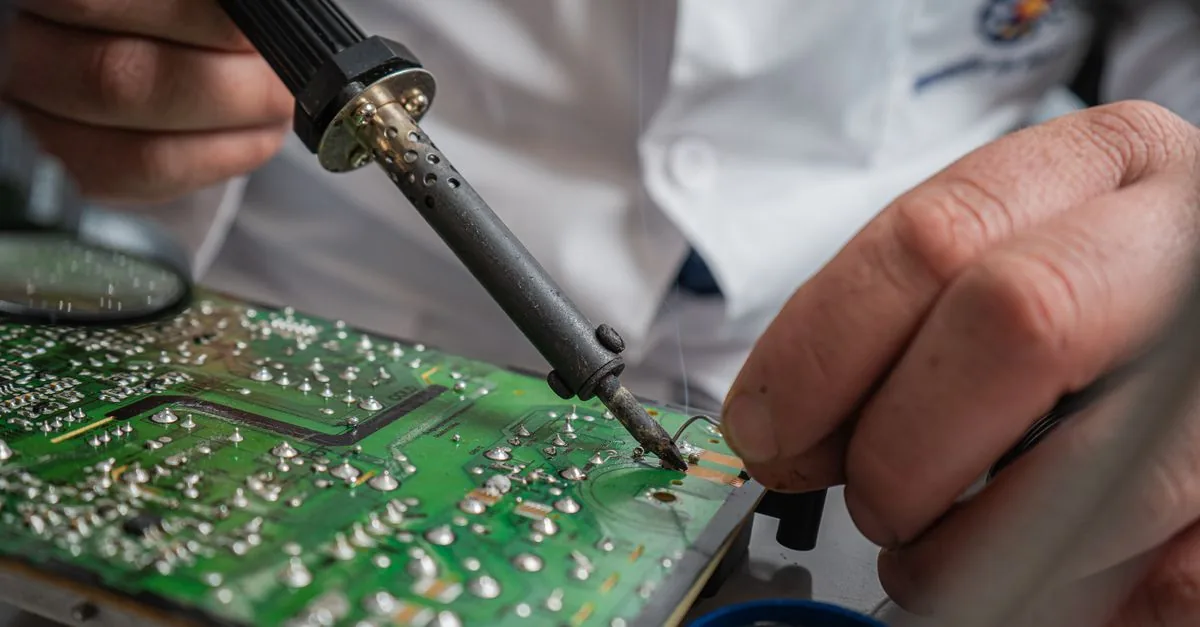
The PCB is the control board — the electronics that drive an inverter AC's variable-speed compressor. When it fails the unit typically will not start, starts and stops, throws an error code, or runs at a fixed speed with none of the inverter behaviour you paid for.
It is an expensive repair and a hard one to challenge, because almost nobody can inspect a circuit board and form a view. So this page is mostly about the questions that give you a handle on the diagnosis without needing to understand the electronics.
One structural fact worth knowing up front: an inverter board costs several times what a non-inverter board does. That is not a markup — it is a genuinely more complex board doing variable-frequency drive rather than simple on-off switching. It also means the repair-versus- replace maths is different on an inverter unit, and it tips earlier.
A note on these numbers. XpertWorker is a marketplace, not a service company. We do not set any professional's price and we never charge you a paisa. Every figure below is an indicative market range collected from what independent professionals in Delhi NCR generally charge — a guide to help you judge a quote, not a quote itself.
In this guide
Inverter AC repair rates — Delhi NCR, 2026
Read the PCB row against the rows below it. Two of them are what the problem frequently turns out to be instead.
| Job | Typical market range | What it usually includes |
|---|---|---|
| PCB repair (inverter AC) | ₹2,000–4,500 | Component-level repair or board replacement |
| Split AC service & cleaning (per unit) | ₹500–900 | Where poor cooling usually actually comes from |
| Split AC deep clean / jet wash | ₹900–1,500 | The heavier version of the same |
| Gas refill — R410A (inverter ACs) | ₹3,000–4,500 | The other expensive diagnosis to check |
| Compressor replacement — 1.5 ton | ₹6,000–16,000 | The repair above this one |
| Annual Maintenance (AMC) — per unit/year | ₹2,000–4,000 | If the unit is ageing |
Indicative Delhi NCR market ranges, 2026. Each professional sets their own charge and quotes you free before starting. Parts are normally billed on top of labour.
Want a real quote for your own job?
Get free quotesHow to check a PCB diagnosis
You do not need to understand the board. You need to know whether anyone actually looked.
- “What is the error code?” Inverter ACs report faults through blinking LEDs or a display code, and the codes are documented in the manual. A technician who cannot tell you the code has not read the machine — ask them to note the blink pattern.
- “Is it the indoor board or the outdoor board?” They are separate. “The PCB” is not an answer.
- “Have you checked the power supply and voltage?” Delhi voltage fluctuation is a real cause of both symptoms and failures. A unit misbehaving on low voltage is not a failed board.
- “Have the sensors been checked?” A faulty temperature or coil sensor produces exactly the erratic behaviour a bad board does, and costs a fraction to replace. This is the commonest cheaper cause.
- “Is the capacitor good?” On a unit that hums but will not start, the capacitor is the usual suspect and is inexpensive.
- “Component-level repair or whole board?” Many boards can be repaired at component level for considerably less than replacement. Ask which is being quoted — and if it is a repair, what warranty comes with it.
Check the warranty before you pay anyone
- Inverter ACs commonly carry longer cover on the PCB and compressor than on the rest of the unit — frequently well beyond the general warranty period. People pay privately for repairs that were still covered, and this is easy to avoid.
- Find the invoice and the warranty card before booking anyone. The purchase date decides this, not your memory of it.
- Third-party repair can void remaining cover. If the unit is still in warranty, go to the brand's service first even if it is slower.
- Extended warranty plans bought at purchase often cover exactly this. Check whether you have one.
Repair, replace the board, or replace the AC?
Rough guidance, with the arithmetic done against your own quote rather than a rule of thumb:
- Unit under about five years old: repair. The rest of the machine has plenty of life and a board is worth putting into it.
- Five to ten years: depends on the quote and the unit's history. If the PCB is the first significant failure and cooling is otherwise good, repairing is usually sound. If it has already had a gas issue and a fan motor, you are maintaining a machine on the way down.
- Over ten years, or a PCB plus compressor together: replacement generally makes more sense. A PCB and a compressor on the same unit is most of a new AC in parts, and a modern inverter unit will use noticeably less electricity — our inverter vs non-inverter guide covers that.
- Protect the new board. If voltage fluctuation contributed, fit a stabiliser or ensure the unit is on a properly rated circuit — otherwise you are buying the same part twice. Our electrical safety tips cover supply issues.
- Keep the old board if it is replaced. Ask for it. It is your part, and it is the simplest check that the work was actually done.
Our compressor guide covers the other big-ticket repair, and the not-cooling guide covers the far commoner and cheaper causes of poor performance.
Need an AC & Appliance Repair professional?
Get free quotes from independent, local professionals near you. XpertWorker never charges you — you pay the professional directly.
Get free quotes →Frequently asked questions
How much does inverter AC PCB repair cost in Delhi?
How do I know if my AC PCB is really faulty?
Is an AC PCB covered under warranty?
Should I repair the PCB or replace the AC?
Can an AC PCB be repaired instead of replaced?
Does XpertWorker do the repair or set the price?
How we put this guide together
The ranges in this guide are indicative market rates compiled from real jobs across Delhi NCR and reviewed by the XpertWorker pricing desk. They are not quotes, and they are not our prices — every independent, local professional sets their own charge and quotes you free before any work starts.