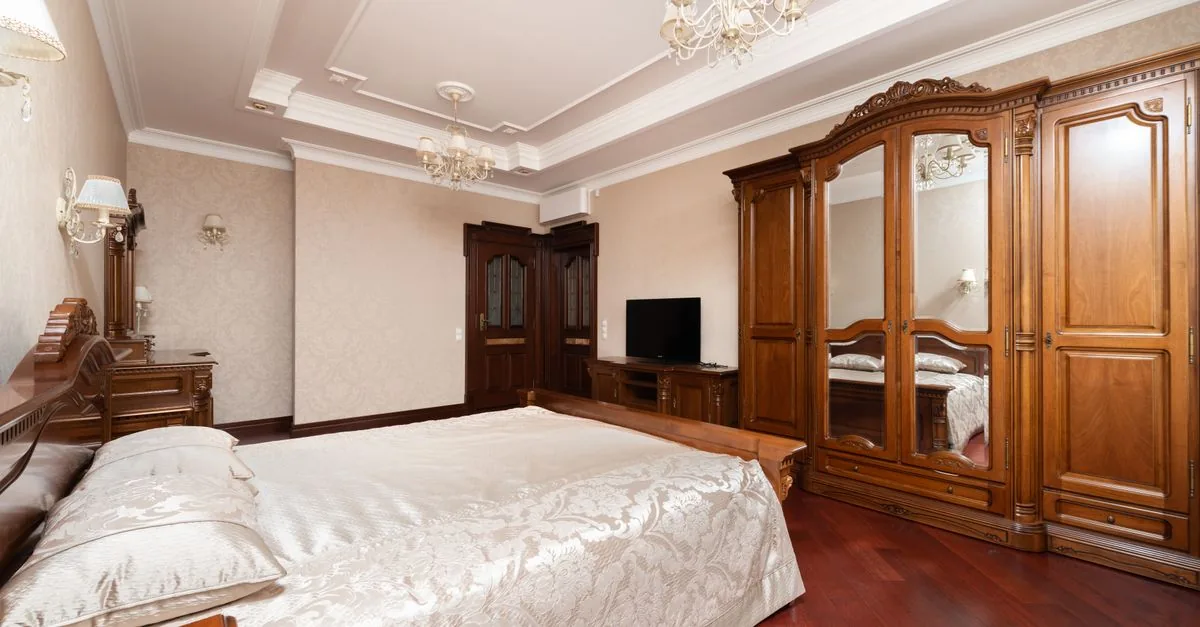
A wardrobe is a big, heavy thing, and when its doors stop behaving it feels like a big problem. It usually is not.
Wardrobe doors go wrong in a small number of predictable ways, and nearly all of them are hardware faults rather than damage to the wardrobe itself. Sliding doors ride on little plastic or nylon rollers running in a channel, and that channel sits at floor level in a city where fine dust settles on everything. Hinged shutters hang on hinges held by short screws driven into board. Dust in the channel, a flat spot on a roller, or one screw that has lost its grip will stop a door dead — and none of them means the carcass is finished.
So the thing to avoid is being told the wardrobe has “gone out of shape” and needs rebuilding when the actual fault is a clogged track or a hinge that wants adjusting. This guide takes the causes in order of likelihood, splits sliding doors from hinged shutters because they fail differently, and says plainly which checks you can do yourself first.
A note first. XpertWorker is a marketplace, not a service company. We do not set any professional’s price and we never charge you a paisa. Every professional quotes you free before starting, and you pay them directly. This page names no figure at all; when you want to know what a job typically costs, our carpenter furniture repair charges guide carries the indicative ranges.
In this guide
Free checks to do before you call anyone
Five minutes with a torch and a screwdriver settles a large share of wardrobe door complaints in Delhi homes. Do these before you let anyone quote for parts.
- 1. Clean out the bottom channel. Shine a torch along the track a sliding door runs in. In most Delhi flats you will find a compacted line of fine dust, hair and grit, sometimes with a dropped hairpin or coin in it. Vacuum it out with a narrow nozzle, then wipe the channel with a dry cloth. A packed channel is the single commonest reason a sliding door drags or stops halfway.
- 2. Check the hinge screws on a hinged shutter. Open the shutter and look at where each hinge is screwed into the side panel. A screw sitting proud, or one that spins without biting, drops that corner of the shutter and makes it rub the shutter next to it. Try tightening each one by hand.
- 3. Take the weight out. Empty the shelf directly above a sagging shutter or the drawer nearest a sticking door. Wardrobe shelves in board carcasses bow under heavy stacks of books, folded quilts and suitcases, and a bowed shelf pushes the whole side out of square. If the door improves once you unload it, you have found the cause.
- 4. Watch where it rubs. Close the door slowly and look for the exact point of contact. A shiny or scuffed mark tells you where. Rubbing high on one side is a dropped hinge or roller; rubbing along the full height points to a swollen edge or a carcass that has shifted.
- 5. Look at the top guide. Sliding doors are held upright by a small guide in a top channel. If a door leans out at the top or feels loose and rattly, the top guide may have popped out of its groove. It often clicks straight back in.
If the door still misbehaves after all five, it is worth calling someone — and you will now be able to describe the fault instead of guessing.
Want a real quote for your own job?
Get free quotesWhy is my sliding wardrobe door stuck or off its track?
Sliding doors fail at the rollers and the track, in that order. Here is what each fault looks like from the outside.
- Dust and grit in the channel. The classic Delhi fault. Fine dust settles into the bottom track, mixes with fibres from clothes, and packs down into a hard ridge. The roller has to climb it, so the door feels heavy, judders, or stops at the same spot every time. Cleaning is free and often the whole fix.
- Worn or seized rollers. Rollers are small nylon or plastic wheels carrying a heavy door. Over years they flatten, crack, or the little bearing inside seizes so the wheel skids instead of rolling. The tell is a door that scrapes with a gritty noise even on a clean track, or one that has visibly dropped so the bottom edge touches the floor. Rollers are a cheap replaceable part; the door is fine.
- Roller height not adjusted. Most sliding rollers have a small adjusting screw that raises or lowers that corner of the door. If a door has slowly dropped, or one door sits lower than its neighbour so the gap between them is a wedge shape rather than parallel, this is usually a matter of turning that screw. A carpenter does it in minutes.
- Bent or lifted track. An aluminium bottom track can get dented by something heavy dropped into the wardrobe, or lift at one end if its fixing screws have loosened. A door running over a bent section will jump, catch, or come off entirely. Look along the track at eye level and you will see the kink.
- Door has jumped the top channel. If the door leans, rattles or scrapes the frame at the top, the top guide has come out. This is usually a lift-and-refit, not a repair.
Mirror-fronted sliding doors deserve one extra note: they are much heavier than plain shutters, so their rollers wear out sooner and their tracks take more punishment. If your mirror door is the one misbehaving and the plain one beside it is fine, weight is probably why.
Why is my hinged wardrobe shutter crooked or not shutting flush?
Hinged shutters go wrong at the hinge, and the good news is that a modern concealed hinge is adjustable in three directions without removing anything.
- Loose hinge screws. A concealed hinge is fixed to the side panel with two short screws, and those screws are driven into engineered board that does not grip as stubbornly as solid timber. When one loses its bite the shutter drops on that corner, rubs the shutter beside it and stops sitting flush. Tighten first; if a screw spins freely the hole has stripped and a carpenter needs to plug and re-drill it.
- The hinge just needs adjusting. Look at the hinge arm and you will see two or three small screws. One moves the shutter left and right, one moves it in and out, one moves it up and down. That is how a fitter squares up a row of shutters so the gaps between them are even. A shutter that is only slightly off does not need parts — it needs a quarter turn on the right screw.
- Too few hinges for the height. A tall wardrobe shutter carried on only two hinges will bow and sag in time, especially a full-height one. Adding a third or fourth hinge spreads the load and pulls the shutter straight.
- A heavy mirror or extra fitting on the shutter. Bolting a full-length mirror or a loaded tie rack onto a shutter that was not built for it drags the top hinge out over a couple of years. If a shutter with a mirror on it is the only one drooping, that is your answer.
- A swollen edge. In the monsoon a shutter edge can take up moisture and expand just enough to bind against its neighbour. If it eases again in winter, it is seasonal movement and not a fault. Our tip page on protecting wood from Delhi humidity covers what to do about it.
Soft-close hinges add one more possibility: if a shutter now slams instead of easing shut, the damper in the hinge has failed. That is a hinge replacement, not a wardrobe problem, and the same adjustment rules apply.
Why Delhi wardrobes go out of line in the first place
Three local things do most of the damage, and knowing them tells you what to argue with when someone quotes for a rebuild.
Dust. Delhi air carries fine construction and road dust all year, and it settles into every horizontal groove in the house. A bottom sliding channel is a dust trap by design. Nothing you do will stop it arriving; vacuuming the channel two or three times a year is what keeps doors running, and it costs nothing.
The humidity swing. Delhi goes from bone-dry April to saturated August and back again. Wood and engineered board take up moisture in the wet months and give it back in the dry ones, so shutters swell slightly in the monsoon and shrink in winter. A shutter that binds only in August and clears in December is behaving normally. A carpenter can ease a persistently tight edge back by a whisker so it clears in the wet and still looks right in the dry.
An uneven floor or a carcass that has moved. Wardrobes are built plumb on the day they are installed. If the floor is not level, or the unit has been dragged during a move or a paint job, the carcass racks slightly out of square and every door in it starts to rub. This is why doors often start misbehaving right after a shift or a renovation. Re-shimming and re-levelling the carcass is a carpenter’s job, but it is a small one.
Termites, occasionally. A wardrobe standing hard against an external wall, with its back panel touching plaster, is a favourite target in Delhi. If a shutter has dropped and the board around a hinge feels soft or crumbles under a fingernail, stop tightening screws and read our guide on what to do with termite-damaged furniture first.
When it is a carpenter’s job, and how not to overpay
Channel cleaned, screws tightened, shelf unloaded, and the door is still wrong. Everything below is routine, quick work — not a rebuild.
- Replacing rollers. Small parts, quick swap. Ask for the door to be lifted, the old rollers shown to you, and the new ones fitted and height-adjusted before payment.
- Re-plugging stripped hinge holes. When a screw spins in its hole the fix is to fill and re-drill so the screw grips again. This is standard and cheap. Refusing to do it and insisting on a new shutter is not.
- Re-aligning or adding hinges. Squaring up a row of shutters so gaps are even, or adding a hinge to a sagging tall shutter.
- Straightening or replacing a bent track. A dented aluminium track can sometimes be eased straight; badly bent, it is replaced with the doors lifted out.
- Re-levelling the carcass. Shimming the base so the unit stands square again. Worth doing properly, because a racked carcass will keep dropping its doors however often you adjust them.
Four things that protect your wallet. First, get the free checks done before anyone visits, so you can say what you have already ruled out. Second, treat “the wardrobe has gone out of shape, better to remake it” with suspicion when only one door is affected. Third, batch the job — if a carpenter is coming anyway, line up the drawer that will not slide, the loose handle and the room door that will not latch for the same visit, because most carry a minimum call-out. Fourth, do not pre-pay. The professional quotes you free, you watch the door run, then you pay them directly.
For what these jobs typically involve and what drives their cost, see our furniture repair charges guide and our carpenter day rate guide for Delhi NCR.
Need an Carpenter professional?
Get free quotes from independent, local professionals near you. XpertWorker never charges you — you pay the professional directly.
Get free quotes →Frequently asked questions
Why is my sliding wardrobe door stuck and hard to slide?
My wardrobe shutter is hanging crooked. Can it be fixed without replacing it?
Why does my wardrobe door stick only in the monsoon?
How often should I clean wardrobe sliding tracks in Delhi?
Should I replace the wardrobe if the doors keep dropping?
Does XpertWorker repair wardrobes or set the price?
How we put this guide together
This guide is compiled from common Delhi NCR service patterns and reviewed by the XpertWorker team. XpertWorker connects you with independent, local professionals — we never charge you a paisa, and each professional sets their own price and quotes you free.