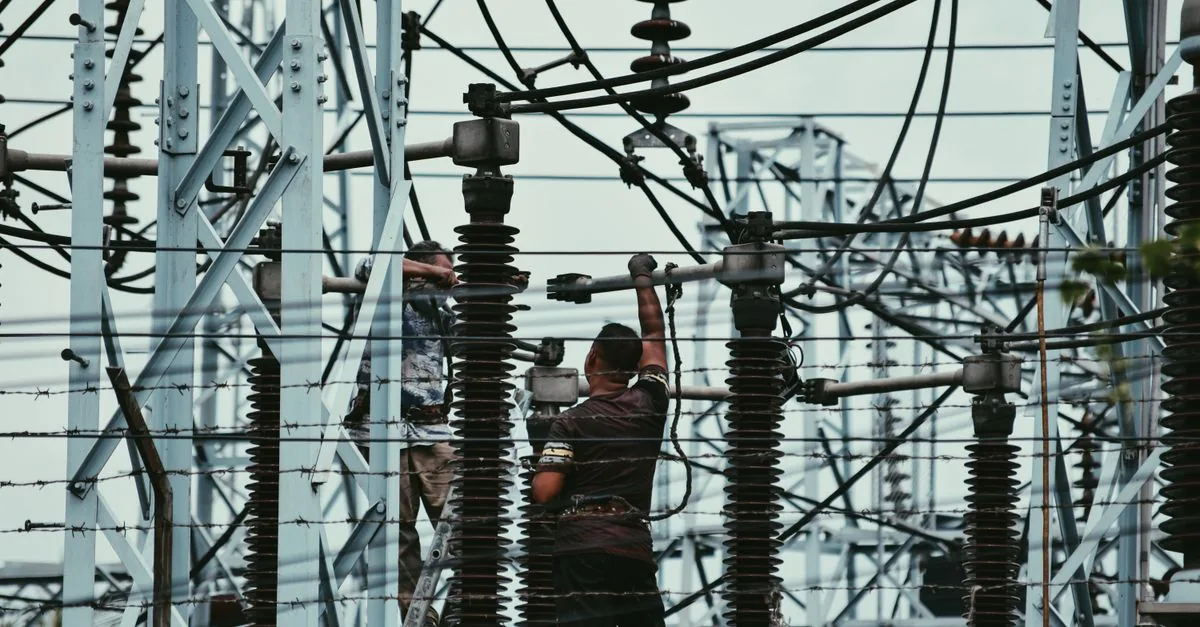
The distribution board — the row of switches in a box by your front door — is the part of a home's electrics that everyone can see and almost nobody understands. It is also the part that decides whether a fault becomes an inconvenience or a fire.
Two jobs get confused here constantly. Replacing one MCB that has failed is a small, cheap task. Replacing the whole board is a different job with different money, and it is usually done for one of three reasons: the board is old and unsafe, you are adding load the board was never designed for, or — most importantly in Delhi's older flats — there is no earth-leakage protection at all.
A note on these numbers. XpertWorker is a marketplace, not a service company. We do not set any professional's price and we never charge you a paisa. Every figure below is an indicative market range collected from what independent electricians in Delhi NCR generally charge — a guide to help you judge a quote, not a quote itself.
In this guide
MCB and distribution board costs — Delhi NCR, 2026
These are labour figures for the work. Where a board is being replaced, the enclosure and the breakers themselves are bought separately and vary widely by brand.
| Job | Typical market range | What it usually includes |
|---|---|---|
| MCB replacement (per MCB) | ₹150–300 | Swapping one failed breaker. Priced per unit |
| New MCB / distribution board | ₹1,000–2,000 | A full board — the labour to fit and terminate it |
| Switchboard repair | ₹400–800 | A different job: the switch and socket plate on the wall, not the main board |
| Minor repair (switch / socket / fuse) | ₹150–300 | The smallest electrical call-out |
| Concealed wiring (per point) | ₹300–500 | If the upgrade needs new circuits run |
| Full house wiring — 2BHK (labour) | ₹25,000–55,000 | For context — the job a board upgrade is sometimes the first sign of |
Indicative Delhi NCR market ranges, 2026. Each professional sets their own charge and quotes you free before starting. Parts are normally billed on top of labour.
Want a real quote for your own job?
Get free quotesMCB, RCCB, ELCB — what each one protects
These are not interchangeable, and most Delhi flats built before the mid-2000s have only the first. That gap is worth understanding.
| Device | What it protects | What it does NOT do |
|---|---|---|
| MCB | The wiring, from overload and short circuit | Does not protect a person. It trips on current, and the current that kills you is far below the level that trips an MCB |
| RCCB / RCD | People. Detects current leaking to earth — through a person, or a wet wall — and cuts in milliseconds | Does not protect against overload; it works alongside MCBs, not instead of them |
| Isolator / main switch | Lets you kill power to the whole board | No automatic protection at all |
The practical point: an MCB will not save someone touching a live geyser body. An RCCB will. If your board has no RCCB — and many older Delhi boards do not — that is the single most worthwhile electrical upgrade in the flat, and it matters most in bathrooms and kitchens where water and electricity share a room.
When a board genuinely needs replacing
- There is no RCCB. The strongest reason of the lot, particularly with a geyser, a washing machine, or children in the house.
- Rewireable fuses instead of breakers. If your board has porcelain fuse carriers with fuse wire, it belongs to a different era of electrical safety and should be replaced.
- Signs of heat. Browning around a breaker, a burnt smell, or a board that is warm to the touch. Do not wait on this one.
- No spare ways. Every slot used and you want to add an AC or a geyser circuit. Adding load to an existing circuit rather than a new way is exactly how overloading starts.
- Nuisance tripping that a good electrician cannot trace to a specific appliance — sometimes the breakers themselves are simply old and weak. Our guide to a tripping MCB covers the diagnosis first, because most tripping is a fault on the circuit rather than a bad breaker.
What is not a reason: an electrician who suggests a whole new board on a first visit for one tripping breaker, without testing which circuit is at fault. That is the upsell to watch for here — the same pattern as our wiring replacement guide describes.
What a properly done board looks like
- Circuits labelled. Every way marked for what it feeds. This costs nothing and is invaluable at 11pm.
- Correct ratings, not "bigger is better". A breaker must match the cable it protects. Fitting a larger MCB to stop nuisance tripping removes the protection instead of fixing the fault — it is the most dangerous shortcut in domestic electrics.
- Proper earthing. An RCCB depends on a sound earth. Ask whether the earth was tested, not assumed.
- Tight terminations. Most board failures are loose connections heating up over months. A professional torques them and often re-checks after a few weeks.
- The RCCB tested with its test button before they leave, in front of you.
- Separate ways for heavy loads. AC and geyser on their own circuits, not shared with sockets.
Need an Electrician professional?
Get free quotes from independent, local professionals near you. XpertWorker never charges you — you pay the professional directly.
Get free quotes →Frequently asked questions
How much does it cost to replace an MCB in Delhi?
What is the difference between an MCB and an RCCB?
Do I need to replace my whole distribution board or just one MCB?
My MCB keeps tripping — does that mean it is faulty?
Is it worth adding an RCCB to an old Delhi flat?
Does XpertWorker do the electrical work or set the price?
How we put this guide together
The ranges in this guide are indicative market rates compiled from real jobs across Delhi NCR and reviewed by the XpertWorker pricing desk. They are not quotes, and they are not our prices — every independent, local professional sets their own charge and quotes you free before any work starts.