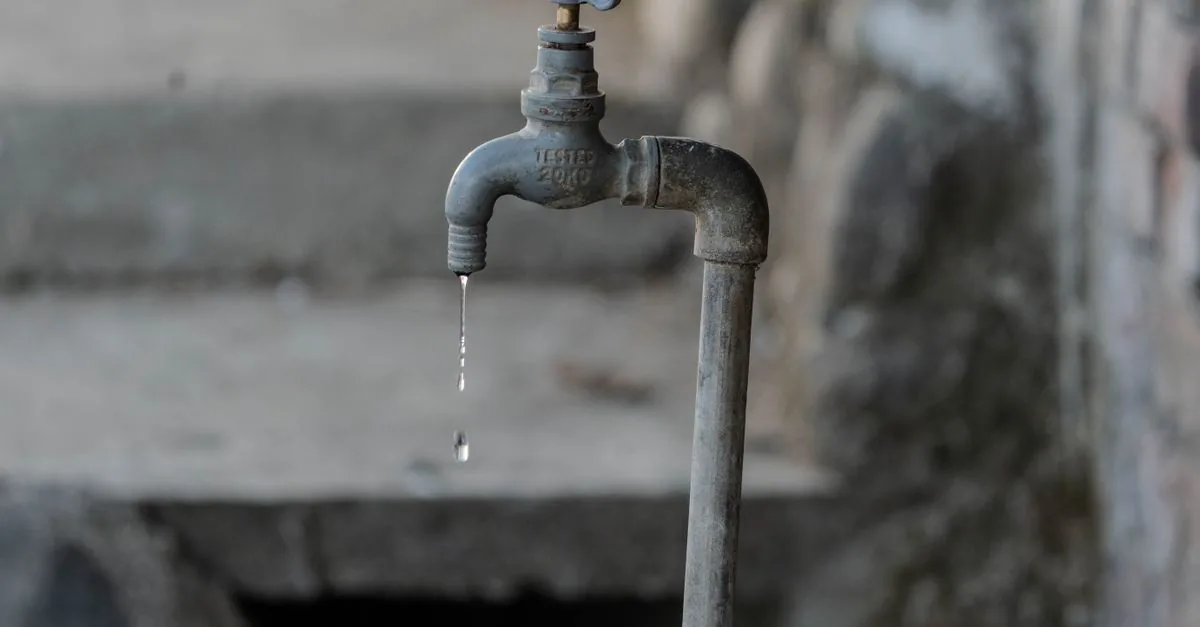
A tap that drips after you close it, or a handle you have to keep turning harder and harder, has a worn sealing part inside it. The tap body itself is almost never the problem. Which part it is depends on whether your tap turns through several rotations, snaps shut in a quarter turn, or lifts and swivels on a single lever — and this guide sorts that out first, because the repair is different for each.
Delhi is unusually hard on taps. The water carries a lot of dissolved mineral, and every time a tap is closed, that mineral grinds against a rubber washer or a ceramic disc like fine sand. It is the reason taps here need attention every couple of years rather than every ten.
A note first. XpertWorker is a marketplace, not a service company. We do not set any professional’s price and we never charge you a paisa. Every professional quotes you free before starting, and you pay them directly.
In this guide
First: which kind of tap do you have?
Turn the handle and count. This one observation decides the whole repair.
- It turns several full rotations to open and close. This is a traditional compression tap, and inside it is a rubber washer pressed onto a brass seat. Cheap parts, easy repair, and the classic cause of an ordinary drip. Most older Delhi bathrooms and almost every terrace, garden and utility tap is this type.
- It opens fully in a quarter turn and stops with a definite click. This is a quarter-turn tap with a ceramic disc cartridge inside. Two polished ceramic discs slide across each other to open and close. There is no washer to change — the cartridge is replaced as a unit.
- One lever that lifts for flow and swings for temperature. A single-lever mixer, with a larger ceramic cartridge that handles both. Same idea, bigger part, and the part is usually specific to that make and model.
- Two handles feeding one spout, wall-mounted, with a diverter. A wall mixer. Each handle has its own cartridge or washer, and the diverter that switches between spout and shower has its own separate mechanism — which is very often the thing actually leaking.
Knowing your type also tells you whether spares are likely to be available. Compression washers are generic and universally available. Ceramic cartridges are usually brand-specific, and for a discontinued model the part can be the reason a tap gets replaced instead of repaired.
Want a real quote for your own job?
Get free quotesWhere is it leaking from? That tells you which part failed
There are only three places a tap leaks, and each one points at a different part.
1. Drips from the spout when the tap is closed.
The sealing part is not sealing. On a compression tap that is the washer, perished or split, or the brass
seat underneath it — which in Delhi water gets pitted and rough, so a brand-new washer starts
leaking again within weeks unless the seat is re-cut or replaced. This is why a tap that was “just
repaired” drips again: the washer was changed and the seat was not. On a quarter-turn or lever tap,
a spout drip means the cartridge is worn or has grit or scale caught between the discs.
2. Water seeps out around the handle or the base when the tap is running.
Not the washer. This is the gland or O-ring seal around the moving spindle, or on a lever mixer the
cartridge’s outer seals. Sometimes a gland nut has simply worked loose. Either way it is a
different part from the one that stops the spout dripping, so tell whoever comes exactly which it is.
3. Water comes out from under the tap, at the wall or the counter.
That is a connection, not the tap mechanism: a loose union, failed sealing tape on the thread, or a
cracked flexible connector hose under a basin. Flexible hoses are a common failure and are simply
replaced. This is also the one to take seriously in a flat, because it is quietly wetting a cupboard or a
wall rather than dripping visibly into a basin.
And one that is not a leak at all: if the tap is not dripping but the flow has gone weak or sprays sideways, the aerator on the nose of the spout is clogged with scale. Unscrew it, soak it in vinegar, rinse and refit — free, and it is the single commonest “my tap is broken” that is not a fault. Our low water pressure guide covers the wider version of that problem.
What you can safely check yourself first
None of this needs tools you do not have, and all of it is free.
- Close it gently and see if it stops. Many drips are a tap that is not fully closed because scale is holding it slightly open. Closing hard is not the answer — that is what destroys the seat. Try opening it fully once, letting it run for a few seconds to flush grit through, then closing it normally.
- Clean the aerator. Unscrew the mesh at the tip of the spout, soak it in white vinegar for an hour to dissolve the scale, rinse and refit. Do this on every tap in the house once or twice a year in Delhi.
- Look underneath with a torch. Dry the area under the basin completely, put a piece of newspaper down, and check it an hour later. This tells you whether you have a tap problem or a connection problem, which are different jobs.
- Find your isolation valve now, not later. Most modern basins have a small valve on the pipe just below the tap. Knowing where it is means you can stop a leak instantly rather than shutting off the whole flat. If there is no isolation valve, the flat’s main valve is the fallback — find that too.
- Note the make and model. The brand name is usually on the handle or the spout. If a cartridge is needed, a plumber who knows the make before arriving is far more likely to have the part on the first visit.
Beyond this, opening up a tap is genuinely fiddly. Handles are held on by a screw hidden under a cap, the headwork can be seized solid with scale, and forcing it cracks the tap body — turning a small part into a whole new tap. That is the point at which it is worth paying someone.
What a plumber will actually do
So you can follow along, and judge whether the work matches the quote.
- Shut off the supply at the isolation valve or the flat’s main valve, and open the tap to drain the pressure out of the line.
- Take the handle off. Prise off the decorative cap, remove the screw beneath it, and lift the handle. On a scaled-up Delhi tap this is often the hardest part of the whole job.
- Unscrew the headwork or cartridge with a spanner. This is where a seized tap either comes apart cleanly or does not.
- Compression tap: replace the washer, then check the seat. A good plumber runs a finger or a tool over the brass seat and, if it is pitted, re-cuts it with a seat-dressing tool or fits a seat insert. If they skip this in Delhi, the drip comes back.
- Ceramic tap: replace the cartridge with the matching part, clean the housing of scale, and check the seals. Ceramic cartridges are not serviceable; they are swapped.
- Wall mixer: the same, plus the diverter mechanism if the leak was between spout and shower.
- Reassemble, restore the supply slowly, and test at full flow — both for the drip and for seepage around the handle, which is a different seal.
Two questions worth asking: “did you check the seat, or only the washer?” on a compression tap, and “is this the matching cartridge for this make?” on a ceramic one. A generic cartridge forced into a branded mixer is the usual reason a repair fails within months. Our tap and mixer repair guide covers what drives the cost of this work.
When is a new tap the honest answer?
Repair is usually right, but not always. Replacement is genuinely the better call when:
- The cartridge is not available. A discontinued model, or an unbranded tap with no spares, leaves nothing to fit. Adapting the wrong part is worse than replacing.
- The body is cracked or the chrome is flaking. Once the plating lifts, the tap will keep looking and feeling rough however well the inside works.
- The threads inside are stripped from previous over-tightening. Nothing will seal reliably.
- It has been repaired twice already in two or three years. At that point you are paying for visits, not parts.
- You are changing the fitting anyway — a basin swap, a bathroom refresh, or moving from two handles to a single lever.
If you are replacing, choose for Delhi water rather than for looks alone: our guide to choosing bathroom fittings covers what survives hard water and what to prioritise. And a genuinely dripping tap is worth fixing promptly for its own sake — in a city where the supply runs only a few hours a day and everything depends on a stored tank, a constant drip drains the tank you paid to fill. Our water saving plumbing tips cover the rest of that.
Need an Plumber professional?
Get free quotes from independent, local professionals near you. XpertWorker never charges you — you pay the professional directly.
Get free quotes →Frequently asked questions
Why does my tap keep dripping even after the washer was changed?
How do I know if my tap has a washer or a cartridge?
My tap will not close fully. What is wrong?
Water is leaking from around the tap handle, not the spout. Is that different?
Why do taps fail so fast in Delhi?
Is it cheaper to repair a tap or replace it?
How we put this guide together
This guide is compiled from common Delhi NCR service patterns and reviewed by the XpertWorker team. XpertWorker connects you with independent, local professionals — we never charge you a paisa, and each professional sets their own price and quotes you free.