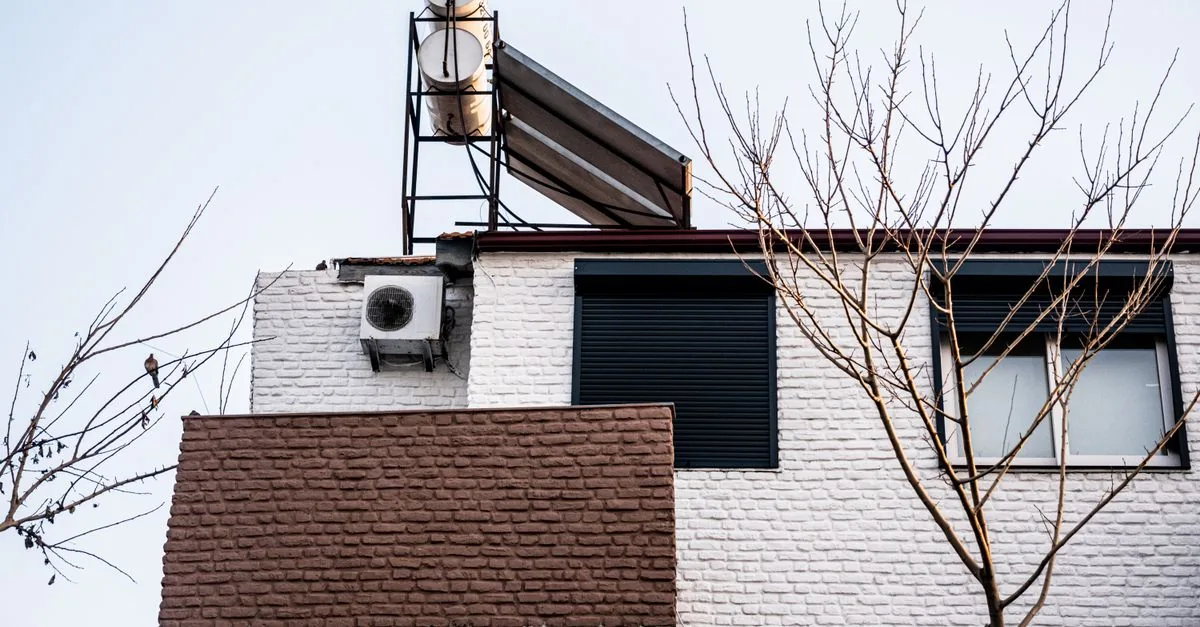
Winter in Delhi does not last long, which is exactly why people are unprepared for it. The geyser has not run since March, heaters come out of storage onto circuits already carrying a full load, and the instinct to shut every window collides with the smog months.
Most of this is a single afternoon in October or early November.
One note first. XpertWorker is a marketplace, not a service company. We do not set any professional’s price and we never charge you. When a job below needs a professional, you choose an independent local one who quotes you free and whom you pay directly.
In this guide
1. The geyser, before you need it daily
- Switch it on once in October and check it heats, holds and does not leak. Finding out on the first cold morning is how a small service becomes an urgent call-out at a bad rate.
- Look at the connection and the MCB. A geyser should be on its own circuit with its own breaker — our electrical upgrades tips cover why.
- Descale it if the water is hard. Delhi water scales the element, and a scaled element heats slowly and eventually fails. Our hard water tips cover the wider problem.
- Check the pressure release valve is not seized. It is a safety device, not a decoration.
- Any tingle from a tap or the geyser body is an earthing problem and a same-day item. Switch it off at the board.
- Switch it on twenty minutes before you need it rather than leaving it on all day — our geyser safety tips cover the running habits.
Want a real quote for your own job?
Get free quotes2. Heaters and the load they add
This is the genuinely risky part of a Delhi winter, because room heaters draw heavily and often get plugged into whatever socket is nearest.
- Never run a heater off an extension board or a multi-plug. Straight into a properly rated wall socket. Extension leads are where winter electrical fires start.
- Check the socket after ten minutes of use. If the plate or the plug is warm, stop and get it looked at — our socket guide covers what warmth means.
- Do not run a heater and a geyser on the same circuit. That combination trips MCBs, and repeated tripping is a load problem rather than a faulty breaker — see our tripping guide.
- Keep curtains, bedding and clothes well away from any radiant or halogen heater, and never dry clothes over one.
- Never leave a heater running overnight in a closed room, and never use a gas or coal heater indoors without ventilation. This is the one non-negotiable item on this page.
- Inspect the cord before first use. Storage damage and rodent damage both happen, and a frayed heater cord is not a small problem.
3. Condensation, damp and the smog months
- Cold outside walls attract condensation, and that is what causes the black spots that appear behind wardrobes and in corners over winter. Pull furniture a few inches off outside walls so air can move.
- Do not dry clothes indoors in a closed room. It puts litres of water into the air, and in winter that water condenses on the coldest surface in the flat. If you must, open a window in that room.
- Run bathroom and kitchen exhausts even in the cold. The moisture has to leave.
- Ventilate on the better days. The instinct to seal everything against smog collides with needing to clear cooking fumes and moisture — the compromise is timing, and our air quality tips cover it.
- Change air purifier filters more often through the smog months. They stop working long before they look full.
- Watch for damp appearing in a new place. Winter is when seepage from the monsoon finally shows — our seepage guide covers tracing it.
4. Winter is the right season for these jobs
The dry, mild months are when several jobs are both easier and cheaper, and you are not competing with everyone else.
- Painting. October to March is the window — paint needs dry air to cure. See our timing guide and the preparation tips.
- Waterproofing. Needs a dry surface, so now rather than during the next monsoon — our terrace guide covers it.
- Rodent proofing. Rodents move indoors as it gets colder, so this is the season to seal the gaps — our rodent guide explains why proofing is the job.
- AC servicing. February or March, before the rush — not May in a hot room.
- Carpentry and door adjustment. Wood is at its driest now, so a door adjusted in winter will not turn out to have been swollen — our door care tips explain the seasonal trap.
- Cover or clean the AC outdoor unit if it will sit unused for months, and clear the indoor filters before storing for the season.
Need an AC & Appliance Repair professional?
Get free quotes from independent, local professionals near you. XpertWorker never charges you — you pay the professional directly.
Get free quotes →Frequently asked questions
What should I check on my geyser before winter?
Is it safe to run a room heater off an extension board?
Why do black spots appear on my walls in winter?
Which home jobs are best done in a Delhi winter?
How we put this guide together
This guide is compiled from common Delhi NCR service patterns and reviewed by the XpertWorker team. XpertWorker connects you with independent, local professionals — we never charge you a paisa, and each professional sets their own price and quotes you free.