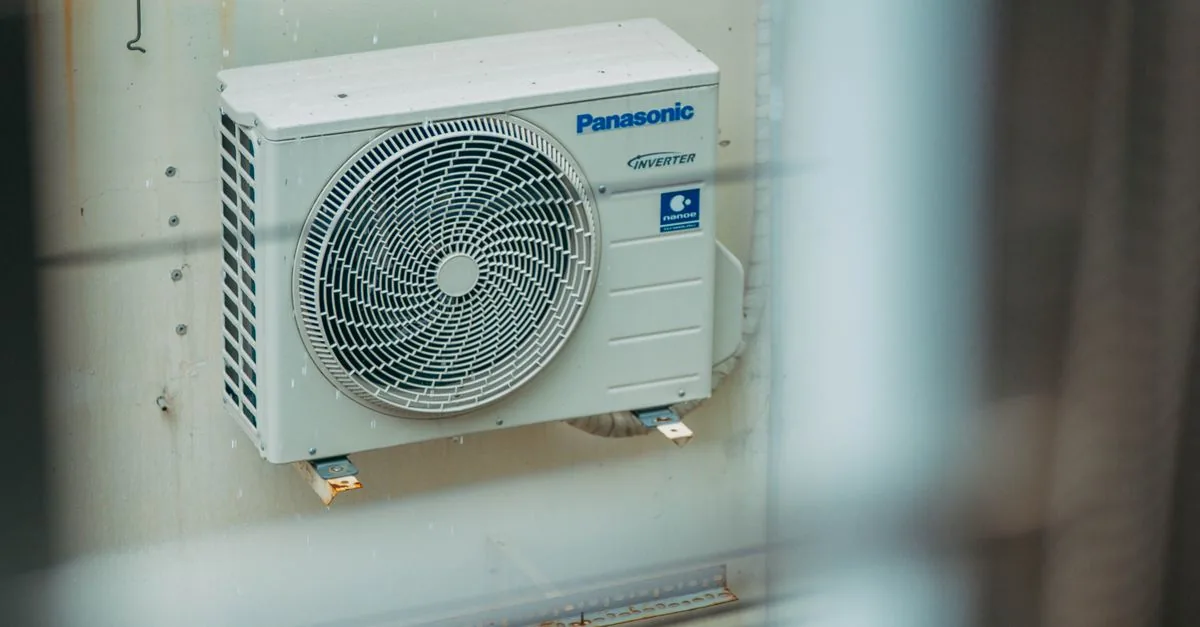
Most people spend weeks choosing the AC and ten seconds deciding where the outdoor unit goes. Usually it goes wherever the installer says the bracket will fit, which is usually wherever is quickest.
That is a mistake, because the outdoor unit is where the heat actually leaves your home. An air conditioner does not create cold. It moves heat out of your room and dumps it into the air outside. If the outdoor unit cannot get rid of that heat — because it is boxed into a balcony, jammed against a wall, breathing its own hot exhaust, or baking in a sealed shaft — then the machine runs longer, cools less and costs more to run, and no repair will fix it.
This page is for anyone installing a new AC, shifting one, or wondering why a perfectly good unit underperforms every afternoon. It covers clearances, the placements that Delhi flats push you into, vibration reaching the neighbours, and the pipe and drainage details worth settling before the drilling starts.
A note first. XpertWorker is a marketplace, not a service company. We do not set any professional’s price and we never charge you a paisa. Every professional quotes you free before starting, and you pay them directly.
In this guide
What does an outdoor unit actually need?
Four things, in this order of importance. Get these right and almost everything else is detail.
- 1. Free air in, free air out. The unit pulls air through the coil on its back and sides and blows it out of the fan at the front. Both paths need to be clear. Keep generous space at the front for the discharged air — a foot is a common minimum, more is better — and a comfortable gap behind and at the sides. Space above matters too if the fan blows upwards.
- 2. It must not re-breathe its own hot air. This is the failure nobody notices. If the fan blows into a wall a short distance away, that hot air bounces straight back into the intake, and the unit is now trying to cool a room using air it has already heated. It will run continuously and never quite win, particularly in the afternoon.
- 3. A solid, level mounting. Either a wall bracket rated for the weight or a floor stand on a firm surface. The unit should sit level, because the compressor and the drainage both prefer it, and it should not be able to rock.
- 4. Reachable for servicing. Whoever cleans it has to be able to open the top, wash the coil and get water off it. An outdoor unit hanging over a four-storey drop with no safe access will either not get serviced or will get serviced badly, and in Delhi’s dust an unwashed condenser is the beginning of most cooling complaints.
Shade is a real bonus, but it comes fifth, and it never justifies breaking rule one. A shaded unit in a sealed box performs worse than an exposed unit in open air. If you can shade it without enclosing it — a raised awning that does not touch it, or the shadow of the building itself — take it.
Want a real quote for your own job?
Get free quotesThe usual Delhi placements, and what goes wrong with each
Most homes here have three or four possible spots, and each has a known failure mode.
- Inside a covered or grilled balcony. Extremely common and often the worst choice. Once a balcony is enclosed with glass, mesh or a tight grille, the hot air the unit throws out has nowhere to go, the balcony becomes an oven, and the AC quietly loses a chunk of its capacity every afternoon. If this is your only option, leave the largest possible opening in front of the fan and never store boxes or cycles around it.
- In a light or ventilation shaft. Convenient in older Delhi buildings and dense in problems: several units in one narrow shaft all dumping heat into the same still column of air, with the units near the top suffering most. Noise also echoes badly in a shaft, which is where a lot of neighbour complaints begin.
- On a wall bracket outside the window. Usually the best performer, because the air is genuinely open. The trade-offs are vibration transmitted into the wall, the road dust it will collect, water dripping onto whatever is below, and the safety of anyone who has to service it from a window ledge.
- On the terrace or roof, on a stand. Good airflow and easy servicing, but a top-floor unit standing in full sun on a hot roof is working against the harshest conditions in the building. A raised shade that leaves the airflow untouched genuinely helps here.
- At ground level in a stilt, side lane or corner. Easy to service and cool, but exposed to dust, water splash and interference. Keep it off the ground on a low stand, out of the path of hosing and water tankers, and where a stray parked vehicle cannot block the airflow.
Vibration, noise and the neighbour problem
An outdoor unit makes two kinds of noise. The air noise you hear standing next to it, which placement barely changes, and the vibration it feeds into the structure, which placement changes completely. In Delhi flats with shared walls, the second one is what starts arguments.
- Anti-vibration pads matter more than people think. Rubber grommets or pads between the unit’s feet and the bracket or stand break the path that carries compressor vibration into the wall. They are a small part of any installation and they are the difference between a hum you notice in the next room and one you do not.
- A floor stand on a slab is usually quieter than a wall bracket. A wall is a large flat surface that carries and amplifies vibration through the building. Where a terrace, ledge or balcony floor is available, standing the unit on it tends to transmit less.
- Do not mount it on a bedroom wall — yours or theirs. The obvious spot outside a bedroom window is the one most likely to be regretted at two in the morning. Choose a wall backing onto a passage, kitchen or utility area if you have the choice.
- Point the fan away from the neighbour’s window. Hot air blown directly at somebody else’s window is both a nuisance and a fair complaint, and in shafts and narrow gaps between blocks it is a common one.
- Check your society’s rules before install day. Many RWAs and condominium associations in Noida, Gurgaon and Delhi have rules about where units may be mounted on a facade, how they are hidden, and where the water may drip. Finding this out afterwards means paying to move it.
If an already-installed unit has become noisy rather than always having been, that is a different problem — a loose panel, a worn fan bearing or a failing mount — and our guide on an AC making a loud noise walks through the sounds and what they mean.
Pipe length, height difference and where the water goes
These three details are settled by where you put the unit, and they are hard to change later.
- Keep the copper run short and simple. The indoor and outdoor units are joined by copper pipes, and every extra metre and every extra bend costs some efficiency. Manufacturers specify a maximum length for a reason. A long run also costs more on install day, since extra copper is charged separately.
- Mind the height difference. There is a limit to how far above or below the indoor unit the outdoor unit can sit, and oil return to the compressor depends on it. If you are putting the outdoor unit on the terrace of a two-storey house with the indoor unit on the ground floor, ask the installer to check the model’s permitted height difference rather than assuming it is fine.
- Insulation on the copper is not optional. In Delhi’s humidity, bare or badly wrapped pipe sweats heavily, drips down the wall and stains it, and loses cooling on the way. Insist on proper insulation on the full run, including the section outside.
- Decide where the indoor unit’s drain water will go. That pipe has to fall continuously all the way to its outlet. A drain line that runs flat or dips will hold water, silt up with Delhi dust, and eventually back up into the room. Where the outdoor unit sits often decides how that pipe is routed, so raise it before the wall is drilled.
- And where the outdoor unit’s own water will go. The outdoor unit sheds water too, especially in the monsoon. If it drips onto a neighbour’s window ledge, a parked car or a walkway, you will hear about it. A short drain elbow and a length of pipe on install day prevents a long-running dispute.
The costs of the install itself — the bracket, the extra copper, the drilling — are set by the installer, not by us. Our guide on AC installation and uninstallation charges sets out what drives each line so you can read a quote properly.
What to settle before install day — and what not to do yourself
Have this conversation before anyone starts drilling, because moving an outdoor unit afterwards means fresh holes, fresh copper and a second bill.
- Walk the installer to the spot and ask for the clearances. Ask what gap the unit will have at the front, behind and above, and whether the hot air has anywhere to go. A good installer will happily discuss it.
- Ask what the bracket is rated for and how it is fixed. The unit is heavy, it vibrates, and it will hang there through monsoon and summer for years. Rusted or undersized brackets on old Delhi facades are a genuine hazard.
- Ask for anti-vibration pads by name. If they are not mentioned in the quote, ask whether they are included.
- Ask how it will be serviced. If the honest answer is that someone will have to lean out of a window, reconsider the position now rather than in four summers.
- Confirm the drain routes for both units. Where the water leaves, and where it lands.
One firm line: do not mount, move or unmount an outdoor unit yourself. It is heavy, it hangs at height, the copper lines hold pressurised refrigerant that has to be pumped down properly before anything is disconnected, and the electrical connection is a professional’s job. If you are moving house, our guide on AC shifting charges explains what a proper shift involves.
Finally, wherever it ends up, the outdoor unit needs cleaning. In this city the condenser fills with fine dust every season, and a dust-caked unit is the usual reason an AC cools at night but gives up in the afternoon. Placement that makes cleaning easy is placement that keeps working.
Need an AC & Appliance Repair professional?
Get free quotes from independent, local professionals near you. XpertWorker never charges you — you pay the professional directly.
Get free quotes →Frequently asked questions
How much space does an AC outdoor unit need around it?
Can I put the AC outdoor unit inside a covered balcony?
Should the AC outdoor unit be in shade or in the open?
How do I stop my AC outdoor unit from vibrating the wall?
Does the distance between the indoor and outdoor unit matter?
Can I move my AC outdoor unit myself?
How we put this guide together
This guide is compiled from common Delhi NCR service patterns and reviewed by the XpertWorker team. XpertWorker connects you with independent, local professionals — we never charge you a paisa, and each professional sets their own price and quotes you free.