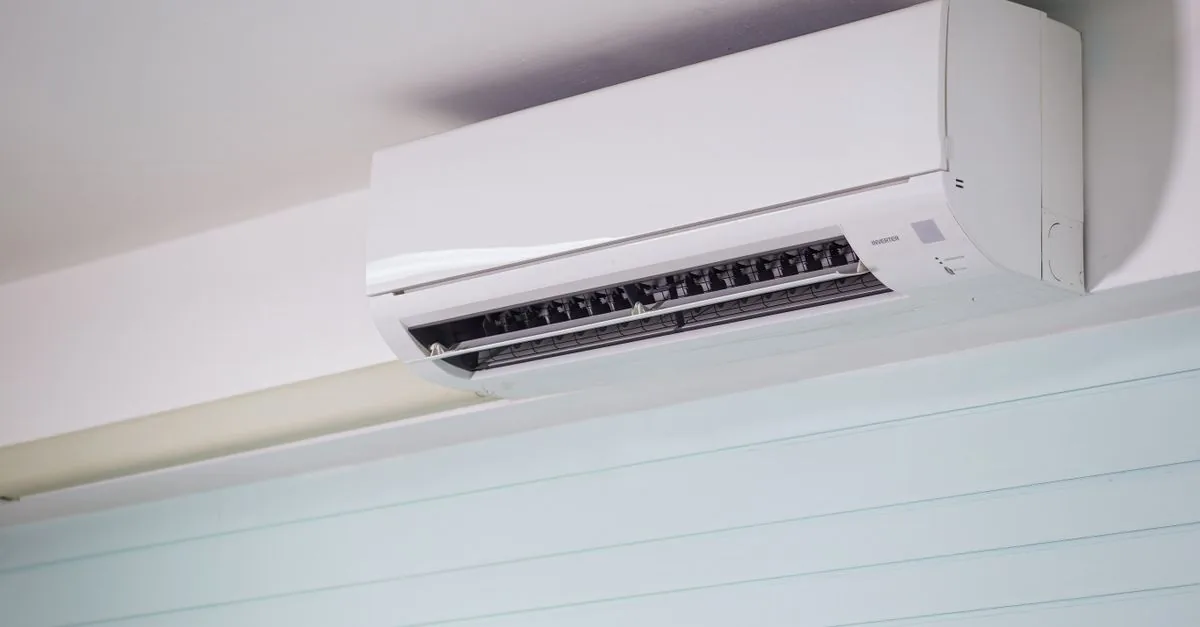
The smell usually arrives in the first minute after start-up, fades a little, and comes back every time the unit rests and restarts. People describe it as musty, sour, like a wet towel left in a bag, or like old socks. It is not your imagination and it is not something you have to live with.
An air conditioner pulls water out of the air. That water sits on the cold indoor coil and drips into a small tray under it. Add Delhi’s fine grey dust, which lands on that wet coil every day the unit runs, and you have damp grime sitting in the dark. Damp grime smells. That is the whole mechanism, and almost every fix on this page is about removing it or drying it out.
Below: what each kind of smell points to, the checks that cost nothing, why Delhi flats get this worse than most, and the one smell that means switch off immediately.
A note first. XpertWorker is a marketplace, not a service company. We do not set any professional’s price and we never charge you a paisa. Every professional quotes you free before starting, and you pay them directly.
In this guide
What does the smell actually tell you?
The kind of smell narrows the cause down fast. Match yours to the list below before you touch anything.
- Musty, damp, like a wet cloth. The commonest one by far. Damp dust and slime on the indoor coil, in the drain tray, or inside the blower wheel. It is worst on start-up because the fan pushes the trapped air out of the unit first.
- Sour or vinegary. Same cause, further along. The tray or drain line is holding standing water that is not draining away, so the water has gone stale.
- Sewer-like or drain-like. Look at where the drain pipe ends. If someone has pushed the AC drain into a floor trap or a waste line without a proper gap, smells travel back up the pipe into the room.
- Cigarette smoke, cooking, or last night’s food. The coil and filter have absorbed it. Common in kitchens-adjacent bedrooms and in flats where someone smokes indoors. It needs a wash, not a repair.
- Burning, hot plastic, or an electrical smell. Different category entirely. Switch the unit off at the MCB and read the safety section below before you run it again.
Note what is not on this list: refrigerant. A smell is almost never a gas problem, and a gas refill will not fix any of the causes above.
Want a real quote for your own job?
Get free quotesWhat to check yourself before calling anyone
These take about fifteen minutes, cost nothing, and clear up a good share of smell complaints in Delhi homes. Switch the AC off at the wall before you open anything.
- 1. Pull the filters and smell them. Lift the front flap of the indoor unit and slide out the mesh filters. If the smell is on the filters, you have found most of your problem. Rinse them under a running tap until the water runs clear, let them dry completely in the shade, and refit them. A damp filter put back wet makes the smell worse, not better.
- 2. Find the outdoor end of the drain pipe and watch it. With the AC running on cooling for twenty minutes, water should be dripping steadily out of that pipe. If nothing comes out, the line is blocked and water is standing inside the unit. That standing water is the sour smell.
- 3. Look into the indoor unit with a torch. With the flaps open you can usually see part of the aluminium coil behind the filters. If the fins look furred with grey-brown grime rather than clean metal, that is what you are smelling. Do not poke it — the fins bend at a touch and a bent coil cools worse.
- 4. Run fan-only mode for ten minutes before you switch off. This is the single best habit for prevention. Cooling stops, the fan keeps running, and the coil dries instead of sitting wet all night.
If the filters were filthy and the smell goes after a wash, you are done. If the filters were reasonably clean and the smell is unchanged, the grime has moved deeper into the coil and the blower wheel, and that is a wet job for someone with the right equipment.
Why Delhi ACs smell worse than most
Three things stack up here, and together they explain why this complaint peaks in July and August across Delhi NCR.
- The dust is constant and very fine. Construction, road dust and crop-burning season all put fine particles in the air. That dust does not just sit on the filter — enough of it gets past to settle on a permanently wet coil, where it turns into a paste that ordinary filter cleaning cannot reach.
- The monsoon turns everything damp. From late June the outdoor air is heavy with moisture, so the unit condenses far more water than it does in dry May heat. More water on a dusty coil, in a warm dark box, is exactly the condition that grows the smell.
- The drain line silts up. Delhi AC drain pipes are thin and often run flat rather than sloping down. Dust that washes off the coil settles in the pipe, algae grows in the monsoon, and the line narrows until water sits in the tray permanently instead of running out.
There is a fourth, quieter one in older flats and rented homes: a unit that has never had a proper deep clean. Routine servicing in this city very often means a wipe and a filter rinse. That keeps cooling acceptable but leaves the coil and the blower wheel untouched for years, and those are the parts that hold the smell.
A burning or electrical smell is different — switch it off
Stop reading the rest of the page and switch the unit off at the MCB. A smell of hot plastic, burning insulation or scorched wiring is not a cleaning problem. It usually means something electrical is overheating — a connection, a winding, a capacitor, or the control board on an inverter unit.
- Switch off at the wall socket or the dedicated MCB for the AC, not just at the remote. The remote only puts the unit to sleep.
- Do not open the electrical side, do not remove covers to “have a look”, and do not work on wiring yourself. Live circuits are a professional’s job, always.
- Do not switch it back on to test whether the smell is still there. Repeated runs are how a small overheating fault turns into a larger one.
- If the same circuit also trips, treat it as urgent and read our guide on the AC that trips the MCB before anyone reconnects it.
One harmless exception worth knowing: the very first run of the season often smells of hot dust for two or three minutes, because dust has settled on warm internal parts over winter. If it clears quickly and does not return, it was just that.
What a professional actually cleans — and what to ask for
If washing the filters did not fix it, what you need is a deep clean of the indoor unit with water, not a dry wipe. Ask for it by name when you book, because a standard quick service usually will not include it.
- A jet or foam wash of the indoor coil. The technician bags the unit with a waterproof sheet that channels the dirty water into a bucket, then pressure-washes the fins. This is the part that actually removes the smell.
- The blower wheel. The long drum-shaped fan behind the coil collects a thick felt of dust in its blades, and it is one of the biggest smell sources. Ask specifically whether the blower will be cleaned — many quick services skip it because it takes time.
- The drain tray and the full drain line. Flushed through, not just glanced at, and the outdoor end checked for a free drip.
- The drain pipe slope and route. If the line runs flat or has a dip in it, water will always stand. Re-routing it is a small job that permanently ends a recurring sour smell.
Two things to be careful about. First, be wary of a strong chemical spray offered as the cure on its own — a scented spray on a dirty coil masks the smell for a few days and changes nothing. Second, a smell is not a reason for a gas refill; if that is offered, it is unrelated to the complaint. Our guide on AC gas refill in Delhi NCR explains why refrigerant is not consumed in a sealed system.
Once the unit is clean, keeping it that way is mostly habit: rinse the filters often, run fan mode before switching off, and get the deep clean before summer rather than during it. Our AC filter cleaning tips cover the routine part, and the AC service cost guide sets out what drives the price of a full service so you can judge a quote.
Need an AC & Appliance Repair professional?
Get free quotes from independent, local professionals near you. XpertWorker never charges you — you pay the professional directly.
Get free quotes →Frequently asked questions
Why does my AC smell musty when I turn it on?
How do I get rid of the smell from my AC myself?
Is a bad smell from the AC a gas problem?
Why does my AC smell like a drain or sewer?
My AC smells like burning plastic. What should I do?
Does deep cleaning an AC remove the smell for good?
How we put this guide together
This guide is compiled from common Delhi NCR service patterns and reviewed by the XpertWorker team. XpertWorker connects you with independent, local professionals — we never charge you a paisa, and each professional sets their own price and quotes you free.