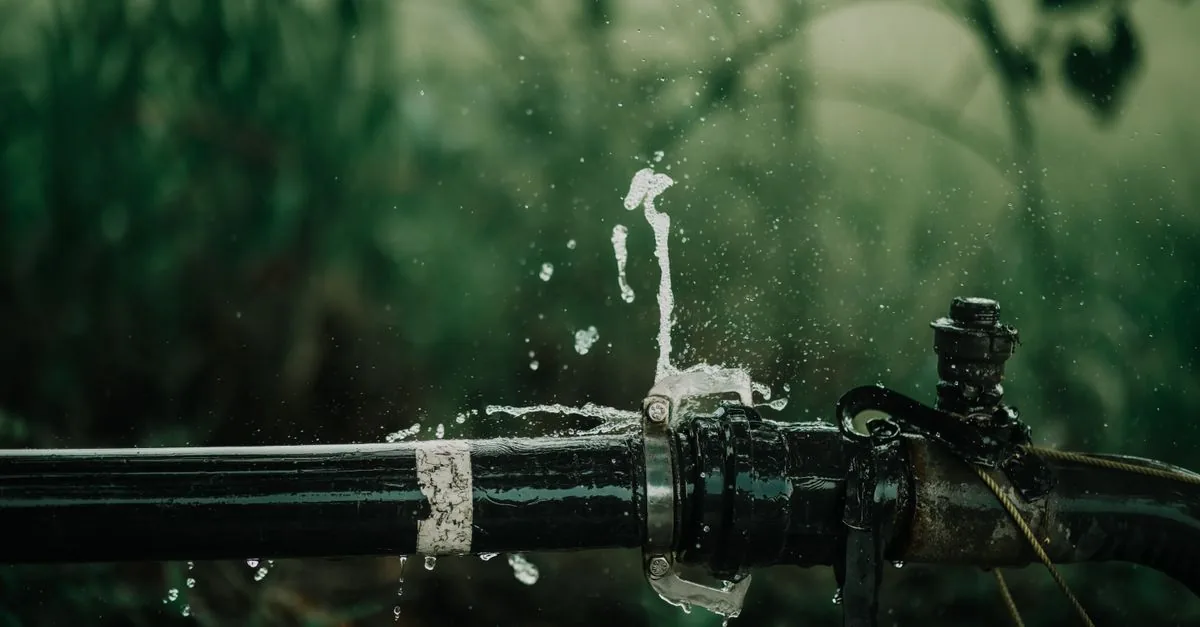
Water under the geyser, a wet patch on the wall beneath it, or a steady drip onto the bathroom floor. Before you accept a quote for a new unit, spend five minutes finding out which part is leaking. Three of the four common sources are ordinary repairs. Only one of them means the geyser has to be replaced.
Delhi makes this worse than it needs to be. The water here is hard, and years of mineral deposit inside a storage geyser eats the tank lining, coats the heating element and clogs the safety valve. Every one of the failures below is accelerated by that.
A note first. XpertWorker is a marketplace, not a service company. We do not set any professional’s price and we never charge you a paisa. Every professional quotes you free before starting, and you pay them directly.
In this guide
Do these three things before you look at anything
A geyser is a tank of hot water with an electric element inside it, mounted on a wall above a wet floor. Make it safe first.
- Switch it off at the MCB, not just the switch. Go to the distribution board and turn off the geyser’s breaker. Then leave it off. Do not open the geyser’s cover, do not touch the terminals, and do not work on it while it is connected — a wet electrical appliance is not a DIY job at any level of confidence.
- Close the inlet valve. There is a small valve on the cold-water pipe going into the geyser, usually right beside it. Turning it off stops fresh water refilling the tank, which stops the leak growing while you decide what to do.
- Look at where the water is actually coming from. Dry everything with a cloth, put a sheet of newspaper underneath, and watch for a few minutes. Newspaper shows you exactly where the first drops land, which is usually directly under the source.
Want a real quote for your own job?
Get free quotesWhere geysers leak from, and what each one means
Nearly every geyser leak is one of these five. Find yours before anyone quotes you.
1. The inlet or outlet pipe joint — the commonest, and the least serious.
The two pipes screwed into the top or side of the geyser are the first suspects. Threads work loose with
heating and cooling cycles, and the sealing tape on them dries out and fails. If the drip is at a joint
and the body is dry, this is a small repair: the joint is opened, cleaned, resealed and tightened. Often
it is the flexible connector hose rather than the geyser at all, and that is simply replaced.
2. The safety valve dripping — sometimes normal, sometimes not.
Every storage geyser has a pressure-relief or safety valve, usually with a small pipe pointing down. A
few drops while the water is heating are normal — water expands as it heats and the valve lets the
excess out. That is the valve doing its job. What is not normal is a continuous run, or a
constant drip when the geyser is cold and switched off. That usually means the valve is jammed open by
hard-water deposit, or the incoming pressure is too high. The valve is a cheap part and it is replaced,
never plugged or blocked.
3. The drain plug or drain valve at the bottom.
Loose, or its washer has perished. Usually a straightforward fix, but check it is not simply that
somebody opened it during a service and did not seat it back properly.
4. Around the element or thermostat cover.
A leak from the flange where the heating element enters the tank means the gasket has failed. It is
replaceable, but the element and gasket usually come out together, so it becomes an element job. Very
common on older units in hard-water areas.
5. From the body of the tank itself.
This is the end. If water is weeping from the seam, from a rusted spot, or from anywhere on the tank
that is not a fitting, the inner tank has corroded through. It cannot be welded or sealed usefully, and
any offer to patch it is a false economy — the pressure inside will find the next thin spot within
weeks. Replace the geyser.
Which geyser leaks are urgent?
Not every leak needs someone tonight. These do:
- Water reaching any electrical point. A socket, the switchboard, the geyser’s own connection, or water running down inside the wall towards them. Switch the circuit off at the MCB and stop using that circuit.
- A steady stream rather than a drip, and the inlet valve does not stop it. If closing the inlet valve does not slow the leak, the valve itself may be faulty. Shut the supply to that bathroom or the flat if you have to.
- Water is going into a neighbour’s ceiling. Hot water sitting on a bathroom floor finds the slab quickly, and in a high-rise the flat below will see it before you do. Fix it, then deal with the ceiling — our ceiling leak guide covers that side of it.
- Continuous discharge from the safety valve with the geyser off. Something is holding it open or the pressure is wrong. Do not block it — that valve is the geyser’s protection.
Everything else — a slow joint drip, a few drops from the safety valve while heating — can wait for a normal appointment. Our emergency plumber guide explains what actually changes when you call someone at odd hours, so you can judge whether it is worth it tonight.
Why Delhi water shortens a geyser's life
Most of the failures on this page have the same root cause. Delhi and NCR water is hard, meaning it carries dissolved minerals, and every litre heated inside a storage geyser leaves some of them behind.
- Scale coats the heating element. The element then has to run hotter and longer to do the same work, which stresses the tank and the element together. If the geyser is also heating slowly, our geyser not heating guide covers that side.
- Sediment collects at the bottom of the tank. It insulates the base, traps heat and moisture against the lining, and speeds up corrosion at exactly the spot where a leak eventually appears.
- The sacrificial anode rod gets used up. Most storage geysers contain a rod designed to corrode instead of the tank. In hard water it is consumed faster. Once it is gone, the tank starts corroding, and that is the leak you cannot fix.
- Deposits jam the safety valve. Which is why so many Delhi geysers drip from the valve after a couple of years.
What actually helps: get the tank flushed periodically by whoever services it, have the anode rod checked at service time and replaced if it is spent, and do not run the thermostat at maximum — hotter water deposits scale faster and there is no benefit to storing water hotter than you ever use. Our hard water tips cover the same problem across the rest of the house.
Repair it or replace it?
The honest rule is simple: fittings are repaired, tanks are replaced.
- Repair if the leak is at a pipe joint, a flexible hose, the drain plug, the safety valve, or the element flange gasket, and the tank body is dry. These are parts, and they are meant to be replaced.
- Replace if water is coming from the tank body or a rusted seam. There is no repair for a corroded tank that lasts.
- Think hard if the unit is old, has already had the element and thermostat replaced, and is now leaking at the flange. At that point you are rebuilding an old tank that will corrode anyway.
- Do not let anyone seal a tank leak with putty or a clamp and call it done. A geyser is a pressure vessel; a patched tank is a leak waiting to happen somewhere else.
If replacement is the answer, decide the type before you shop: our instant versus storage geyser guide covers which suits a Delhi flat, and the geyser installation guide covers what the fitting work involves — including whether your existing wall mounting and pipe positions can be reused, which is what makes one installation simpler than another. Ask any professional who quotes you: “where exactly is it leaking from, and can you show me?” Anyone recommending a new geyser should be able to point at wet metal on the tank body.
Need an Plumber professional?
Get free quotes from independent, local professionals near you. XpertWorker never charges you — you pay the professional directly.
Get free quotes →Frequently asked questions
Why is my geyser leaking water from the bottom?
Is it normal for a geyser safety valve to drip?
Can a leaking geyser be repaired or does it need replacing?
What should I do first if my geyser is leaking?
Why do geysers fail so quickly in Delhi?
Is a leaking geyser dangerous?
How we put this guide together
This guide is compiled from common Delhi NCR service patterns and reviewed by the XpertWorker team. XpertWorker connects you with independent, local professionals — we never charge you a paisa, and each professional sets their own price and quotes you free.