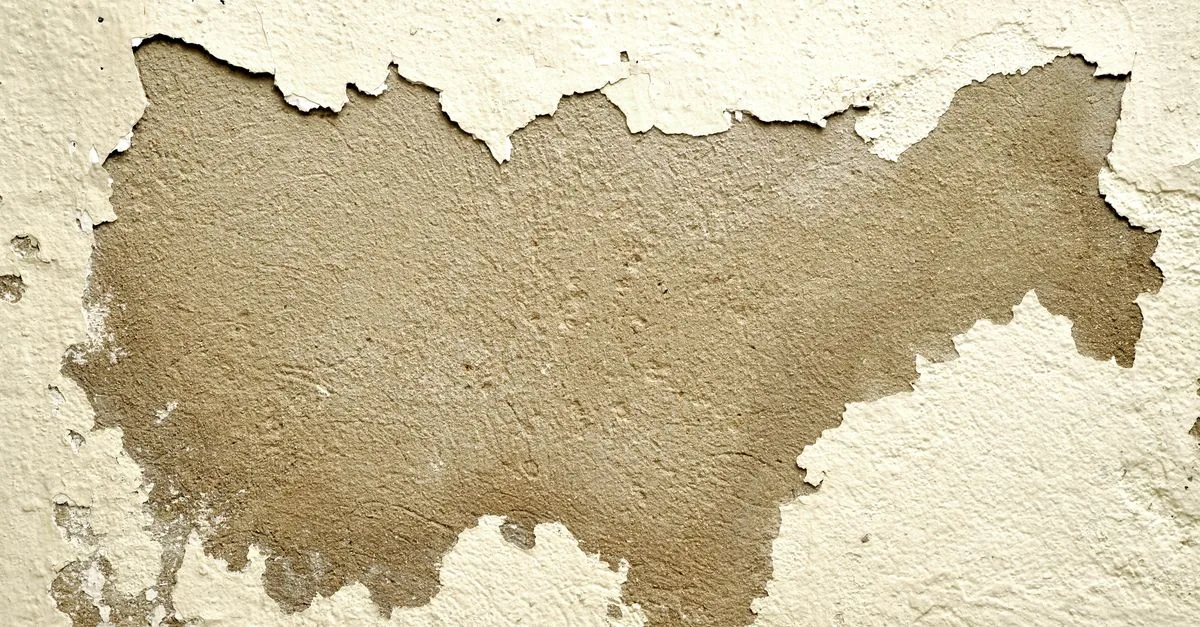
There are two completely different problems that both look like “cracks on my wall”. One is the plaster or the masonry cracking. The other is only the paint film cracking — the thin layer of coating sitting on top of a wall that is perfectly sound underneath. This page is about the second one.
Paint-film cracking has a few recognisable looks: a fine web of hairlines like a dried-up pond, called crazing; deeper cracks in a scaly pattern that people describe as crocodile or alligator skin, called alligatoring; and single hairlines that appear as a fresh coat dries. All of them come from the same basic situation — the layers of coating are moving at different rates, and the top one loses.
Delhi makes this worse than most places. A wall in May can be well above 45°C by afternoon, which means paint skins over on the surface while the body of it is still wet underneath. That alone causes cracking that would never happen in a mild climate. If your cracks run through the wall rather than the coating, read cracks in walls instead.
A note first. XpertWorker is a marketplace, not a service company. We do not set any professional's price and we never charge you a paisa. Every professional quotes you free before starting, and you pay them directly.
In this guide
Free checks: is it the paint or is it the wall?
Do these before you call anyone. They cost nothing, take ten minutes, and they decide whether this is a repainting job or a building job.
- The fingernail test. Run a fingernail across the crack, then try to lift the edge of it. If a flake of coating lifts, curls or comes away and leaves smooth sound plaster underneath, the crack is in the paint film. If your nail drops into a groove that continues into gritty plaster, the crack is in the wall.
- Does the crack follow a straight structural line? Stand back. Cracks that run in a straight line along a beam, down a column edge, diagonally up from a door or window corner, or along a buried pipe channel are wall cracks. Paint-film cracks follow no logic at all — they wander, branch and form a web across an area.
- Is it a patch or the whole wall? Paint cracking usually covers a whole panel or a whole wall fairly evenly, because the whole wall got the same coat on the same day. A wall crack is a line in one place.
- Look at the crack edges side-on. Get a torch and hold it almost flat against the wall. Paint-film cracks show as raised, curling scale edges catching the light. Plaster cracks are sunken.
- Count the layers. Pick a spot behind a door or a piece of furniture and scrape a small area with a coin. If you can see three, four or five different colours stacked up, you have a very old build-up, and that is a cause in itself.
- Press for hollowness. Tap the cracked area with a knuckle. A drummy, hollow sound means the plaster itself has come away from the wall, which is a different problem entirely — see wall bulging or bumpy.
Want a real quote for your own job?
Get free quotesCrazing and crocodile skin: a hard coat over a soft one
This is the commonest cause of cracking in Indian homes, and it is almost always a layering mistake made years ago. A hard, inflexible coating has been applied on top of a softer, more flexible one. The two move at different rates in the heat, the top coat cannot stretch, and it splits into that scaly crocodile-skin pattern.
- Emulsion straight over old distemper is the classic. Dry distemper and oil-bound distemper are soft, chalky, water-sensitive coatings. Modern emulsion is a tighter, harder film. Put emulsion directly on old distemper without removing it and the emulsion eventually cracks and lifts in scales. Our guide on whitewash vs distemper vs emulsion explains why these layers do not mix.
- Enamel or oil paint under water-based emulsion. Old enamel on a dado or a skirting is glossy and hard, and emulsion on top has nothing to grip and no shared flexibility. It cracks and it also lifts — see paint not sticking to wall.
- Very old multi-layer paint that has simply gone brittle. Every coating hardens with age. After enough summers and enough repaints, the whole stack has lost its flexibility, and the daily expansion and contraction of the wall cracks it. This is the version you see in flats that have been repainted every few years for twenty years without anything ever being taken off.
- An incompatible primer. A primer chosen for the wrong surface, or a cheap sealer used as a primer, can cure hard and brittle under a flexible topcoat. The topcoat then cracks along the primer’s failure.
Is it DIY? The diagnosis is. The fix is not really a touch-up job: cracked layers have to come off back to a sound surface by scraping or sanding, then be primed correctly and repainted. Filling over crocodile-skin cracking and painting on top brings it back, usually within a year.
Cracks that appeared while the new paint dried
If the cracking showed up within days or weeks of a fresh paint job, it is an application problem, not an old-layers problem. These are the usual four.
- The second coat went on before the first had cured. Paint is touch-dry long before it is cured. Put a second coat on a first coat that is still releasing water or solvent underneath, and the trapped layer keeps shrinking after the top is set — so the top cracks. This is the single most common cause of cracks in a job that was fine on day one. It gets worse in humid monsoon weeks, when the first coat takes far longer to cure than it looks like it has.
- The paint was applied too thick. One heavy coat is not the same as two thin ones. A thick film dries from the outside in, and the shrinking body underneath tears the skin above it. Overloading a roller, or trying to get coverage in one pass over a dark old colour, produces exactly this. Our guide on how many coats of paint you need covers the sensible way to do it.
- It dried too fast in the heat. This is the Delhi one. Painting a wall in direct afternoon sun, or in a closed room in May and June, means the surface skins in minutes. The film cannot flow out and level, the body stays wet, and you get fine crazing across the whole panel. It is why the best time to paint is not peak summer afternoon, and why painters work the shaded face of a building first.
- Over-thinned or over-worked paint. Too much water breaks down the binder that holds the film together, so it dries weak and cracks. Repeatedly rolling back over a patch that has already started to set tears the skin.
Is it DIY? Preventing it is. If you are painting yourself, work out of direct sun, keep coats thin, thin only as far as the tin allows, and leave the full recoat time between coats — longer in humid weather, not shorter. Fixing crazing that has already happened means sanding the affected coat back flat and recoating properly.
When the surface underneath is the real cause
Sometimes the paint is fine and applied well, and it still cracks, because what it was painted onto was never going to hold a stable film.
- New plaster that had not cured. Fresh plaster keeps shrinking and keeps releasing moisture and alkali for weeks. Paint applied onto it goes on over a surface that is still moving, and cracks as the plaster settles. This is why new work is supposed to be left before it is painted.
- A chalky or powdery surface. If the wall dusts off on your palm, the paint is bonded to loose powder rather than to the wall. The film cracks and lifts together. Our chalky or powdery walls guide covers how to test and treat this.
- Too much putty, or putty applied too thick in one go. A heavy putty layer shrinks and cracks as it dries, and the paint over it simply follows the cracks underneath. This shows as fine hairlines in a very specific area — usually where a repair was skimmed. See wall putty and primer.
- Damp moving through the wall. Moisture pushing out from behind stresses the coating constantly, and cracking is often the first stage before blistering and peeling. If you also have bubbles or flaking, read paint bubbling and paint peeling, and work through how to find the cause of a damp wall.
Is it DIY? Sanding back and re-priming a small chalky patch is. Anything driven by damp is not a painting job at all until the water is stopped — wall seepage and waterproofing explains where to start.
When to call a painter, and what to tell them
Call someone when the cracking covers a full wall or more, when it is scaly rather than hairline, or when it has come back after a previous repaint. Small isolated hairlines in an otherwise sound coat can wait for your next repaint cycle.
- Say what the pattern looks like. “A fine web across the whole wall” and “scales like crocodile skin” point at different causes and different amounts of work. Send a close-up photo and a photo from three metres back.
- Say when it was last painted, and with what. Distemper, emulsion, enamel, or “I do not know, it was before we moved in” — all useful. Mention if anyone has ever removed the old coating rather than painting over it.
- Say how soon after painting it appeared. Within weeks means application. After years means the layer stack.
- Say whether the wall sounds hollow, feels damp, or has stains. That changes the job from painting to repair, and you want to know that before, not after.
- Ask what they will do about the existing layers. The answer you want is scraping or sanding back to a sound surface and priming, not “we will putty over it”. Ask what primer, and why that one.
For what drives the cost of the work, see house painting cost in Delhi NCR and wall putty and primer. If you want the finish to survive, how to choose paint for a Delhi home and preparing your home before painters arrive are worth ten minutes each, and wall and paint care tips covers the upkeep.
Need an Painting & Waterproofing professional?
Get free quotes from independent, local professionals near you. XpertWorker never charges you — you pay the professional directly.
Get free quotes →Frequently asked questions
Why is my paint cracking when it dries?
What is crazing on a painted wall?
Why does my paint look like crocodile skin?
How do I know if the crack is in the paint or in the wall?
Can I just paint over cracked paint?
Does Delhi heat cause paint to crack?
How we put this guide together
This guide is compiled from common Delhi NCR service patterns and reviewed by the XpertWorker team. XpertWorker connects you with independent, local professionals — we never charge you a paisa, and each professional sets their own price and quotes you free.