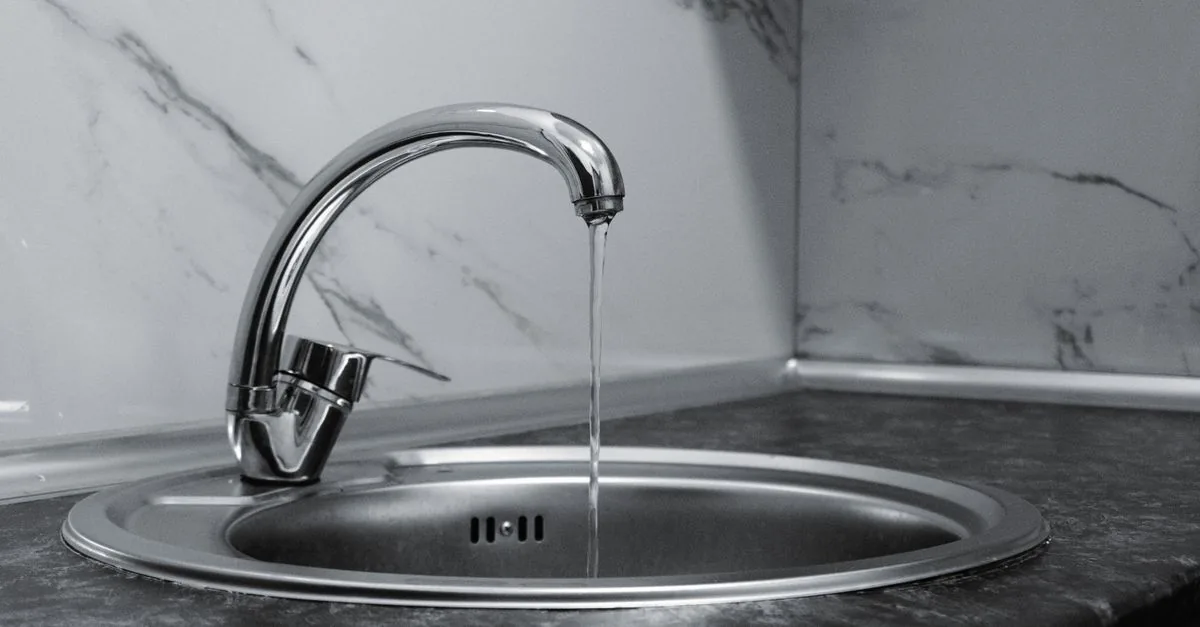
The basin fills while you brush your teeth and takes a minute to empty afterwards. It has been getting slowly worse for months. This is not a plumbing failure — it is a build-up, and it is sitting in one of three predictable places within half a metre of the plughole.
Basins clog differently from kitchen sinks and floor drains. The material is hair, soap scum, toothpaste and shaving stubble, and it binds into a soft grey felt around the moving parts of the waste fitting. In Delhi, hard water makes it worse: the mineral in the water reacts with soap to form a sticky scum that glues everything else in place. That is why a basin here clogs faster than the same basin elsewhere.
A note first. XpertWorker is a marketplace, not a service company. We do not set any professional’s price and we never charge you a paisa. Every professional quotes you free before starting, and you pay them directly. This is a job most people can do themselves, and we would rather you did.
In this guide
One check before you start: is it only the basin?
Two minutes, and it decides whether this page is the right one.
Run water at the other fittings — the second basin, the shower, the kitchen sink, the floor trap. Flush the WC.
- Only this basin is slow, everything else runs fine. It is a local blockage in the basin’s own waste. Everything below applies, and it is free.
- Both basins in the same bathroom are slow. The blockage is a little further along, where their waste pipes join. Clean both traps first; if that does not do it, it is in the branch pipe.
- Everything is slow, or the WC gurgles when the basin drains. Stop. That is the shared line, not your basin, and nothing you do at the plughole will help. Our blocked drain guide covers how to confirm that and what happens next.
- The basin is slow and also smells. Clear the blockage first, then read our bathroom smell guide if the smell survives.
Want a real quote for your own job?
Get free quotesStart with the pop-up waste: this is usually the whole problem
If your basin has a stopper that pops up and down — either lifted by a rod behind the tap, or pushed by hand — the underside of that stopper is where the blockage lives. It sits directly in the flow, it has a pivot rod passing through it, and hair wraps around both.
The click-clack type (push to open, push to close). Most modern Delhi basins have these. Grip the stopper, and either lift it straight out or unscrew it anticlockwise — most come out by hand with no tools at all. What comes up with it is usually a grey rope of hair and soap. Clean it, clean inside the plughole with an old toothbrush, rinse the stopper mechanism, and drop it back in. In a large share of slow basins, that alone fixes it completely.
The rod-operated type (a lever behind the tap). Look under the basin: a horizontal rod goes into the back of the waste pipe and is held by a nut. Unscrew that nut by hand, pull the rod out a little, and the stopper lifts free from above. Clean everything, then refit the rod and hand-tighten the nut — over-tightening it cracks the plastic housing and creates a leak you did not have.
A useful trick if the stopper will not come out. Push a length of stiff wire with a small hook bent into the end down past the stopper, twist it, and pull. Hair catches on the hook and comes out in a mass. Cheap plastic drain-cleaning strips sold in every hardware shop do the same job and cost almost nothing.
Next: open the bottle trap under the basin
If cleaning the waste did not do it, the blockage is in the trap. On a wash basin this is usually a bottle trap — the chrome or plastic cylinder directly under the plughole, wider than the pipe. It is designed to be opened, and it is designed to collect exactly the material that is blocking you.
- Put a bucket underneath. A wide one. The trap holds more water than you expect and it will be dirty.
- Unscrew the bottom cup. On most bottle traps the lower half unscrews by hand, anticlockwise. If it is tight, grip it with a cloth for purchase rather than pliers, which mark the chrome and crack plastic.
- Tip out what is inside and clean it. A bottle trap accumulates a sludge of hair, soap and grit, and in Delhi a layer of fine dust and sand that has washed off hands and faces. Wash it out completely and clean the internal tube too.
- Check the washer. There is a rubber sealing washer where the cup screws on. If it is flattened, twisted or perished, it will drip when you refit. These are inexpensive and available at any hardware shop — take the old one with you to match it.
- Screw it back hand-tight only. No spanner. Then run the tap and watch the joint for two minutes before you put anything back in the cupboard.
If your basin has a P-trap instead — a U-shaped bend with two hand-tightened collars — the approach is the same: bucket underneath, unscrew both collars, remove the bend, clean it out, refit hand-tight.
Still slow after cleaning the waste and the trap?
Then the blockage is past the trap, in the waste pipe running into the wall, and your options narrow.
- Try a plunger properly, now that the trap is clean. Block the overflow slot — the small hole near the rim inside the basin — with a wet cloth, or the pressure escapes through it and you achieve nothing. Fill the basin enough to cover the plunger cup, and plunge firmly a dozen times.
- Push a drain snake or a length of flexible wire into the wall pipe with the trap removed. A metre of reach clears most branch blockages. Do not force anything metal hard into an old pipe.
- Check whether the waste pipe has enough fall. A basin waste needs a slope towards the wall. After a renovation or a basin change, pipes are sometimes refitted almost level, and then the basin drains slowly forever no matter how clean it is. If your basin became permanently slow immediately after work was done, this is the likely reason, and it needs the pipe re-run rather than cleaning.
- Check the pipe is not crushed or kinked where it enters the wall, particularly if a flexible corrugated waste pipe was used — those sag, hold water and silt up permanently. Replacing a corrugated waste with rigid pipe is a genuine improvement.
- Consider whether this is really a main-line problem that only shows at the basin because it is the lowest or nearest fitting. Back to the check at the top of the page.
At this point it is a plumber’s job, and a reasonable one — they will have a hand auger that reaches into the branch pipe. Our plumber charges guide covers what drives the cost, and the new plumbing point guide covers what is involved if a waste pipe genuinely has to be re-run.
Keeping a basin draining freely
All free, all habits.
- Pull the stopper out and clean it every month. Thirty seconds. It is the single measure that prevents most slow basins.
- Flush with hot water weekly. A mug of very hot — not boiling — water down the basin once a week softens soap scum before it sets. Boiling water can craze ceramic and stress plastic waste fittings, so let the kettle stand a minute first.
- Do not rinse hair clippings or beard trimmings down the basin. Wipe them into the bin with tissue. Shaving stubble is the classic Delhi basin blockage and it binds with soap scum immediately.
- Keep face packs, clay, plaster of paris and paint out of the basin. They set hard in the trap and no amount of hot water shifts them.
- Go easy on bottled drain chemicals. They do very little against a wad of hair and soap, they damage older pipework over time, and they make the trap dangerous to open. Cleaning the trap by hand is faster and works better.
- Check the trap washer whenever you open it. A perished washer turns a cleaning job into a slow leak into the cupboard below.
Our tips on preventing blocked drains cover the kitchen and the rest of the bathroom the same way.
Need an Plumber professional?
Get free quotes from independent, local professionals near you. XpertWorker never charges you — you pay the professional directly.
Get free quotes →Frequently asked questions
Why is my wash basin draining slowly?
How do I clean the bottle trap under a wash basin?
How do I remove a click-clack basin stopper?
Should I use drain cleaner on a slow basin?
My basin has been slow ever since it was replaced. Why?
The basin is slow and it smells. Are those the same problem?
How we put this guide together
This guide is compiled from common Delhi NCR service patterns and reviewed by the XpertWorker team. XpertWorker connects you with independent, local professionals — we never charge you a paisa, and each professional sets their own price and quotes you free.