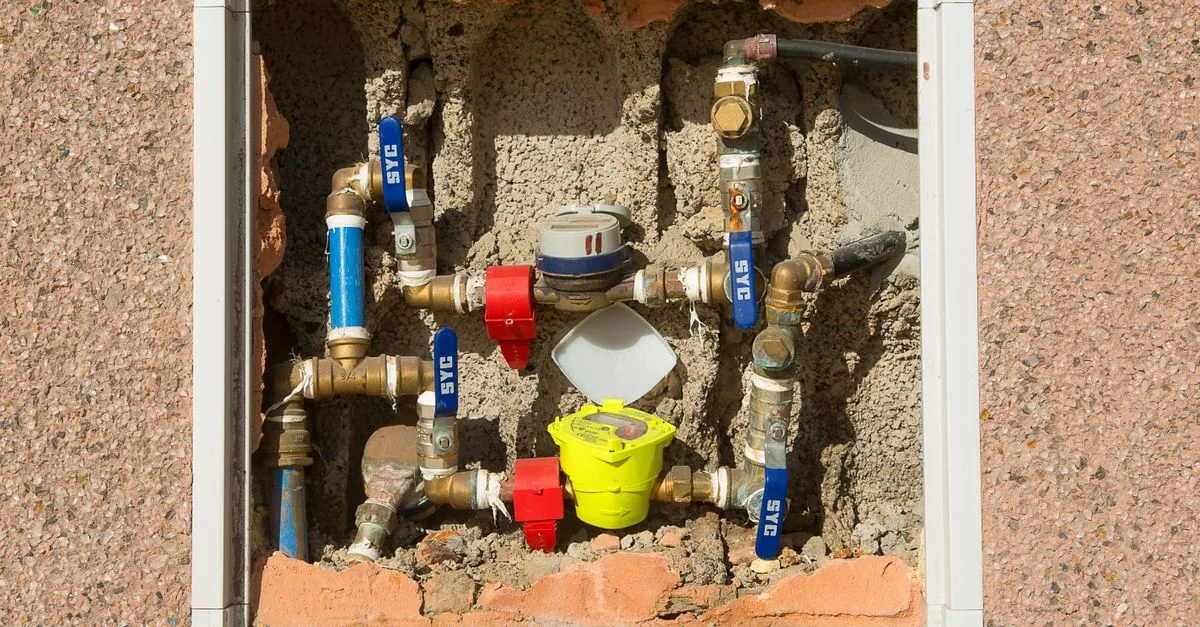
Every storage geyser has a small valve on the side, usually with a short pipe or a lever on it. It goes by several names — pressure relief valve, safety valve, PRV, multi-function valve — and it is the most important component on the appliance.
Water expands when it is heated. In a sealed tank that expansion has nowhere to go, so pressure rises. The safety valve exists to let a little water out when the pressure passes a set point. That is why a small drip during or just after a heating cycle can be completely normal behaviour rather than a breakdown.
The problem is what happens next. The drip stains the wall, somebody puts a bucket under it, somebody else caps it, and a safety device becomes a plugged pipe on a sealed vessel full of very hot water. This page separates a valve doing its job from a valve that has failed, separates both from an ordinary fitting leak, and explains plainly why the answer is never to block it.
A note first. XpertWorker is a marketplace, not a service company. We do not set any professional’s price and we never charge you a paisa. Every professional quotes you free before starting, and you pay them directly.
In this guide
First, find out where the water is actually coming from
Three very different faults all look like “my geyser is leaking”, and they have three different answers. Ten minutes with a dry cloth will tell you which one you have, and it costs nothing.
- 1. Dry everything and watch. Wipe the geyser body, the valve, the pipe connections and the wall completely dry. Put a sheet of dry newspaper or a dry cloth underneath. Come back in an hour and see where the first wet mark appears. That single observation usually names the fault.
- 2. Is it from the small valve, or from a joint? Water emerging from the safety valve outlet or its discharge pipe is a pressure story. Water beading at a threaded joint where a pipe screws into the geyser is a fitting leak, which is ordinary plumbing and usually the least serious outcome.
- 3. Is it from the body or the bottom seam? Water appearing from the casing itself, from the seam, or running steadily from underneath with the joints dry is the serious one. That is the tank, and this page’s later section covers it.
- 4. When does it drip? During or just after a heating cycle, then stopping? That is thermal expansion. All the time, hot or cold, day and night? That points at a valve stuck open or at supply pressure that is too high.
- 5. How much water? A few drops after heating is one thing. A steady trickle, or enough to run down the wall and pool on the floor, is another. Note it honestly.
- 6. Check whether it started after something changed. A new pump, a new booster, a change from tanker to mains supply, or a plumbing repair elsewhere in the building can raise the pressure your geyser sees and start a drip that was never there before.
If the water turns out to be coming from a joint, a fitting or the inlet, our guide on a leaking geyser covers those cases in more detail. The rest of this page is about the valve and the tank.
Want a real quote for your own job?
Get free quotesWhy is water dripping from my geyser safety valve?
Because pressure inside the tank has reached the point the valve is set to release at. The question is whether that is normal expansion or a sign that something is wrong.
- Normal: a small drip while heating. Cold water expands as it heats. In a closed system that expansion has to go somewhere, and a few drops released during or shortly after a heating cycle, stopping once the geyser has finished, is the valve working as designed. It is not a breakdown. It does mean the discharge should be routed to drain properly rather than down your wall.
- Not normal: dripping constantly. A valve that weeps all day and night, whether the geyser is heating or cold, is either failing to seat or is being held open by debris. Either way it needs replacing by a plumber. Constant discharge also means constant fresh hard water entering the tank, which accelerates scaling.
- Not normal: a heavy flow or an overflow. If the valve is discharging steadily rather than dripping, something is pushing the pressure up too far. Treat it as urgent, switch the geyser off, and call.
- Not normal: nothing ever comes out, ever. A valve that has silted up solid and cannot open is the dangerous condition, and it is silent. This is the case nobody searches for, because there is no symptom until there is. It is a strong argument for an annual service.
- How to tell it apart from an inlet fitting drip. Dry everything, then look at whether the wet point is the valve outlet or the threaded joint. Fitting leaks tend to be steady and unrelated to heating cycles.
One thing to be clear about: the valve releasing water is not the valve malfunctioning. It is the only part of the geyser whose job is to let water out. Judge it by the pattern, not by the fact that it is wet.
Why you must never plug or block the safety valve
Because it is the only thing standing between a sealed tank of very hot water and a pressure it cannot contain. Capping it, taping it, tying the lever down or fitting a stop to end the drip removes that protection completely.
- “Why did my geyser burst?” is a real search, and this is the honest answer. A tank that fails violently has almost always had its pressure relief defeated or blocked — plugged deliberately to stop a drip, silted solid with scale, or paired with a thermostat that failed to switch off. The valve is what makes a geyser safe. A geyser without a working one is a different object.
- Scale can defeat it without anyone touching it. Delhi NCR water is hard, and calcium builds on the valve seat as readily as on the element. It can hold the valve slightly open, which is why some geysers weep constantly. It can equally seize it shut, which is the silent and far more dangerous outcome. Both are reasons to have the valve checked and replaced periodically rather than only when it drips.
- Do not swap it for a plain plug or a different fitting. The replacement must be the correct type and rating for the appliance. This is not a place for whatever is in the plumber’s bag.
- Do not test it by forcing the lever on a hot tank. The water coming out is hot enough to scald. Leave testing to the technician at a service, with the tank cooled and the discharge routed safely.
- Do not ignore a valve discharging heavily. Switch the geyser off at the MCB, shut the inlet valve if you can reach it safely, and call. Heavy discharge means the pressure or temperature control is not doing its job.
High supply pressure, and a geyser leaking from the bottom
If the valve is healthy and still discharging, look outside the geyser. And if the water is coming from the tank rather than the valve, the conversation changes entirely.
- Supply pressure that is simply too high. The valve releases whenever pressure passes its set point, and it does not care whether that pressure came from heating or from the mains. A new booster pump, a building pump running hard, a change from tanker to pressurised supply, or a flat low down in a tall tower can all put more pressure on the geyser than it was set up for. The clue is a valve that started dripping after something changed elsewhere. A plumber can measure the incoming pressure and fit a pressure reducing arrangement if it is out of range. Our guide on water pressure in Delhi flats explains how supply varies here.
- A thermostat that is not switching off. If the geyser keeps heating past the point it should, pressure keeps climbing and the valve keeps releasing. Water that is dangerously hot at the tap alongside a discharging valve is a serious combination. Switch it off and call, and do not work around it by turning taps down.
- Scale on the valve seat. Covered above, and common enough here that it is worth checking before assuming the pressure is at fault.
- Water from the bottom of the geyser, with all the joints dry. This is usually the end of the tank’s life. Steel tanks corrode from the inside, helped by hard water and by the sacrificial anode being long gone, and once the vessel itself is weeping it cannot be patched or sealed. There is no repair. The geyser has to be replaced, and it should be taken out of use rather than nursed along, because a corroded tank is a tank that is getting weaker.
- Water appearing only when the geyser is on. That points at pressure or expansion. Water present constantly, hot or cold, points at the tank or a fitting.
If replacement turns out to be the answer, our guides on what drives geyser installation cost in Delhi and instant versus storage geysers set out the factors, including whether the existing plumbing and mounting can be reused.
When to call someone, and what to tell them
Match the urgency to what you found in the first section.
- Switch off and call today if the valve is discharging steadily rather than dripping, if the water at the tap is scaldingly hot, if water is coming from the body or bottom of the tank, or if anything wet is near the electrical connection. Switch off at the MCB and shut the inlet valve if you can reach it safely.
- Call this week if the valve weeps constantly rather than only after heating, or if it has been dripping for a while and nobody has looked at it. A constantly weeping valve is a valve that is not sealing, and it keeps pulling fresh hard water into the tank.
- Book it into the next service if you get a few drops during a heating cycle and nothing else. Mention it, ask for the valve to be checked, and ask for the discharge to be routed to drain rather than down the wall.
- Call regardless if the geyser has never been serviced and you do not know whether the valve has ever been tested. A valve that has silted shut gives no warning at all, which is exactly why it deserves a look.
- What to tell them. Where the water appears when everything is dried first, whether it drips only during heating or constantly, roughly how much, the geyser’s rough age, whether anything changed recently in the building’s water supply or pumps, and whether your supply is DJB, borewell or tanker. That tells them whether to arrive with a valve, a pressure gauge, or a conversation about replacement.
Two things not to accept. A plug, cap or tied-down lever offered as a way to stop the drip. And a sealant or patch offered for a tank that is weeping from the body, because a corroded pressure vessel cannot be repaired that way.
Related reading: a leaking geyser for fitting and inlet leaks, a geyser making noise if scale is in the picture, water that is not hot enough, and what drives plumber charges in Delhi NCR. Our hard water home tips and winter geyser safety tips cover keeping this from returning.
Need an Plumber professional?
Get free quotes from independent, local professionals near you. XpertWorker never charges you — you pay the professional directly.
Get free quotes →Frequently asked questions
Why is my geyser dripping from the safety valve?
Can I block or plug the geyser safety valve to stop the dripping?
Why did my geyser burst?
Why does my geyser keep dripping even when it is switched off?
My geyser is leaking from the bottom. Can it be repaired?
Is a dripping geyser valve an emergency?
How we put this guide together
This guide is compiled from common Delhi NCR service patterns and reviewed by the XpertWorker team. XpertWorker connects you with independent, local professionals — we never charge you a paisa, and each professional sets their own price and quotes you free.