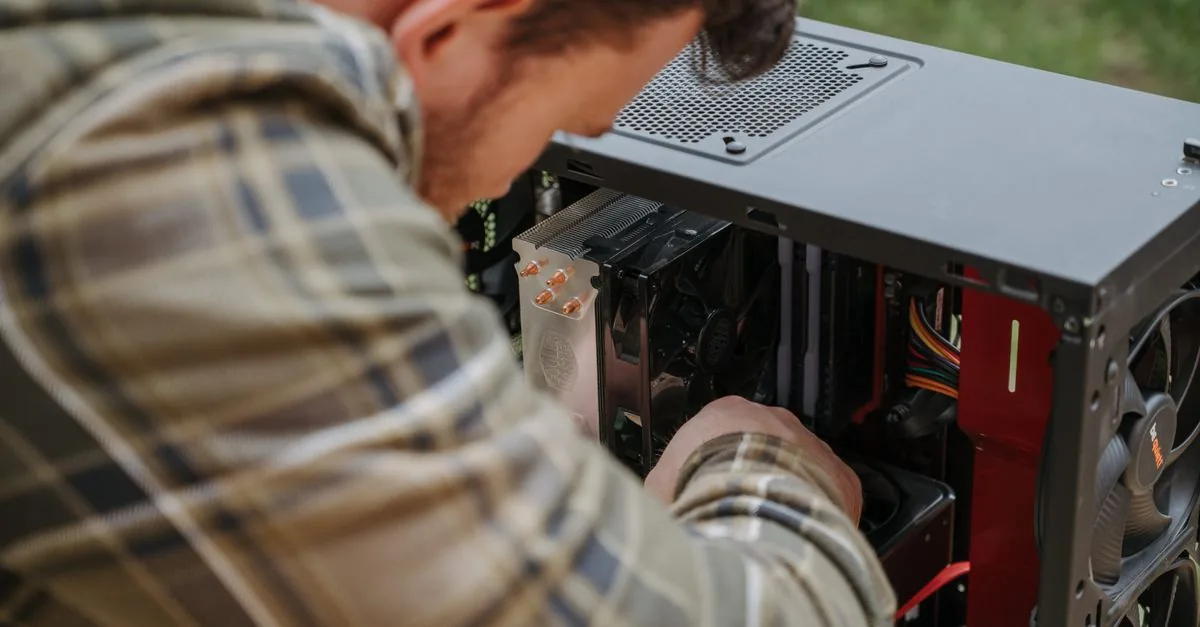
An air cooler is a tank of water, a small pump, a set of honeycomb pads and a fan. There is very little to go wrong, which is exactly why it gets neglected — it keeps blowing air even when everything inside it is filthy.
Two Delhi-specific things make cleaning it worth doing properly rather than occasionally. First, a tank of standing water is a mosquito breeding site, and a cooler left with water in it for a week does the same job as the flowerpot tray everyone is told to empty. Second, our water is hard, so every litre that evaporates leaves its minerals behind in the pads, which turn crusty and stop absorbing water long before they look worn out.
The routine below takes well under an hour, needs nothing you do not already own, and is the difference between a cooler that limps through a season and one that still cools properly in June.
A note first. XpertWorker is a marketplace, not a service company. We do not set any professional’s price and we never charge you a paisa. Every professional quotes you free before starting, and you pay them directly.
In this guide
How often to clean a cooler, and what to do first
Three rhythms, and the first one is the one people skip.
- Change the water every few days in season. Not top up — change. Drain what is left, give the tank a quick swill and refill with fresh water. This is the single habit that prevents both the smell and the mosquitoes.
- A proper clean every two to three weeks of heavy use. Tank scrubbed, pads rinsed, pump strainer cleared. In Delhi’s dust this is not overkill; the inlet face of a pad cakes up faster than you would believe.
- A full clean at each end of the season. Once before you start using it and once before it goes into storage. The storage one matters most, because whatever you leave inside is what greets you next April.
Before you touch anything:
- Unplug it at the socket. Not the switch on the cooler — the plug. You are about to put your hands in water next to a mains pump, so there is no version of this where the plug stays in.
- Move it where water can go. A balcony, a bathroom or near a floor drain. You will spill more than you expect.
- What you need. A bucket, a stiff brush or an old scrubbing pad, a soft cloth, mild detergent or dishwashing liquid, and plain white vinegar for scale. Nothing stronger, and no acid-based bathroom cleaners.
Want a real quote for your own job?
Get free quotesCleaning the water tank — do not skip this one
The tank is where the smell comes from and where the mosquitoes come from, so it is the part that earns the most from ten minutes of work.
- Drain it completely. Most coolers have a drain plug at the bottom of the tank. If yours does not, tip it carefully or bail it out. Do not leave the last inch in there, because that is the layer holding all the sediment.
- Scrape out the sludge. You will find a fine grey-brown silt across the floor of the tank — Delhi dust that came in through the pads and settled. Scoop it, do not just rinse it, or it will go straight back into the pump strainer.
- Scrub the walls and floor. Mild detergent, a stiff brush, and pay attention to the corners and the area around the pump where a slimy film builds up. That film is the source of the musty smell that comes into the room.
- Attack scale with vinegar, not with a blade. The chalky white crust along the old waterline dissolves with plain white vinegar left on it for fifteen or twenty minutes, then scrubs off easily. Scraping it with anything metal risks the tank lining.
- Rinse twice and drain fully. Any detergent left behind will foam through the pump the moment you refill.
The mosquito point, plainly. Mosquitoes breed in still, standing water, and a cooler tank sitting untouched for a week is exactly that — indoors, shaded and undisturbed. This is the same advice our pest-proofing tips and our mosquito control guide give about flowerpot trays and water drums, and the cooler is the one people forget. Empty it whenever the cooler will sit unused for more than a couple of days, and empty it completely at the end of the season.
And never run a cooler on stale water. Water that has stood for days goes slimy, smells, and the fan blows that smell straight into the room you are trying to make comfortable.
Cleaning honeycomb cooler pads — and when to replace them
Start with the honest part: pads are a consumable. They are replaced, not cleaned forever. Cleaning extends their life within a season; it does not resurrect a pad that hard water has turned to stone.
- Take the panels off. Most coolers have three removable side or rear panels, each holding a honeycomb block behind a grille. Note which way round each pad sits before you pull it out — honeycomb is directional and refitting it backwards reduces how well it drains.
- Rinse gently, from the clean side. Run water through the pad from the inside face outwards, so the dust cake on the inlet face is pushed off rather than driven deeper. Low pressure only. A honeycomb pad is essentially stiff paper and it tears under a jet.
- No brushes, no detergent, no pressure washing. Scrubbing collapses the honeycomb structure, and once the channels are crushed the pad neither holds water nor passes air. Plain water is correct.
- For scale, a dilute vinegar soak. If the pad is still soft but has white deposits, soaking it in a tray of water with a good splash of white vinegar for twenty minutes will loosen a fair amount of it. Rinse afterwards and let it drain.
- Dry them in the shade before refitting. Full Delhi sun makes honeycomb brittle and warps it. Shade and moving air.
How to know a pad is finished. Press a corner between your fingers. A healthy pad is slightly soft and springy and darkens instantly when wet. A dead pad is pale, rigid and crunches, water runs off it rather than into it, and parts of it stay dry even with the pump running properly. On borewell or mixed hard-water supply that usually arrives after two or three summers — see our hard water tips for why the same minerals show up on your taps and geyser. Replacing a tired set of pads is the cheapest thing you can do for a cooler that has stopped cooling; our guide on why an air cooler stops cooling covers the rest of the diagnosis.
The pump filter, the fan and the body
Ten more minutes while the tank is empty and the pads are out.
- The pump strainer. The small submersible pump sits in a mesh cage or has a clip-on filter over its inlet, and in Delhi this is the part that silts up. Lift the pump out, unclip the cage, rinse the mesh under a tap until you can see light through it, and refit. A choked strainer is the reason many pumps hum away while the top of the pads stays dry.
- The distribution hoses and header. Thin pipes carry water from the pump to a perforated header along the top of each pad. Check the pipes are still on their spigots and not kinked, and run a pin or a thin wire through any header holes that have blocked with scale.
- The fan blades. Wipe the blades and the inside of the housing with a damp cloth. A furred blade moves noticeably less air, and less air means less evaporation and less cooling. Do not soak the motor.
- The louvres and the grille. Dust on the outlet louvres blows straight into the room. A damp cloth is enough.
- The body and the castors. Wipe the outside, and check the wheels are not seized so the cooler can still be moved to a window — where it works best, because it can then draw in drier outside air.
End-of-season storage and the pre-season restart check
What you do in September decides how much trouble the cooler gives you in April.
Putting it away, at the end of the season:
- Drain the tank completely and dry it. Leave the drain plug out, tip the residual water away and wipe the inside dry with a cloth. A tank stored with water in it is a mosquito site all through the wet weeks and a slime factory the rest of the year.
- Take the pads out and dry them fully. Pads stored damp go mouldy and smell for the whole of the following summer. Dry them in the shade, then either refit them dry or store them flat.
- Dry the pump too. Rinse it, shake the water out and leave it out of the tank.
- Cover it and keep it out of the sun. A cloth or a proper cooler cover keeps monsoon damp and winter dust out. Storing it on an open terrace in direct sun ages the plastic body and makes it brittle.
- Leave it plugged out. Obvious, and worth saying.
Waking it up, before the season:
- Look before you switch on. Check for lizards, insect nests and rodent damage to the wiring — a cooler that has sat in a store room for seven months is a favourite spot. Any chewed cable means it does not get plugged in until an electrician has seen it.
- Fit fresh or cleaned pads. This is the moment to decide honestly whether last year’s pads have another summer in them.
- Fill, run the pump alone, and watch. All three pads should wet through evenly within a minute or two. Uneven wetting now is a hose or header problem you can fix in five minutes rather than discover on the first hot night.
- Then run the fan and listen. Rattles, scraping or a wobble mean something is loose or the blade is fouling. Sort it before peak heat, when every technician in the city is busy.
Doing this alongside the rest of your pre-summer round makes sense — our getting your AC ready for summer and summer heat and cooling tips cover the same week’s work for the rest of the house.
Need an AC & Appliance Repair professional?
Get free quotes from independent, local professionals near you. XpertWorker never charges you — you pay the professional directly.
Get free quotes →Frequently asked questions
How do I clean the water tank of an air cooler?
Why does my cooler water smell bad?
How do I clean honeycomb cooler pads?
How often should cooler pads be replaced?
Can a cooler breed mosquitoes?
Should I empty my cooler before storing it for the year?
How we put this guide together
This guide is compiled from common Delhi NCR service patterns and reviewed by the XpertWorker team. XpertWorker connects you with independent, local professionals — we never charge you a paisa, and each professional sets their own price and quotes you free.