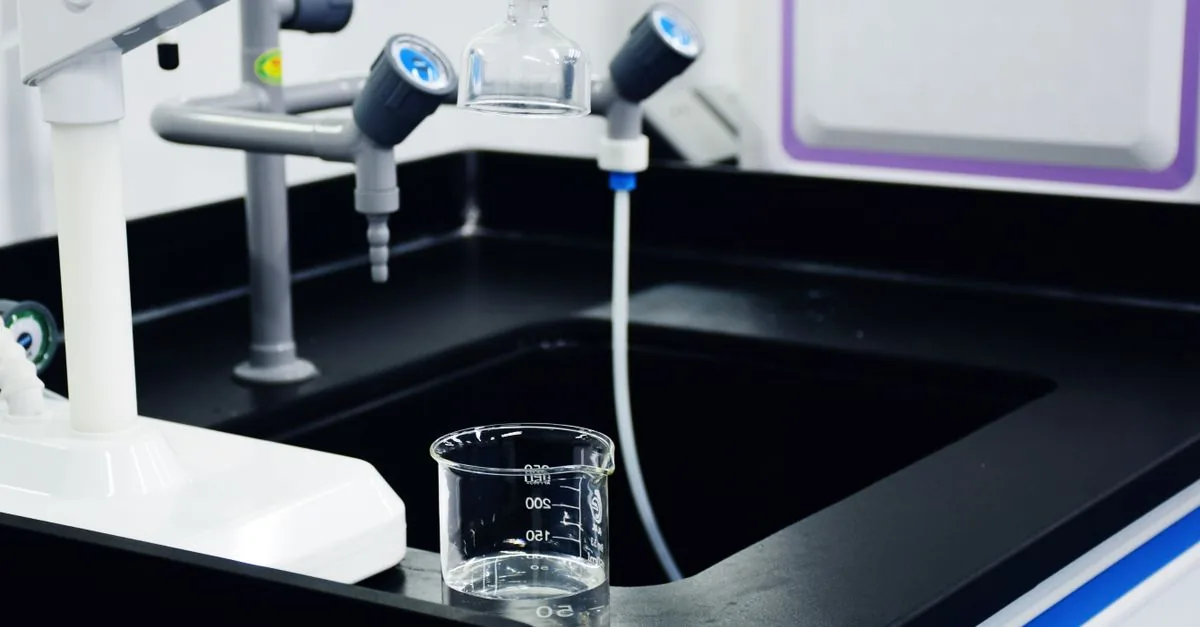
If you have had your water tested — by a laboratory, by your RWA, or by a technician with a handheld meter — you end up holding a sheet of numbers with units you have never used. Most people give up and ask the nearest salesperson what it means, which is the one person with a reason to read it a particular way.
This page does one job: it tells you what each common row on a report is measuring and what a higher or lower figure physically means. It does not tell you whether your water is fit to drink. That judgement belongs to the laboratory that ran the test and to the relevant public authority, and any report worth having will name the standard it was compared against and print the permissible limits alongside your results.
Delhi NCR makes this worth doing properly, because readings vary enormously — between localities, between a DJB line and a borewell and a tanker delivery, and sometimes between the same building in March and in June. A number from a neighbour, a forum or a brochure is not your number.
A note first. XpertWorker is a marketplace, not a service company. We do not set any professional's price and we never charge you a paisa. Every professional quotes you free before starting, and you pay them directly.
In this guide
How to take a sample that means something
A report is only as good as the sample. Getting this wrong is the commonest reason two tests on the same building disagree.
- Ask the laboratory for their instructions first, and use the container they give you. Different tests need different containers and some need to reach the lab within a set time, so collecting a sample in a reused soft-drink bottle on a Friday evening wastes the fee.
- Sample from the tap you actually care about. The kitchen tap you drink from tells you about the whole chain. A sample taken at the inlet before the purifier tells you what the machine has to deal with. If you want to know whether the purifier is doing anything, you need both, taken the same day.
- Note the source. Write on the form whether that day’s water came from the DJB line, a borewell or a tanker, and roughly when the tank was last filled. Without that, the report cannot be compared with the next one.
- Do not run the tap for ten minutes first unless the lab tells you to. Flushing changes what you are measuring — it removes what was sitting in the pipe, which may be exactly the thing you were trying to find.
- Keep every report. One report is a snapshot. Three reports over two years is a trend, and a trend is what actually tells you something.
Want a real quote for your own job?
Get free quotesThe units and the columns before you read a single result
Almost every confusion about these reports comes from the layout rather than the chemistry.
- mg/L and ppm are the same thing in practice for drinking water. Milligrams per litre and parts per million are interchangeable on these reports, so do not treat a switch between them as a different scale.
- “as CaCO3” is a convention, not an ingredient. Hardness and alkalinity are conventionally reported as if all of it were calcium carbonate, so the results can be compared. It does not mean chalk was found in your water.
- BDL means below detectable limit — the instrument could not find it at the sensitivity used. It is not the same as zero, but for practical purposes it means the test did not find it.
- The limits columns are the point of the report. A proper report prints your result next to the permissible limit from the standard it was tested against, and names that standard. If your report has no limits column and no standard named, ask the lab for one.
- Check the accreditation and the date. Use a laboratory that is accredited for water testing, and check that the report carries a sample date, a test date and a signature. An unsigned printout with no dates is not a report.
What each common row is actually measuring
These are the rows you will see on almost every domestic report, described by what they measure rather than by what they imply.
- TDS (total dissolved solids). The combined weight of everything dissolved in the water — salts, minerals, metals — per litre. It is a single lumped figure and it does not say what is dissolved, which is why a lab report with individual rows tells you far more than a handheld TDS meter. A membrane-based purifier works by reducing this number.
- pH. How acidic or alkaline the water is on a scale where the middle is neutral. It affects taste and it affects how the water behaves with metal pipes and fittings.
- Total hardness. Mostly calcium and magnesium. This is the row that explains scale on your taps, white marks on glassware, poor lather from soap, and scaling inside a geyser. It is the most directly visible number in a Delhi home — see our hard water tips.
- Turbidity, in NTU. How cloudy the water is — a measure of suspended particles rather than dissolved ones. Turbidity is what a sediment pre-filter removes, and it rises sharply during the monsoon and after tanker deliveries.
- Alkalinity. The water’s capacity to resist a change in pH. It matters mostly to people treating water, and it often tracks hardness.
- Chlorides. Salt content. High chlorides are associated with a salty taste and they push the TDS figure up.
- Iron. Explains rust-coloured staining in the sink, an orange tinge on a fresh sediment filter, and a metallic taste. Common on some borewell supply and with old galvanised pipes.
- Fluoride and nitrate. Both appear naturally in some groundwater and both have stated limits in the drinking water standard. If either is flagged on your report, take the report to the laboratory and the relevant authority for guidance — this is not something to settle by reading a website.
- Microbiological rows. Reports usually include tests for bacterial indicators. If any of these is flagged, that is a matter for the laboratory, your water supplier and the relevant public health authority, and you should raise it with them rather than assuming a purifier setting will address it.
TDS in Delhi NCR: what the number does and does not tell you
TDS gets more attention than any other row because it is the one a technician can measure in your kitchen in ten seconds. It is genuinely useful, provided you know its limits.
- It is a total, not a list. Two samples with the same TDS can be completely different water. A lab report breaks it into rows; a meter cannot.
- The useful figure is the drop, not the level. Measure the water going into the purifier and the water coming out on the same day. A membrane in good condition produces a large reduction between the two. An output figure that has crept up towards the input over months is the earliest sign the membrane is tiring — often before the taste changes.
- Very low output is not automatically better. Water with almost nothing dissolved in it tastes flat, which is why many units add a mineral or taste stage after the membrane.
- Your number moves with your source. A building that runs on DJB supply in winter and tankers in summer can see a genuinely different reading in June than in January, with no change to the machine at all. Record the source with the reading.
- Meters drift. A handheld meter is a running check between lab tests, not a replacement for one. Check it occasionally against a known reference solution.
Our RO service and TDS guide goes further into how the reading relates to servicing, and our RO and drinking water tips cover the habit of recording both readings.
What to do with the report once you have it
A report is only worth the fee if it changes a decision. Here is what it is genuinely good for.
- Choosing equipment on evidence. Take the report to the shop instead of taking the shop’s word for your water. Whether a membrane-based system, a UV stage, an ultrafiltration stage or a combination suits your supply depends on what is actually in it — our RO vs UV guide explains what each stage physically does.
- Judging whether a service worked. Test the output before and after a membrane change and you will know, rather than hope.
- Raising a supply problem. If the issue is with what is arriving at your building rather than what your machine does with it, the report is what you take to your RWA, your supplier or the relevant authority. One documented report gets further than several verbal complaints.
- Settling a landlord conversation. If you rent, a dated report is useful evidence when a supply or storage problem needs attention — see our rented flat purifier guide.
- Deciding on tank cleaning. High turbidity with otherwise ordinary dissolved figures often points at storage rather than supply. Our tank cleaning guide covers what a proper clean involves.
And one thing it is not for: a report should never be used by anyone to promise you a health outcome. If a row on your report concerns you, the people to ask are the testing laboratory and the relevant authority.
Need an Water Purifier professional?
Get free quotes from independent, local professionals near you. XpertWorker never charges you — you pay the professional directly.
Get free quotes →Frequently asked questions
What does TDS mean on a water test report?
What is the difference between TDS and hardness?
What does turbidity mean in a water report?
Where can I get my water tested in Delhi?
Is a handheld TDS meter enough, or do I need a lab test?
The report has flagged something. What should I do?
How we put this guide together
This guide is compiled from common Delhi NCR service patterns and reviewed by the XpertWorker team. XpertWorker connects you with independent, local professionals — we never charge you a paisa, and each professional sets their own price and quotes you free.