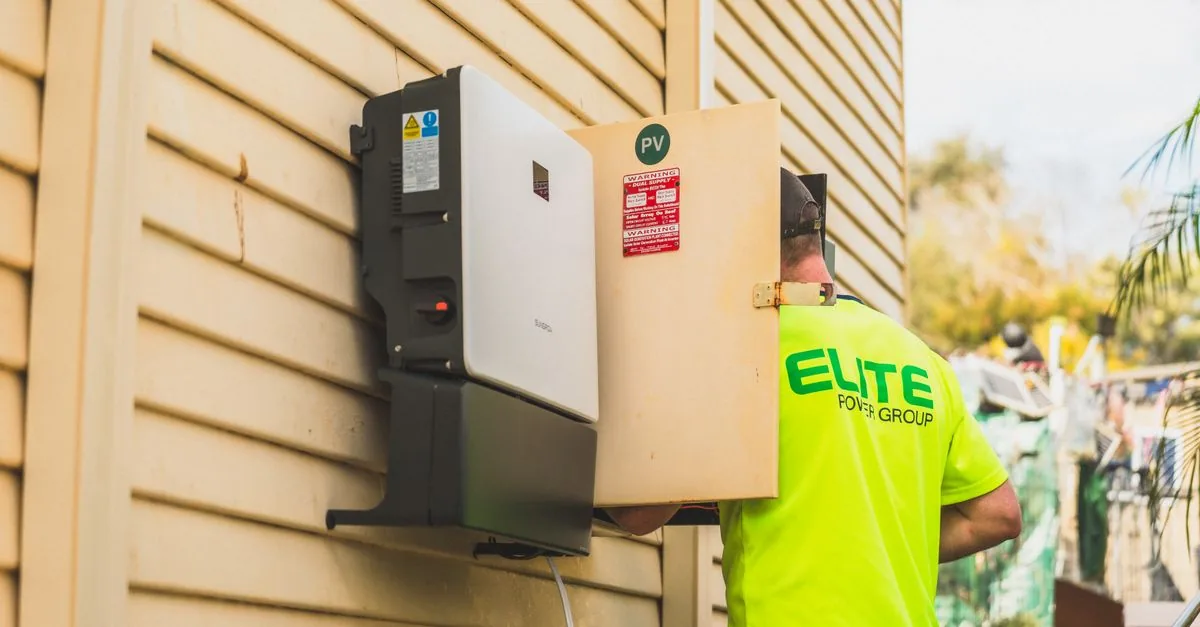
An inverter alarm is not a breakdown signal. It is the unit talking, and it has a small vocabulary: you have switched on too much, the battery is nearly empty, the mains has gone, I am in a different mode, or something is actually wrong. Four of those five are normal behaviour.
The commonest by a wide margin is the first one. A long continuous beep that starts the moment somebody switches on an iron, a geyser, a microwave or a water motor during a cut is an overload alarm, and it stops within seconds of switching that appliance back off. If you learn nothing else from this page, learn that one, because it saves an unnecessary call.
Work through the sections in order. They are ordered by how common each cause is, not by how serious it is.
Where the DIY line is on this page. Everything suggested here is safe: looking at the display and the indicator lights, counting the beeps, listening, smelling, switching appliances off, unplugging them, resetting a tripped breaker, and changing a setting on the inverter’s own front panel. Do not open the inverter, remove any cover or panel, touch or clean the battery terminals, remove the battery caps, or disturb any wiring. A battery can push an enormous current into a spanner in an instant, and the inverter’s output stays live even during a power cut. All of that is a professional’s work, without exception.
A note first. XpertWorker is a marketplace, not a service company. We do not set any professional’s price and we never charge you a paisa. Every professional quotes you free before starting, and you pay them directly.
In this guide
First: read the beep and the front panel, free and in one minute
Before you touch anything, stand in front of the inverter and gather four pieces of information. Together they identify the cause in most cases, and they cost nothing.
- 1. What is the beep pattern? A slow single beep every few seconds, a fast repeated beep, and one long unbroken tone all mean different things on almost every make. Slow and occasional usually means “I am running on battery”. Faster means “the battery is getting low”. A long continuous tone that started suddenly is almost always overload.
- 2. What is lit on the panel? Nearly every domestic inverter has separate indicators for mains present, running on battery, charging, low battery and overload. The lit one names the fault for you. On units with a small screen, look for a numeric code or a bar showing the load percentage.
- 3. Is the mains actually on? Check a light or socket on a circuit that is not backed up by the inverter. If the colony supply has gone, then an inverter that has switched over and is beeping occasionally is behaving exactly as designed.
- 4. What was switched on in the last minute? Ask the house. An alarm that begins the instant somebody starts the iron, the microwave, the water motor or the geyser is not a coincidence and not a fault.
Then do the single most useful test there is: switch off the heaviest thing that is running and wait ten seconds. If the alarm stops, you had an overload and nothing more. If it carries on unchanged, read the next two sections.
Also worth a look while you are there: is anything stacked on top of the inverter, is it in a cupboard with no air around it, and is the room brutally hot? Delhi summers push these units hard, and a unit that cannot breathe will alarm and shut down on temperature when a ventilated one would not.
Want a real quote for your own job?
Get free quotesWhy is my inverter beeping continuously? Usually an overload
This is the commonest reason by far, and it is the easiest to fix: something too heavy has been switched on, and the inverter is warning you before it protects itself by shutting down.
A domestic inverter is sized to carry lights, fans, a television, a router and a few chargers. Anything that makes heat or drives a large motor is in another league entirely, and switching one on during a cut pushes the inverter past its limit within a second or two. The alarm is immediate, continuous, and it stops the moment the load comes off.
Switch these off first, in this order:
- 1. Anything that heats. The geyser, an iron, an electric kettle, a toaster, an induction hob, a room heater, an oven or a hair dryer. Heating elements are the heaviest domestic loads there are and they alone explain most overload alarms.
- 2. Anything with a big motor. The water pump or borewell motor, a washing machine, a mixer or grinder, a vacuum cleaner. Motors also draw a large surge at the instant of starting, several times their running load, which is why an inverter can alarm the second a pump kicks in and be perfectly happy afterwards.
- 3. The microwave and the fridge. A microwave is effectively a heater. A fridge is usually fine on a well-sized system, but it surges when the compressor starts, so it is the next thing to try if the alarm persists.
- 4. Then count the small stuff. If the alarm sounds with only lights and fans running, either far more points are on the backup than you think, or the battery is too weak to carry even that — which is the next section.
One more Delhi-specific trap: the point that looks like an ordinary socket may be on the backup circuit. In many flats the inverter feeds selected points, and somebody plugs an iron into one of them without realising. If the same alarm keeps recurring at the same time each day, find out which sockets are backed up and label them.
The low battery warning, and how to tell it apart
The second commonest cause. Here the beep is usually intermittent and gets more insistent over time rather than starting as one long tone, and the low-battery indicator is lit. The inverter is telling you it is about to shut down to protect the battery from being drained flat.
- How it presents. A cut starts, everything runs normally for a while, and then the beeping begins and gradually speeds up. Shortly afterwards the inverter switches off the backed-up points entirely. That whole sequence is correct behaviour, not a fault.
- What to do about it now. Switch off everything you do not need — extra fans, the television, unnecessary lights. Reducing the load stretches whatever charge is left and can quiet the alarm for a while. Nothing else is needed; the inverter will recharge when the mains returns.
- The finding that matters. How long did it take? If the low-battery alarm arrives an hour into a cut on a system that used to run all evening, or worse, within a few minutes, the battery is near the end of its life rather than merely discharged. That is the single most useful thing you can tell a technician.
- A battery that never fills up. If the charging indicator is on for hours or days on end and the backup is still short, the problem may be charging rather than storage. Our guide on why an inverter stops charging separates a dead battery from a supply problem from an inverter fault.
Delhi shortens battery life in two specific ways worth knowing about. Sustained 45°C heat ages a lead-acid battery faster than anything else, and long, frequent cuts mean deep discharges, which is exactly what these batteries dislike. A battery in an unventilated cupboard on a top-floor flat has a harder life than the same battery in a shaded ground-floor room.
Looking at the battery is fine — check whether the level indicator or float shows low, and whether the casing looks swollen or is leaking. Topping up water, opening the caps or touching the terminals is not a DIY job and should be left to the technician who services it.
Why is my inverter showing UPS on? Beeps that are not faults at all
Some beeping is the inverter reporting normal events, and a good deal of unnecessary worry comes from not knowing that. Three cases:
- The mains-failure beep. Many inverters give one or two beeps, or a slow repeated chirp, at the moment the supply fails and they take over. It is an announcement, not an alarm. In a Delhi summer with several cuts a day you will hear it several times a day, and there is nothing wrong. If it irritates you, most units have a mute or buzzer-off button; muting the changeover beep is a normal setting and does not disable the real protection alarms.
- UPS mode versus inverter mode. A great many home units carry a switch or menu option marked UPS on one side and Inverter or Normal on the other, and a light or display reading “UPS” simply shows which one is selected. UPS mode switches over faster and accepts a narrower band of incoming voltage, which suits a desktop computer. Inverter mode tolerates a wider voltage swing, which suits a Delhi supply that sags in the evening. The practical effect is that a unit left in UPS mode changes over to battery far more often, because it rejects voltage that inverter mode would have accepted — so you hear the changeover beep constantly and the battery is worked hard for no reason. If your unit beeps and switches to battery all evening while the lights are clearly still on, check which mode it is in. Selecting the mode on the front panel is a normal user setting and perfectly safe.
- Bypass mode. Some units can be set to pass the mains straight through without backing anything up, usually so a heavy appliance can be run without the inverter trying to carry it. On bypass, the backed-up points behave like ordinary sockets and there is no backup during a cut. If your inverter has stopped providing backup but is otherwise silent and healthy, check whether it has been left on bypass — often after someone ran an iron or a pump deliberately.
The general rule: a beep that coincides with the mains going or coming back is normal; a beep that continues while the mains is present and nothing heavy is running is not.
When it is a real fault, and what to tell the technician
Now the small minority of cases. Treat the alarm as a genuine fault, and stop using the inverter, if any of the following is true.
- The alarm continues with the mains present and nothing heavy switched on. You have removed every heavy load, the mains is clearly on, and it still beeps. That is the classic fault signature.
- A fault code or fault indicator is showing that does not match overload, low battery or mains failure.
- There is a smell. Hot plastic, burning, or the sharp rotten-egg smell of a gassing battery. Switch the inverter off at its own switch and at the wall socket or breaker feeding it, open a window, and call someone. Do not wait.
- The casing is very hot, or the battery casing is swollen, leaking or bulging.
- It shuts down instantly on switching over, or trips the breaker feeding it each time.
- The socket or point feeding the inverter is scorched, discoloured or sparking. That is an urgent, separate problem — see what to do about a sparking switch or socket, and switch that circuit off at the board in the meantime.
What to tell them when you call. The more of this you have, the more likely they arrive with the right part rather than making two visits:
- The beep pattern and which indicator lights are on, including any code on the display.
- Whether the alarm happens only during a cut, only with the mains on, or both.
- How long the backup lasts now, and how long it used to last.
- The make and model of the inverter, the type and age of the battery, and when it was last serviced.
- What you had switched on when the alarm started, and whether switching it off silenced it.
Who to call. A battery or inverter fault is work for an inverter technician or an electrician who handles backup systems. If the inverter is in warranty, go to the brand’s service line first, because an outside repair can void it. For how electrical work is normally quoted across the region, see electrician charges in Delhi NCR, and if the outcome is a new battery or a resized system, inverter battery installation in Delhi covers what drives that job. Our power cut and inverter tips cover the habits that keep a system healthy between visits, and home electrical safety tips cover the rest of the house.
Need an Electrician professional?
Get free quotes from independent, local professionals near you. XpertWorker never charges you — you pay the professional directly.
Get free quotes →Frequently asked questions
Why is my inverter beeping continuously?
Why is my inverter showing UPS on?
How do I stop my inverter beeping?
What does it mean when the inverter beeps during a power cut?
Can I run an AC or a geyser on an inverter?
Why does my inverter beep even when there is no power cut?
How we put this guide together
This guide is compiled from common Delhi NCR service patterns and reviewed by the XpertWorker team. XpertWorker connects you with independent, local professionals — we never charge you a paisa, and each professional sets their own price and quotes you free.