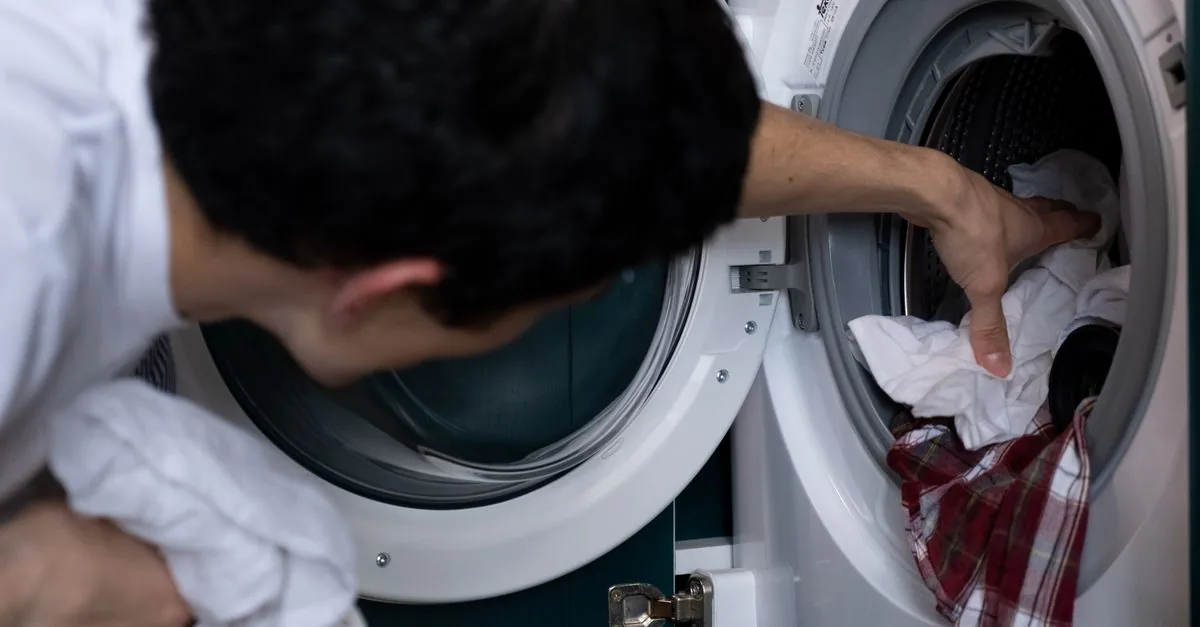
A washing machine that clicks but does not start is telling you something. Almost every machine runs a short safety routine before it will do anything: it checks that it has power, that the door is shut and locked, and that no setting is telling it to wait. If any one of those fails, the machine either sits silent or clicks over and over as it keeps trying.
The good news is that the checks that rule out the common causes cost nothing. A socket that has quietly died, a door that looks shut but is not latched, a child lock nobody remembers switching on, or a delay-start setting left over from the last cycle — between them these account for a large share of the machines people call about. Only after those should you think about voltage, the motor or the control board.
A note first. XpertWorker is a marketplace, not a service company. We do not set any professional’s price and we never charge you a paisa. Every professional quotes you free before starting, and you pay them directly.
In this guide
What to check first, before you call anyone
Do these in order. They take about ten minutes together and none of them costs anything. Stop as soon as the machine starts.
- Test the socket with something else. Unplug the machine and plug in a table fan, a phone charger or a lamp you know works. If that does not run either, the fault is the socket, the switch or the MCB — not the machine.
- Push the plug in properly and switch the socket on. Sounds obvious, but a heavy machine that has been nudged during cleaning often pulls its own plug half out. Check the socket switch too.
- Close the door until you hear it latch. Press it shut firmly with your palm rather than swinging it. On a top loader, press the lid down over the latch area.
- Look for a lock or key symbol on the display. That is child lock. It is usually cleared by holding two marked buttons together for a few seconds — the panel or the manual will say which pair.
- Look for a clock symbol or a time showing that you did not set. That is delay start. The machine is working perfectly and simply waiting. Cancel the programme and set it again without the delay.
- Check the tap is open. Many machines will not begin, and some will beep or click, if they cannot draw water.
- Do a full reset. Switch off at the socket, wait a couple of minutes, switch back on and select a fresh cycle. This clears a surprising number of stuck control boards.
- Photograph any error code. If a code appears, note it exactly. It narrows the diagnosis enormously for whoever you eventually call.
Want a real quote for your own job?
Get free quotesIs the machine getting power at all?
If the display is completely dead and there is no click, no beep and no light, treat this as a power problem first and a machine problem second.
- The socket itself. You have already tested it with another appliance. If that appliance also fails, look at the MCB in your distribution board. One tripped MCB explains a dead socket, and a socket that trips again the moment you reset it is an electrical fault to hand over, not to keep resetting.
- Extension boards and multi-plugs. A washing machine draws far more current than a phone charger, especially while heating. Cheap extension boards fail internally under that load and are a common hidden cause. Plug the machine straight into a wall socket rated for it.
- The plug and cable. Look for a cable pinched behind the machine, crushed against the wall, or chewed. Look at the plug pins for scorch marks. If the plug has a fuse, a blown fuse gives exactly this symptom.
- Damp. Machines on Delhi balconies and in open washing areas take monsoon splash and dust. Water in a socket or in the machine’s inlet area can make the earth leakage protection cut in, killing the socket every time.
Do not open the back panel or the control panel to look for the problem. A washing machine holds a charge in its capacitor after it is unplugged, and the wiring runs beside water. This is where the DIY part of the job ends.
Is the door really latched, or is a setting blocking it?
If the machine lights up but will not begin, the two likeliest causes are a door the machine does not believe is shut, and a setting that is telling it to wait. Both are free to fix.
- The door interlock never closes the circuit. On a front loader the door has to physically latch before the interlock will lock it, and until it locks, the machine will not run a drop of water. If the door swings back slightly, or the latch tongue is bent, or the strike plate on the body is loose, the machine simply waits. Press the door firmly shut and listen for the lock clicking a second or two after you press start.
- Clothes trapped in the seal. One sock caught in the door gasket holds the door a millimetre proud, which is enough. Run a finger all the way round the seal before you close it.
- Top loader lid switch. Top loaders have a small plunger where the lid meets the body. If the plunger is broken off or the lid is warped, the machine behaves as though the lid is open forever.
- Child lock. Look for a padlock or key icon. With child lock on, the panel accepts nothing — you press start and get one beep or one click and no cycle. Holding the two marked buttons together for a few seconds usually clears it.
- Delay start or a timer setting. If the display shows a time you did not choose, the machine is counting down to a start later. Cancel the whole programme, do not just press start again.
- Pause left on. Some machines pause rather than stop when the start button is tapped mid-cycle, and then look idle. Hold the button rather than tapping it, or cancel and reselect.
If the door will not open at all, or the machine beeps and stays locked, that is a related but different fault — see our guide on a washing machine beeping or not opening.
What is that clicking sound, exactly?
The clicking itself is a clue, and where it comes from tells you a lot. Put your ear near the door and then near the control panel and press start again.
- One or two clicks from the door area, then nothing. That is the door lock trying to engage and failing, or engaging and then releasing because the machine does not get the confirmation it expects. Usually a latch, strike plate or interlock problem — go back to the door checks above.
- Repeated clicking from behind the control panel. That is a relay on the control board switching on and off. A relay chatters like this when the board wants to start something — the motor, the pump, the heater — and the supply cannot hold up, or the component it is switching has failed. This one is not a home fix.
- A single loud clunk and then silence. Often the motor being told to run and not turning, or a jammed drum. Try turning the drum by hand with the machine switched off. If it will not move freely, something is wedged or a bearing has seized. Stop running cycles at that point.
- Clicking from low voltage. During a Delhi summer evening, when everyone’s AC is running, supply voltage in some areas sags well below what a washing machine expects. The board powers up enough to light the display and click its relays, but there is not enough to start the motor, so it keeps trying and failing. The tell is that the machine starts perfectly at seven in the morning and refuses at nine at night. If lights dim and fans slow at the same time, that is your answer.
If low voltage is the pattern, a stabiliser sized for the machine is the usual answer, and it also protects the control board from the spikes that come when supply returns. Our voltage fluctuation and stabiliser tips cover how to judge whether you need one.
When to call someone, and what to tell them
Call once the free checks are done and the machine still will not start. Those checks are exactly what a technician does in the first five minutes, so doing them yourself means you are not paying a visit charge for a plug that was loose.
Hand the job over if any of these apply:
- The socket works with other appliances but the machine is completely dead. Something inside has failed — the mains filter, the on-off switch, the board or the wiring. Not a home job.
- The relay clicks repeatedly and the supply voltage is fine. This points at the board or at whatever it is trying to switch.
- The motor hums or clunks and the drum will not turn by hand. A jam or a seized bearing. Repeated attempts make it worse.
- The MCB trips whenever the machine is plugged in. Stop. That is an electrical fault and it needs an electrician, not a repeat reset.
- There is a burning smell, scorching or melted plastic anywhere. Switch off at the socket and leave it off.
To get someone arriving with the right part, tell them: the brand and whether it is a front loader, a top loader or a semi-automatic; the exact error code if there is one; whether the display lights up at all; where the clicking comes from and how many clicks; whether other appliances on that socket work; and whether the problem is worse at particular times of day. That last one is how a good technician spots a voltage problem before opening anything.
For what makes one washing machine repair bigger than another, see our washing machine repair cost guide. If the machine does start but then behaves oddly, our guides on a machine that will not spin, one that will not drain, and a cycle that takes far too long cover what comes next. Simple habits that keep the board and door lock alive longer are in our fridge and washing machine care tips.
Need an AC & Appliance Repair professional?
Get free quotes from independent, local professionals near you. XpertWorker never charges you — you pay the professional directly.
Get free quotes →Frequently asked questions
Why is my washing machine clicking but not starting?
Why is my washing machine not starting at all?
How do I turn off child lock on a washing machine?
Can low voltage stop a washing machine from starting?
Why does my washing machine door not lock?
Is it safe to open a washing machine to find why it will not start?
How we put this guide together
This guide is compiled from common Delhi NCR service patterns and reviewed by the XpertWorker team. XpertWorker connects you with independent, local professionals — we never charge you a paisa, and each professional sets their own price and quotes you free.