You wipe a small heap of pale, talcum-like powder off the floor under the wardrobe. Two days later it is back. Look up at the wood above it and there are tiny round holes, each about the size of a pin prick or a little larger, that were not there when you bought the piece.
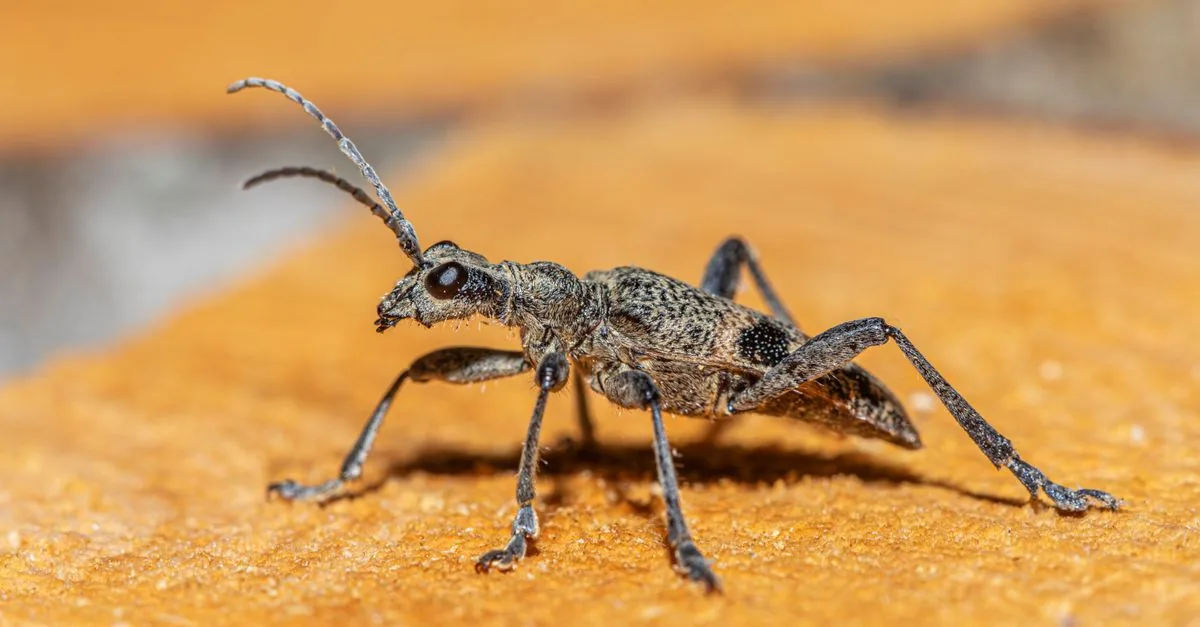
That is wood borer — the larvae of small beetles living inside the timber. The adult beetle lays eggs on or in the wood, the grubs tunnel through it for months or years eating their way along, and when they finally mature they chew a round exit hole and fly out. The powder on your floor is frass: the digested wood dust pushed out of those holes. It is a slow, quiet, entirely internal process, which is why people usually discover it long after it started.
Almost every household in Delhi calls this termites, and it is not. Termites and borer damage wood in different ways, leave different evidence, and are treated in completely different ways — so getting the identification right in the first five minutes saves you from paying for the wrong job. Delhi conditions do not help: humid monsoon months, timber and ply that is often not fully seasoned, and second-hand or newly delivered furniture that can arrive with an active infestation already inside it.
A note first. XpertWorker is a marketplace, not a service company. We do not set any professional’s price and we never charge you a paisa. Every professional quotes you free before starting, and you pay them directly. The professionals you would meet through us are independent; our checks are identity checks, not a skill test.
In this guide
Borer or termite? Tell them apart in two minutes
Run through these four checks. They separate the two almost every time, and you can do all of them yourself with a torch.
- What is on the floor. Borer leaves dry, fine, pale powder that feels like talcum or fine sand between your fingers, in small heaps directly below the holes. Termites do not leave loose powder; they leave mud and soil, and in some cases small dark pellets from drywood species. Powder means borer.
- What the holes look like. Borer makes clean, round exit holes in the wood surface, usually small and neat, scattered across a panel. Termites do not make neat round exit holes in furniture; they eat the wood from inside and leave the outer surface intact until it collapses, and where they break out it is ragged and packed with mud.
- Look for mud. The clearest termite sign is a mud tube: a gritty line of packed soil running up a wall, a skirting, a door frame or a leg of furniture, connecting the wood to the ground. Termites also pack their tunnels with mud, so if you break open damaged wood and it is full of soil, that is termites. Borer tunnels are clean, packed only with fine powder, and connect to nothing outside.
- Where the damage starts. Termites in Delhi usually work upward from the ground or through a wall — skirting, door frames, the bottom of an almirah, the back of a wall unit, wooden flooring near a damp wall. Borer starts inside the timber itself and can be anywhere on a piece, including a table top or a chair that never touches a wall.
If any of the checks point at mud, soil or a hollow-sounding skirting, treat it as termites and read the signs of termite infestation guide, then the termite treatment guide. That is a bigger and more urgent job than borer and it involves the building, not just the furniture.
Want a real quote for your own job?
Get free quotesWhat wood borer looks like, and where it starts
Once you know the signs, borer is easy to spot early, which matters because early is much easier to deal with.
- Fresh powder that returns. This is the test that separates an active infestation from an old one. Wipe or vacuum the powder away completely, put a sheet of clean white paper or newspaper under the piece, and check it after a few days. New powder means active larvae inside right now. No new powder over a couple of weeks in warm weather suggests the holes are old and the beetles have already gone.
- Round exit holes appearing over time. Count them or photograph the panel. New holes appearing over weeks is another sign of an active population.
- A faint ticking or rasping in a quiet room. Some households hear the larvae working inside furniture at night. It is uncommon but unmistakable when you do.
- Weak or crumbling edges. Press a screwdriver gently into a suspect edge. Wood that gives way with a papery crumble and reveals powder-filled tunnels is structurally gone.
- Small beetles near the piece or at the window. The emerged adults are small, hard and brown or dark, often found on the windowsill of the same room as they head for light.
The things most affected in a Delhi home: plywood and blockboard used in wardrobes and kitchen carcasses, the back panels and bottoms of almirahs, bed frames and slats, door and window frames, dining tables and chair legs, wooden flooring and beading, packing cases, and untreated sapwood in cheaper furniture. Timber that is not fully seasoned is the classic entry point — which is why a brand-new piece of furniture can start showing powder within a year, and why it is worth checking a delivery before it is carried in.
Where it comes from: the timber usually arrives already carrying eggs or larvae from the yard, the workshop or the storage godown. It is not a hygiene issue and it is not a sign of a dirty home. Second-hand furniture, a piece brought from an ancestral house, and cheap wooden packing crates are all common ways it enters a flat that had no problem before.
What you can do yourself, right now
None of this cures an established infestation, but all of it is free, useful, and makes any later treatment work better.
- Do the paper test. Clean the powder, put white paper underneath, date it, and photograph what appears. This single piece of evidence tells you and any technician whether the problem is live, and it stops you from paying to treat a piece where the beetles left years ago.
- Isolate the piece. Move an affected item away from other wooden furniture and away from wooden flooring or door frames if you can. Adult beetles emerging can lay on nearby timber, and one infested chair in the corner of a bedroom is how a wardrobe gets it next.
- Check everything else in the same room. Get on the floor with a torch and look underneath every wooden item: bed slats, the underside of the dining table, the bottom rail of the sofa, the back and base of the wardrobe, the skirting and the door frame. Borer is easy to miss because the damage is on the surfaces nobody looks at.
- Vacuum, do not just wipe. Get the powder out of joints and grooves so that fresh powder is easy to see.
- Bring the humidity down. Damp timber is more attractive to borer. Pull furniture a few centimetres off damp walls, air closed wardrobes on dry days, fix leaks and seepage, and use a moisture absorber in a badly affected almirah — the same measures that deal with silverfish.
- Inspect new and second-hand furniture before it comes in. Turn it over. Look at the unpolished underside and the back panel, which is where borer holes show first because that surface is rarely sealed. Do the same with any wooden packing crate before you keep it.
- Do not just fill the holes. Filling and polishing over the holes hides the evidence and does nothing to the larvae inside, and you will lose your only way of telling whether the infestation is still active.
What a professional borer treatment actually involves
Borer treatment is a different job from a general pest round and from a termite job, and it is worth knowing the shape of it before anyone quotes you, so you can tell a real method from a spray-and-go.
- Inspection and identification first. A technician should look at the powder, the holes and the pattern, check the other timber in the room, and tell you plainly whether it is borer or termites. Ask them to show you what they are basing that on.
- Treatment goes into the wood, not onto the room. The standard approach is to treat the timber itself: applying to the surface and the unpolished undersides so the wood absorbs it, and injecting into the exit holes so the tunnels are reached from inside. A general room spray does nothing for larvae living inside a panel.
- Polished and laminated surfaces are the complication. A sealed, polished or laminated surface resists absorption, so treatment concentrates on unpolished undersides, backs, interiors and the holes themselves. On a valuable or heavily polished piece, ask how they intend to handle it and whether the finish will be affected — get that answer before work starts, not after.
- Expect more than one visit. Larvae are inside the timber at different stages, so a genuine plan usually includes a follow-up. Ask how many visits are included and over what period, and get it in a message.
- Polishing comes after, not before. If you plan to fill the holes and re-polish the piece, do the treatment first and the carpentry afterwards, with enough time in between. Doing it the other way round seals the finish and wastes both jobs.
- Ask about precautions, not about safety. Ask how long the room must be ventilated, how long before furniture can be used again, what to empty out of the wardrobe first, what to do about clothes, bedding, food, pets, a fish tank or a birdcage, and ask to be shown the product label and its instructions. Never accept “it is completely harmless” as an answer. Our preparation guide covers what to clear beforehand.
On money: we do not quote figures and we do not set anyone’s price. What drives it is how many pieces are affected, whether it is loose furniture or fixed woodwork like wardrobes, door frames and flooring, and how many visits the plan includes — see the pest control cost guide. If you also have termites, that is a separate and larger job priced its own way in the termite treatment guide.
Treat, repair or replace?
Not every affected piece is worth treating, and an honest professional will say so. Use these rough lines to decide.
- Worth treating: fixed woodwork you cannot remove — built-in wardrobes, kitchen carcasses, door and window frames, wooden flooring, beading and panelling. Also solid, valuable or sentimental furniture where replacement is not the answer.
- Worth treating and then repairing: a piece where the structure is sound and the damage is cosmetic or limited to one panel. Treat, wait, then have a carpenter fill, replace the affected panel and re-polish.
- Consider replacing: a cheap ply piece where the panels crumble under a screwdriver, or an item that is mostly hollowed out. Treating a structurally finished piece is money spent twice, and while it stays in the house it is a source for the timber around it.
- Get it out of the flat properly. If you are discarding an infested piece, take it out of the building rather than storing it on the balcony, in the loft or in a common area, where the emerging adults simply find your neighbours’ timber. In a society, that also makes it everyone else’s problem — see our tips on pests in a society building.
- Buying new after this. Ask the carpenter or the supplier whether the timber and ply are treated and seasoned, and check the unpolished undersides and back panels on delivery. It is the cheapest inspection you will ever do.
Need an Pest Control professional?
Get free quotes from independent, local professionals near you. XpertWorker never charges you — you pay the professional directly.
Get free quotes →Frequently asked questions
What is the fine powder under my wooden furniture?
How do I know if it is wood borer or termites?
Is wood borer active or is the damage old?
Can wood borer spread to my other furniture?
Does wood borer treatment need more than one visit?
How did wood borer get into brand new furniture?
How we put this guide together
This guide is compiled from common Delhi NCR service patterns and reviewed by the XpertWorker team. XpertWorker connects you with independent, local professionals — we never charge you a paisa, and each professional sets their own price and quotes you free.