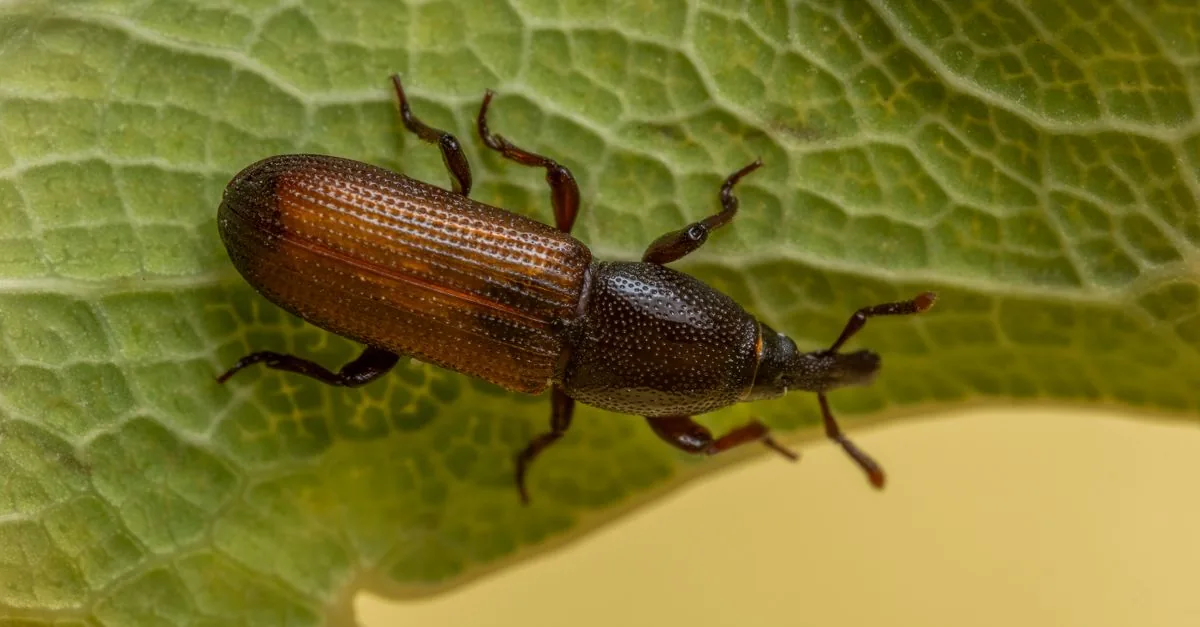
You open a book that has been on the shelf since last monsoon and the page edges are grazed away in irregular patches. There are yellowish stains, a fine dust, and something small and silvery darts off the spine and disappears. That is a silverfish, and if you have one you almost certainly have a population living somewhere close by that you have not found.
They are wingless, teardrop-shaped, about a centimetre long, metallic grey or silver, with three thin bristles at the tail end and long antennae. They move in a quick wriggling dash, they avoid light, and they are almost always found in the same places: bookshelves, the back of an almirah, storerooms, the space under a sink, behind a wall unit, in cardboard cartons, and inside stacked paper.
Here is the thing that matters most, and it is why so many treatments disappoint. Silverfish need humidity, and they eat starch — paper, book glue and binding, wallpaper paste, cardboard, starched cotton, and the size and dressing in fabrics. Delhi supplies both generously: a long humid monsoon, seepage on shared and external walls, closed almirahs that are never aired, and storerooms nobody opens between Diwali cleans. Get the humidity down and the problem collapses. Leave it up and no treatment holds.
A note first. XpertWorker is a marketplace, not a service company. We do not set any professional’s price and we never charge you a paisa. Every professional quotes you free before starting, and you pay them directly. The professionals you would meet through us are independent; our checks are identity checks, not a skill test.
In this guide
How do I know it is silverfish and not something else?
Go by the damage pattern rather than by catching the insect, because you will rarely see one in daylight. Silverfish leave a very recognisable signature.
- Surface grazing, not clean holes. They scrape the surface of paper and cloth, leaving irregular thinned patches and ragged, eaten-away edges. It looks like something sanded the page. Clean round holes punched through many pages are a different insect — a paper or book borer — and holes in a wooden shelf with fine powder below are wood borer, not silverfish.
- Yellow staining and a fine dust. Yellowish marks on paper and cloth, plus a scattering of fine debris and tiny dark specks along the shelf edge or the bottom of the almirah.
- Shed skins and scales. Silverfish moult repeatedly through their lives, so you find translucent shed skins and a faint silvery dust of scales in corners. This is one of the clearest confirmations.
- The damage is at the edges and along the spine. Book covers, spine glue, page edges, the paper labels on files, the gum on envelopes, photo albums, and the folds of stored clothes. Anything with starch or glue.
- Not moths, not fish moths in your food. Holes in stored woollens with silky webbing are usually clothes moths. Small insects in flour, rice or dals are grain pests, a storage problem covered in our food storage tips.
If you want confirmation, look at night with a torch on a bookshelf or in an almirah and check the underside of the lowest shelf and the back panel. That is where they sit.
Want a real quote for your own job?
Get free quotesWhy they are in your almirah in the first place
Because that corner of your home is damper than you think, and it is full of starch. Silverfish struggle in dry air, which is exactly why they favour the few permanently humid pockets of a Delhi flat.
- The monsoon and the weeks after. Through July, August and September, indoor humidity in Delhi stays high for weeks at a stretch. A closed almirah or a packed bookshelf holds that dampness long after the air outside has dried out. Sightings peak from the monsoon into the pre-Diwali cleaning season, which is when most people first discover the damage.
- Seepage on the wall behind the furniture. This is the single most common underlying cause. An external wall, a wall shared with a bathroom, a wall under a leaking terrace or next to a chajja, a damp patch near a pipe chase. Push the almirah or bookshelf away from the wall and feel the plaster. If it is cool and damp, the insects are a symptom and the wall is the problem.
- Furniture flush against the wall. No air gap means no drying. A wardrobe or a bookcase pushed tight to a damp wall creates a still, humid pocket that never changes.
- Cardboard and stored paper. Cartons under the bed, old newspapers, exam files, cardboard boxes in a storeroom, packing material kept “just in case”. Cardboard is food, shelter and a moisture sponge in one item. This is the easiest thing on the list to remove.
- Rooms that are never opened. A servant room used as a store, a locked room in a rented flat, a puja room almirah, a loft. No ventilation, no light, no disturbance, and often a water tank or a bathroom wall next door.
- The kitchen and bathroom edges. Under the sink, behind the WC, and inside a bathroom cabinet, where a slow leak keeps things permanently damp.
Dry it out: the fix that actually holds
Everything below is free or cheap, and it is the part that decides whether the problem comes back. Silverfish are slow breeders compared with roaches or ants, so once the damp is gone a population does not bounce back quickly.
- Pull the furniture off the wall. Leave an air gap of a few centimetres behind every wardrobe and bookcase on an external or shared-bathroom wall. This one change does more than any product.
- Open and air it, on a dry day. Through the monsoon, open the almirah, the storeroom and the bookshelf on the first clear day and let air move through for a few hours. A ceiling fan or a pedestal fan pointed into an open wardrobe for an afternoon is genuinely effective.
- Use a moisture absorber inside closed spaces. Silica gel sachets, a commercial moisture absorber tub, or a small dehumidifier in a badly affected room. Replace or dry the sachets when they are spent; a saturated absorber is doing nothing.
- Sun the books and the clothes. Delhi’s dry autumn and winter sun is a free tool. Fan books open in the sun for an hour or two, shake out and sun stored clothes and linen, and do the same to the shelves themselves before putting anything back.
- Get the cardboard out of the house. Replace cartons with rigid plastic boxes with lids. Store documents in plastic files rather than paper folders inside cardboard. If you keep cartons for a future move, keep them somewhere dry and off the floor.
- Do not stack paper directly on the floor. Floors are the coolest and dampest surface in a room, especially on a ground floor. Get boxes onto a rack or a pallet.
- Fix the leaks. A dripping bathroom pipe, a sweating cistern, a slow leak under the sink, a chronically damp wall. This is the actual root of the majority of long-running silverfish problems in Delhi flats.
- Clean out the crumbs of the shelf. Vacuum or wipe out shelf corners, the runners of a sliding wardrobe and the bottom lip of an almirah, where the shed skins and eggs collect. Do this before any treatment, not after.
Traditional almirah items like cloves, neem leaves or camphor are widely used in Delhi households and are harmless to try, but treat them as a small extra rather than the plan. If the almirah is damp, they will not save your saris.
What to do with an infested bookshelf or wardrobe
Work through it in one sitting rather than in stages, because half-emptying a shelf just moves them along it.
- Empty it completely. Everything out, onto a sheet on the floor, so you can see what is damaged and what is clean.
- Triage the paper. Badly grazed and stained books, old magazines and dead files are best out of the house. They are both the food source and the nursery. Be honest about what you will genuinely read again.
- Check and sun the keepers. Fan each book open, check the spine and the inside of the cover for shed skins and eggs, and give them a few hours in the sun or in front of a fan.
- Vacuum the empty unit. Corners, joints, the back panel, under the lowest shelf, the drawer runners. Then wipe it down and let it dry completely before anything goes back in.
- Check the wall behind before you refill. This is your one chance to find the damp patch. Feel it, look for salt staining or bubbling paint, and take a photo if you will be raising it with a landlord, a builder or the society.
- Repack differently. Rigid boxes instead of cartons, a gap behind the unit, a moisture absorber inside, and clothes stored dry and fully aired rather than put away slightly damp.
- Give it a season. Numbers should drop noticeably within a few weeks of the space drying out. If they do not, the moisture source is still there and has not been found.
When is a professional treatment worth it?
When the population is established across several rooms, when you keep finding them after the drying-out work, or when they are in something you cannot take apart — a fixed wardrobe, a modular kitchen carcass, a boxed-in duct, a false ceiling, a wall cavity. Also when the damage is happening to things you cannot replace: documents, old books, a collection, stored textiles.
What a sensible treatment looks like:
- Inspection first. A technician who looks behind the furniture, checks the wall for damp, and finds where the population is harbouring is worth much more than one who arrives and starts spraying.
- Crack-and-crevice treatment, not a general fog. The work belongs in shelf joints, the backs of units, skirting gaps, wardrobe runners and pipe entries, because that is where they live.
- An honest word about the damp. A good professional will tell you plainly that if the seepage is not fixed, the treatment buys you months rather than solving it. If nobody mentions the moisture, that is a signal about the quality of the inspection.
- Ask about precautions, not about safety. Ask what you must empty out beforehand, how long to keep the room ventilated, when things can go back in, what to do about books, clothes, food, pets, a fish tank or a birdcage, and ask to be shown the product label. Never accept “it is completely harmless” as an answer — ask for the written instructions instead. Our preparation guide lists what to clear before the technician arrives, and it matters more for silverfish than for most pests because the treatment goes exactly where your things are stored.
On money: we do not quote figures and we do not set anyone’s price. The size of the home, how many rooms are involved, and whether it is a one-off round or a running arrangement are what drive it — see the pest control cost guide and the AMC guide. If odour in a bedroom or a study is your concern, the low-odour options guide explains what those actually are.
Need an Pest Control professional?
Get free quotes from independent, local professionals near you. XpertWorker never charges you — you pay the professional directly.
Get free quotes →Frequently asked questions
What is the small silver insect in my bookshelf?
How do I stop silverfish from eating my books?
Why do I get silverfish only during the monsoon in Delhi?
Do silverfish damage clothes as well as paper?
Will pest control get rid of silverfish permanently?
Are silverfish a sign of a damp problem in the wall?
How we put this guide together
This guide is compiled from common Delhi NCR service patterns and reviewed by the XpertWorker team. XpertWorker connects you with independent, local professionals — we never charge you a paisa, and each professional sets their own price and quotes you free.