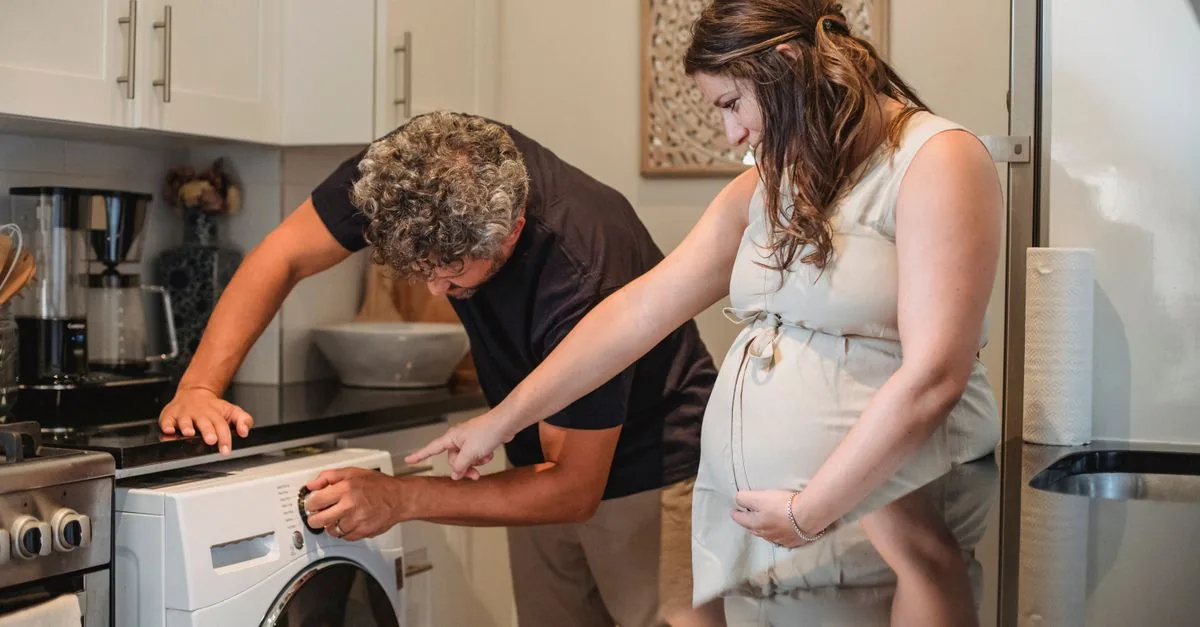
A washing machine that shakes, jumps, dances, bangs against the wall or slowly walks out of its corner is telling you one thing: the drum is spinning off-centre. At spin speed the drum turns fast enough that even a small imbalance turns into a lot of movement.
The good news is that most of the causes are free to fix and take a few minutes. A machine that is bolted for transport, standing on an uneven floor, sitting on feet that were never adjusted, or loaded with one heavy bedsheet bunched to one side will all do exactly this. Only at the far end of the list — worn shock absorbers, worn bearings — does it become a real repair.
Work down this page in order. Do not skip the first section, even if the machine has been in the flat for years. People discover unremoved transit bolts on five-year-old machines all the time.
A note first. XpertWorker is a marketplace, not a service company. We do not set any professional’s price and we never charge you a paisa. Every professional quotes you free before starting, and you pay them directly.
In this guide
- Why is my washing machine jumping around? Start with these free checks
- Transit bolts: the cause almost nobody checks
- Why is my washing machine always off balance? The floor and the feet
- Constantly unbalanced or hitting the sides when spinning? Load, then suspension
- When to call someone, and what to tell them
Why is my washing machine jumping around? Start with these free checks
Run these five checks before you call anyone. Between them they explain most shaking-and-moving complaints, and every one of them is free.
- 1. Look at the back of the machine for transit bolts. Three or four large bolts across the rear panel, often with plastic collars. If they are still fitted, that is your answer and the next section is the whole page for you.
- 2. Push each top corner of the machine down in turn. If any corner drops or the machine rocks, it is not level and not sitting on all four feet.
- 3. Open the door and look at how the load is sitting. One heavy bedsheet, a single towel, jeans wrapped into a rope, or everything bunched on one side will throw the drum off-centre every time.
- 4. Run a spin with the drum empty. If an empty drum spins quietly and stays put, the machine itself is fine and your problem is the load or the loading habit. If an empty drum still bangs and moves, it is the mounting, the suspension or the bearings.
- 5. Take the machine off any mat, ply sheet or wooden platform. A machine standing on a loose mat or a homemade plinth in a small Delhi utility balcony has nothing solid to push against. Put it directly on the floor and test again.
Also grab the top of the machine and try to rock it front-to-back and side-to-side while it is switched off. A firmly seated machine barely moves. If it rocks freely, fix that before anything else — you will chase the wrong fault otherwise.
Want a real quote for your own job?
Get free quotesTransit bolts: the cause almost nobody checks
Every front-loading washing machine leaves the factory with transit bolts fitted — long bolts through the back panel that clamp the drum solid so it cannot swing about in a truck. They are supposed to come out before the very first wash. They are also the single most overlooked cause of violent shaking, because the delivery crew is in a hurry, the customer does not know they exist, and the machine appears to work fine.
- What they look like. Three or four bolt heads in a row across the rear panel, usually with a plastic spacer or collar around them. Once removed, the manufacturer supplies plastic caps to blank off the holes.
- What it feels like if they are still in. Heavy shuddering and loud banging on spin, often from the very first wash the machine ever did. The drum cannot move on its springs, so all of the vibration goes straight into the cabinet and the floor.
- How to be sure. Check the manual or the sticker on the back panel — every brand shows the bolt positions. If the holes are capped with plastic plugs, the bolts came out. If there are bolt heads, they did not.
- Is it DIY? Usually yes. It is a spanner and a few minutes with the machine pulled away from the wall and unplugged. If you are unsure which bolts are transit bolts and which hold the panel on, stop and ask a professional — removing the wrong one is worse than leaving them all in.
Keep the bolts. If you ever move flat inside Delhi, they go back in before the machine goes on a truck, otherwise the drum swings on its springs the whole journey and can damage the suspension. This is the one thing most worth knowing before a shift.
Why is my washing machine always off balance? The floor and the feet
A washing machine needs all four feet carrying weight on a hard, flat, solid surface. Miss that and the machine rocks on two diagonal corners, and every spin cycle turns that rock into a walk. This is extremely common in Delhi flats, where machines end up in a utility balcony or a bathroom corner with a sloped floor built for drainage.
- The floor slopes on purpose. Balcony and bathroom floors in most NCR flats are laid with a fall towards a drain. That slope is fine — you correct for it with the feet — but a machine dropped onto it and left alone will never be level.
- Loose or hollow tiles. Tap around the machine’s footprint. A hollow-sounding tile flexes under load and lets the machine bounce. Move the machine to a solid patch if you can.
- Feet that were never adjusted. Most feet screw in and out and have a locknut. Adjust so all four are firmly down with no rock, then tighten the locknuts against the body — an unlocked foot slowly unscrews itself and the machine goes out of level again in a month.
- Rear feet may be self-levelling. On many models the back feet set themselves when you tilt the machine forward and lower it. Check your manual before trying to screw them.
- Wooden platforms and stands. A machine on a ply board, a stool or a homemade stand has a springy base. Direct contact with the floor is always better.
The test is simple and free: press down on each corner in turn. If nothing moves, it is level enough. Do this again a few months later — feet work loose, especially on a machine that has been vibrating.
Constantly unbalanced or hitting the sides when spinning? Load, then suspension
If the machine is bolt-free and level and still goes off balance all the time, work through these in order. The first two are free and behavioural. The last two are real repairs.
- The load is bunched to one side. The classic case is one bedsheet, one curtain or one blanket. It wraps into a rope, lands on one side of the drum, and the machine spends the whole cycle trying to redistribute it, filling and draining and slowing down again. Stop the machine, shake the item out, and add two or three smaller items so the load can spread.
- Overloading. A drum packed to the roof cannot tumble, so the washing sits as one solid lump and moves as one solid lump. Overloading also loads the bearings and the suspension far harder than they were designed for, which is how a habit becomes a repair bill. Leave a hand’s width of space at the top.
- Mixing very heavy and very light items. Jeans and towels with light cottons in the same load is a recipe for imbalance, because the heavy items all end up together on one side.
- Worn shock absorbers or dampers. The drum hangs on springs and is damped by shock absorbers, exactly like a car. When those wear out, the drum swings freely and hits the cabinet sides. Symptom: heavy knocking or a hollow bang from the spin, on every load, even a small one. Confirmation: with the machine off, push the drum down by hand through the door — if it bounces up and down several times instead of settling, the dampers are tired. This is a technician’s job.
- Worn drum bearings — the serious end. Symptom: a loud grinding, rumbling or aeroplane-like roar that gets louder as the spin speeds up, often with the drum able to be lifted or rocked at the rim by hand, and sometimes rust-coloured water marks under the machine. Definitely a technician’s job, and on many machines a big one, because reaching the bearings means splitting the tub.
If the noise is the main thing you notice rather than the movement, our guide on washing machine noises in Delhi separates the harmless sounds from the ones that mean bearings. If the machine also refuses to finish a spin and leaves clothes soaking, read why a washing machine will not spin — repeated imbalance detection is one of the main reasons a spin gets abandoned.
When to call someone, and what to tell them
Call a professional once transit bolts, levelling and load habits have all been ruled out and an empty drum still bangs. At that point you are into suspension, dampers or bearings, and none of those is a sensible DIY job on a machine that holds water and mains electricity.
Say these things when you book, and the technician can arrive with the right part instead of making two visits:
- Brand, model number and rough age. The model number is on a sticker inside the door frame or on the back panel.
- Front loader or top loader. The suspension design is completely different.
- Whether an empty drum also bangs. This is the single most useful sentence you can offer — it separates a loading problem from a mechanical one.
- What the noise is. A hollow knock, a metallic grinding, or a rumble that rises with speed. Grinding and rumbling point at bearings; knocking points at dampers.
- Whether the drum rocks or drops when you push it by hand, and whether it bounces repeatedly instead of settling.
- Whether you have ever moved the machine, and whether the transit bolts went back in for the move.
Two honest points before you agree to anything. First, ask for labour and the part as two separate figures, before work starts. Second, on an older machine, weigh a heavy bearing job against the age of the machine — our washing machine repair cost guide for Delhi NCR works through the repair-or-replace arithmetic, and how to choose a washing machine in Delhi is the page to read if the answer turns out to be replace. Keeping the machine level and the loads sensible is covered in our fridge and washing machine care tips.
Need an AC & Appliance Repair professional?
Get free quotes from independent, local professionals near you. XpertWorker never charges you — you pay the professional directly.
Get free quotes →Frequently asked questions
Why is my washing machine jumping around when it spins?
Why is my washing machine always off balance?
Do transit bolts have to be removed from a washing machine?
Why is my washing machine banging on spin and hitting the sides?
Is it safe to use a washing machine that shakes and moves?
How do I stop my washing machine from moving across the floor?
How we put this guide together
This guide is compiled from common Delhi NCR service patterns and reviewed by the XpertWorker team. XpertWorker connects you with independent, local professionals — we never charge you a paisa, and each professional sets their own price and quotes you free.