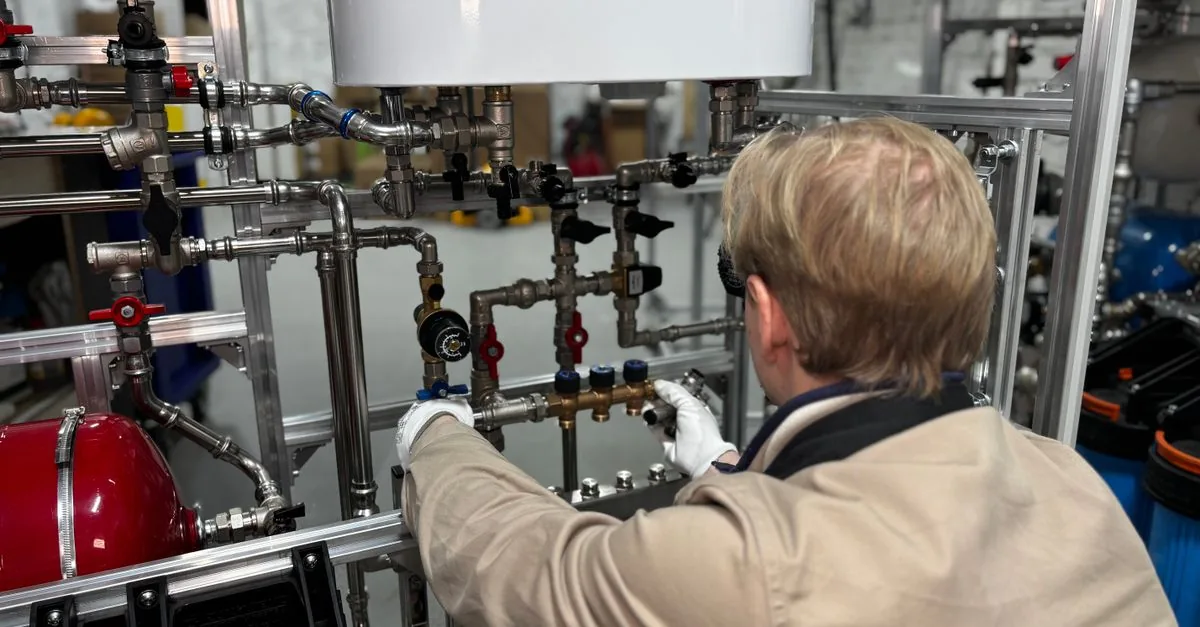
A geyser is not a silent appliance. A faint click as the thermostat cuts in and out, and a soft hiss as the tank warms, are normal. What is not normal is rumbling, popping, banging, a loud hum, or the whole unit shaking on its bracket.
The good news is that the commonest noise here has a boring cause and a straightforward answer. The water in most of Delhi, Gurgaon, Noida and Ghaziabad is hard, and borewell supply is harder still. Every litre heated leaves a little calcium behind, and it settles on the heating element and the bottom of the tank. A geyser that was quiet last winter and rumbles this winter has usually just accumulated another season of scale.
This page sorts the sounds so you can name yours, tells you which ones are harmless, which ones are a plumbing problem rather than a geyser problem, and which ones mean switch it off now. It does not ask you to open the geyser, because a storage geyser is a sealed pressure vessel with a live element inside and opening one is a professional job.
A note first. XpertWorker is a marketplace, not a service company. We do not set any professional’s price and we never charge you a paisa. Every professional quotes you free before starting, and you pay them directly.
In this guide
What to listen for first, before you call anyone
Five minutes of careful listening will usually name the fault for you, and all of it is free. Stand in the bathroom with the geyser on and work through this list.
- 1. Does the noise happen while it is heating, or when you use the water? Noise during heating, with no tap open, points inside the tank — scale, the element, boiling pockets. Noise only when a tap is opened or closed points at the pipework, not the geyser at all.
- 2. Name the sound in plain words. Rumbling and popping like a kettle. A steady low hum or buzz. A sharp bang or knock. A slow tick, tick, tick. A rattle or vibration. Each one has a different cause and the next sections take them in turn.
- 3. Put a hand flat on the wall bracket, not on the geyser. If the noise is a vibration you can feel through the bracket and the wall, the mounting or the pipe clips are involved. Do not put your hand on the geyser body itself.
- 4. Notice when it started. On the first cold morning after eight months unused? After a plumbing repair or a new motor or pump? After the supply changed from tanker to borewell? Each of those points somewhere different.
- 5. Check for the knock that follows a tap. Close a tap sharply and listen. If the bang comes a moment after you shut the tap, that is water hammer in the pipes, and the geyser is an innocent bystander.
- 6. Look while you listen. Any drip from the small valve on the side, any damp on the wall, any rust streak, any scorch mark near the switch. Noise plus water, or noise plus a burning smell, changes the answer completely.
Want a real quote for your own job?
Get free quotesWhy does my geyser rumble, pop or crackle?
Because there is scale on the heating element and sediment on the floor of the tank. This is by far the commonest cause of geyser noise in Delhi NCR, and it is a hard-water story from start to finish.
- What is actually happening. Calcium from hard water bakes on to the hot element as a crust. Water gets trapped under and inside that crust, turns to steam in tiny pockets, and those pockets collapse. That is the popping and crackling. Loose sediment rolling around on the tank floor as the water moves adds the deeper rumble.
- Why it is worse here. Borewell water in much of Gurgaon, Noida and outer Delhi is very hard, and tanker supply varies. The harder the supply, the faster the crust builds. Households that never flush or service the geyser can build a surprising layer in two or three seasons.
- How to confirm it. The noise is worst during a heating cycle from cold, it has got gradually louder over seasons rather than appearing overnight, and the geyser also takes noticeably longer to heat than it used to. Those three together are as close to certain as you get without opening the tank.
- Is it dangerous? Not immediately, but it is not harmless either. Scale acts as a blanket over the element, so the element runs hotter than it was designed to. That is exactly how elements crack and start leaking current to earth, which is the fault behind most geysers that trip the MCB. Rumbling is an early warning of an expensive failure, not a quirk.
- Is it a DIY fix? No. Descaling means isolating the power, shutting the water, draining a full pressure vessel, opening it and cleaning or replacing the element, then resealing it correctly. Have a technician do it during a service. What you can do at home is reduce how fast it comes back — our hard water home tips cover that.
If the geyser is also slow to heat or the water is not as hot as it was, read why geyser water is not hot enough, because scale explains both symptoms at once.
Knocking or banging when I shut a tap: is that the geyser?
Usually not. A sharp bang or knock that arrives a moment after a tap or a washing machine valve shuts is water hammer, and it is a plumbing problem in the pipes rather than a fault in the geyser.
- What water hammer is. Moving water has momentum. When a valve slams shut, that column of water stops suddenly and the shock travels back along the pipe. If the pipe is not clipped firmly, it moves and hits the wall or a joist. That is the bang you hear, and it can sound as if it is coming from the geyser because the geyser is the biggest object on that pipe run.
- Why it is common in flats here. Quick-closing modern taps and appliance valves, high-rise buildings with pumped supply and long vertical risers, and pipework chased into walls with too few clips. In a tower with a shared pump the pressure can be considerably higher than an old ground-floor house, and hammer is the result.
- How to confirm it. The bang always follows a tap or appliance closing, never happens during a quiet heating cycle, and often gets worse the faster you shut the tap. Close the tap slowly: if the bang disappears, that is your answer.
- What can be done. A plumber can add clips to loose pipe runs, fit an arrestor, or check whether the incoming pressure is simply too high. Do not attack it by throttling the geyser inlet down hard, because starving a geyser of inlet flow creates other problems.
- The knock that is not hammer. A single dull thud from inside the tank as heating starts, with no tap involved, is more likely to be steam pockets under scale. That belongs to the section above.
If the banging comes with weak flow at the taps as well, our guide on low water pressure in Delhi is the better starting point, since both can share one cause in a building with an ageing pump.
Humming, ticking, rattling and shaking: the smaller noises
These are the sounds people describe as “my geyser is humming” or “my geyser is shaking”. Some are harmless. One of them is not.
- A slow tick or creak as it heats, fading when it stops. Almost always expanding pipework. Metal pipes grow slightly as hot water enters and rub against the clip, the wall or the chase they are buried in. Annoying, harmless, and hard to cure once the pipe is inside a wall.
- A steady low hum or buzz. Often the element itself vibrating in the water as it heats, which is common and not in itself a fault. It can also be flow noise through a partly closed inlet valve. What matters is whether the hum is accompanied by anything else — a smell, a trip, a warm switch. A hum on its own with everything else normal can be watched. A hum with any electrical symptom is a call.
- Rattling or visible shaking of the unit. Check the mounting. Geysers are heavy when full, and a bracket that has worked loose in a hollow or crumbling wall lets the whole unit move as the water surges. This one deserves prompt attention, because a poorly fixed geyser full of water on a weak wall is a genuine hazard.
- A hiss or whistle. A soft hiss while heating is normal. A rising whistle, or the sound of steam escaping, is not. Switch it off at the MCB and call someone.
- Any new noise from an old geyser after a long summer off. Treat it seriously rather than assuming it will bed in. Seasonal appliances here fail on switch-on, not gradually.
When to call someone, and what to tell them
Not every noise needs a visit today, but each one has a sensible timeframe.
- Call now, with the power off, if there is banging that shakes the unit, a whistle or escaping steam, a burning smell, a scorch mark, a trip on the breaker, or any tingle from a tap. Stop using it in the meantime.
- Call this week if it rumbles and pops through every heating cycle and the water takes longer to heat than it used to. That is scale, and it is quietly cooking the element.
- Call a plumber rather than a geyser technician if the noise is a bang that follows a tap closing, or a knock heard through the walls when the building pump runs. That is pipework.
- Call soon if the geyser visibly moves or the bracket looks loose. A full tank is heavy and the wall matters more than the noise.
- What to tell them. The sound in your own words, whether it happens while heating or only when a tap is used, how long it has been going on, whether the geyser is slower to heat than before, its rough age, whether it is storage or instant, and whether your supply is DJB, borewell or tanker. Water source genuinely changes the diagnosis here.
If the visit turns into a descale-versus-replace conversation, it is worth knowing what drives that decision before you are standing in the bathroom deciding. Our guides on what drives geyser installation cost in Delhi, instant versus storage geysers and what drives plumber charges in Delhi NCR lay out the factors. If there is water as well as noise, see a geyser dripping from the pressure valve and a leaking geyser. And before next winter, our winter geyser safety tips are the cheapest way to keep this from coming back.
Need an Plumber professional?
Get free quotes from independent, local professionals near you. XpertWorker never charges you — you pay the professional directly.
Get free quotes →Frequently asked questions
Why is my geyser rumbling and making a popping sound?
Why does my geyser make a knocking sound when I turn off a tap?
Is a humming geyser dangerous?
Why is my geyser shaking or vibrating on the wall?
Which geyser noises mean I should stop using it?
Can I flush or descale my geyser myself to stop the noise?
How we put this guide together
This guide is compiled from common Delhi NCR service patterns and reviewed by the XpertWorker team. XpertWorker connects you with independent, local professionals — we never charge you a paisa, and each professional sets their own price and quotes you free.