Almost every kitchen sink problem is one of three things: grease that was allowed to cool and set, hard-water scale that built up faster than it was wiped off, or a smell that is not coming from the sink at all but from the trap under it.
All three are handled with hot water, detergent, a cloth and a brush. Almost none of them are helped by pouring something aggressive down the drain, and several are made worse by it.
Delhi has one specific complication: the water is hard almost everywhere, whether the supply is DJB, borewell or tanker. Hard water leaves mineral deposits behind every time it dries, so a stainless steel sink here goes cloudy and spotted far faster than the same sink elsewhere. Fighting that with harsher chemicals is the wrong instinct; drying the sink is the right one.
A note first. XpertWorker is a marketplace, not a service company. We do not set any professional's price and we never charge you a paisa. Every professional quotes you free before starting, and you pay them directly.
In this guide
The daily and weekly routine that does most of the work
None of this takes long. It only works because it is done before anything sets.
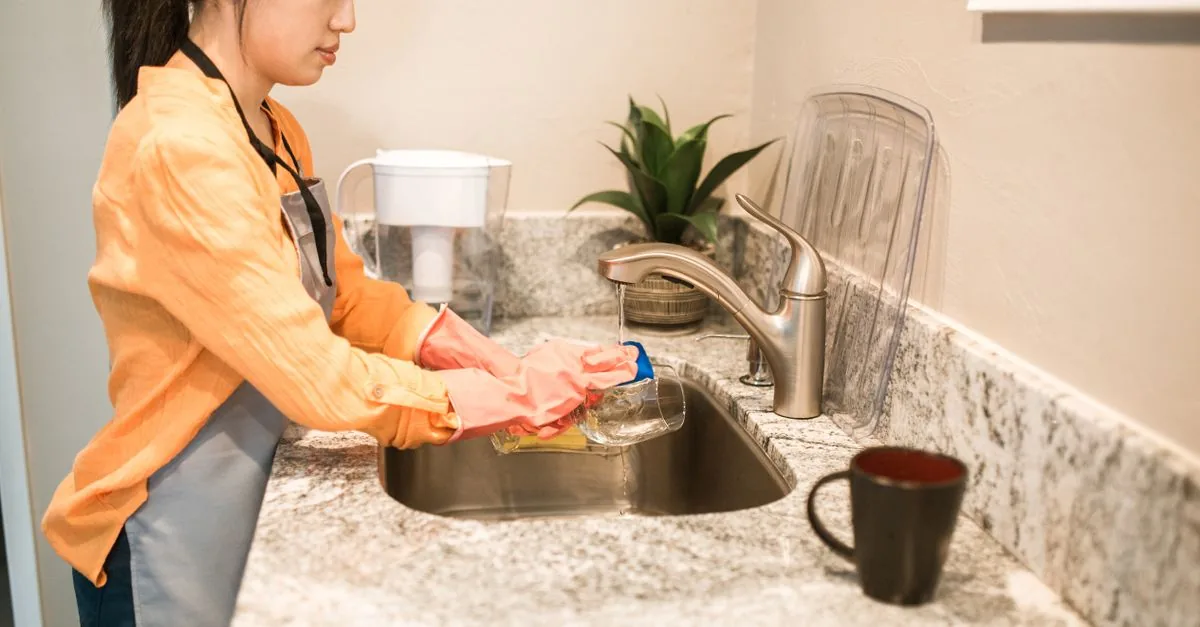
- Every day, after the last washing-up. Empty the strainer basket into the bin. Rinse the bowl. Squeeze a little dishwashing liquid onto a soft sponge and wipe the whole bowl, the rim and around the tap base. Rinse with the hottest water the tap gives. Then dry it with a cloth. The drying is the step everyone skips and it is the one that keeps a sink looking new in hard water.
- Every day, for grease. Pour a kettle or a mug of very hot water down the drain after washing greasy vessels. Hot water and detergent carry warm grease along the pipe; once it has cooled and set on the pipe wall, nothing you pour will move it.
- Once a week, the strainer and drain mouth. Take the strainer out completely. Scrub both sides with an old toothbrush and detergent, including the underside rim where a slimy film builds up. Then scrub as far into the drain opening as you can reach with a bottle brush. This is the single most useful five minutes in the whole routine.
- Once a week, the tap and the scale. Wipe around the base of the tap and the aerator with a soft cloth, and deal with any chalky white build-up before it hardens — see the hard-water section below.
- Once a week, a hot flush. Fill the bowl with hot water and a good squirt of dishwashing liquid, then pull the plug so the whole lot goes down under the weight of a full bowl. A slow trickle does not scour a pipe; a full bowl released at once does.
- Once a month, look underneath. Open the cupboard under the sink with a torch. You are looking for damp patches, a slow drip at the trap, rust on the connections and any smell. Catching a slow leak early is the difference between a wipe and a cabinet floor that has swelled and delaminated.
Want a real quote for your own job?
Get free quotesHow to clean a stainless steel sink without dulling it
Stainless steel has a directional grain — fine parallel lines you can see if you look at it in raking light. Everything about cleaning it comes down to respecting that grain and not scratching across it.
- Always wipe with the grain, never in circles. Circular scrubbing leaves a haze of fine scratches running in every direction, which is exactly what makes an old sink look permanently dull. Find the direction of the lines and work along them.
- Soft sponge and dishwashing liquid is the default. That handles daily grease and food residue completely. For heavier marks, a paste of baking soda and a little water, worked gently along the grain with a soft cloth, is mild enough not to cut the surface.
- What dulls a steel sink. Steel wool and metal scourers, which scratch and also leave tiny iron particles behind that rust and stain. Harsh scouring powders. Scrubbing across the grain. Leaving a cast-iron pan, a steel wool pad or a wet knife sitting in the bowl overnight, which leaves rust marks that look like the sink itself has rusted. And bleach, which pits and discolours stainless steel — do not leave it standing in the bowl.
- Rinse and dry, every time. Detergent film and hard-water minerals both dry as a dull haze. A dry cloth over the bowl at the end of the day is what keeps the shine, more than any product.
- For a tired-looking sink, a clean and dry followed by a few drops of ordinary cooking oil or a stainless steel polish buffed along the grain with a soft cloth will restore a lot of the appearance. Buff it off properly so it is not slippery or greasy.
- Granite, quartz and composite sinks are different. No abrasive powders, no metal scourers, and no acidic descaler at all — see the next section.
Hard-water scale around the tap and drain: the Delhi constant
Chalky white crust at the base of the tap, a rough ring around the drain, cloudy patches on the bowl and a spitting aerator are all the same thing: dissolved minerals left behind as water evaporates. Delhi NCR water is hard across most supplies, so this is maintenance, not a fault.
- Prevention beats removal. Wiping the sink and tap dry once a day prevents more scale than any descaler removes. Scale that is wiped off wet takes seconds; scale left to harden for months needs soaking.
- Fresh light scale. A cloth dampened with plain white vinegar or lemon, laid over the deposit for ten to fifteen minutes, softens it enough to wipe off. Then rinse with plenty of water so nothing acidic is left sitting on the metal.
- The tap aerator. If the flow has gone weak or sprays sideways, unscrew the little mesh at the tip of the spout, soak it in vinegar until the crust loosens, brush it with an old toothbrush and refit it. This is one of the most satisfying five-minute jobs in a Delhi kitchen.
- The ring around the drain. A rough grey-white deposit around the drain opening is scale mixed with soap residue. Soften it the same way and work it off with a nylon brush, along the grain on steel.
- Where NOT to use an acidic descaler. Never on marble, granite or any natural stone worktop or sink, and not on composite or quartz sinks — acid etches stone and leaves a permanent dull patch that polishing, not cleaning, has to correct. Keep vinegar and lemon strictly on the steel and off the stone around it. For stone care, see cleaning marble and granite floors and marble polishing.
- If scale is a constant battle everywhere, the issue is the water rather than the cleaning. Hard water home tips covers the practical options.
Grease and the drain: why oil must never go down the sink
This is the most important habit on the page. Hot oil and ghee pour like water and feel harmless going down. A metre along the pipe they cool, stick to the pipe wall, and start catching everything that passes — atta, rice starch, tea leaves, hair, vegetable peel. That layer is what a blocked kitchen drain is actually made of, and it is also what drain flies breed in.
- Never pour cooking oil, ghee, or the fat poured off meat down the sink. Not even followed by hot water, which only carries it further along before it sets.
- What to do with it instead. Let it cool, pour it into an old jar or a used tetrapak or milk carton, close it, and put it in the bin. Wipe greasy vessels and the kadhai out with a paper napkin, old newspaper or a scrap of cloth before they go in the sink, so most of the fat never reaches the water.
- Wash greasy vessels in genuinely hot water with detergent. Detergent is what emulsifies grease so it travels; hot water keeps it liquid while it does. Cold rinsing greasy vessels is what coats the pipe.
- Use a strainer and empty it into the bin. A fine mesh strainer in the drain outlet catches rice, dal, atta and vegetable scraps. Emptying it into the bin rather than pushing it through is the entire point.
- Nothing solid down the drain. Tea leaves and coffee grounds, atta and dough scraps, rice and starchy water residue, egg shells, and stringy vegetable peel all pack down against existing grease. Scrape plates into the bin first, always.
- Keep the drain mouth scrubbed. The slimy film on the underside of the strainer and just inside the opening is where smell and small flies come from. A weekly brush handles it. If you are seeing tiny moth-like flies around the sink, drain flies explains what they are and how to clear them.
If the sink is already draining slowly, that is a different job — blocked drain and preventing blocked drains take it from there.
How to remove smell from a kitchen sink, and what not to use
Start with the right assumption: the smell is almost never from the sink bowl. It comes from the trap under it — the U-bend or bottle trap holding a small pool of water — and from the film of food and grease lining the pipe just below the drain opening. Scrubbing the bowl harder will not touch either.
- Deal with the film first. Remove the strainer, scrub the drain opening and as far down the pipe as a bottle brush reaches, then flush a full bowl of very hot water with detergent released all at once. Repeat on two or three consecutive days if the smell is established.
- Check the trap is holding water. A sink that is unused for a couple of weeks, especially in summer, can have its water seal evaporate, which lets drain smell straight up into the kitchen. Running the tap for a minute refills it. If the smell disappears after that, that was it.
- If the smell persists, look under the sink. Many trap designs unscrew by hand into a bucket and can be emptied, scrubbed out and refitted. If yours does not obviously come apart, or the fittings look old or corroded, leave it to a plumber rather than cracking a joint you cannot reseal.
- A gurgling drain with a smell is a different signal. That points at venting or a partial blockage in the line rather than the sink — see drain gurgling and bad smell. A sewage smell across the flat rather than at one fixture belongs in bathroom smells of sewage.
What not to use, and why:
- Do not mix bleach with anything. Not with an acidic descaler, not with a drain cleaner, not with another cleaner “to make it stronger”. Mixing household cleaners can release harmful fumes in an enclosed kitchen. One product, rinse well, ventilate.
- Go easy on caustic drain chemicals. They are hard on older pipework, joints and seals, they do very little to a set grease layer, and any residue left in the pipe is a hazard for whoever opens that trap next. If you have used one and the drain is still blocked, tell the plumber before they start work.
- No acidic descaler on stone or composite. Vinegar, lemon and descaling liquids etch marble, granite and composite sinks and worktops permanently.
- No steel wool, metal scourers or harsh powders on a steel sink. They scratch across the grain and leave iron particles that rust.
- Do not leave bleach standing in a stainless steel bowl. It pits and discolours the surface.
If the kitchen has reached the point where the sink, the counter, the chimney and the cabinets all need doing at once, that is a deep-clean rather than a routine — see kitchen deep cleaning for what drives the cost, and kitchen cleaning habits for the daily side.
Need an Home Cleaning professional?
Get free quotes from independent, local professionals near you. XpertWorker never charges you — you pay the professional directly.
Get free quotes →Frequently asked questions
How do I clean a kitchen sink every day?
How do I remove the smell from my kitchen sink?
How do I clean a stainless steel sink without scratching it?
How do I get rid of white hard-water marks around the tap?
What should I do with used cooking oil instead of pouring it down the sink?
Should I use drain cleaner chemicals in my kitchen sink?
How we put this guide together
This guide is compiled from common Delhi NCR service patterns and reviewed by the XpertWorker team. XpertWorker connects you with independent, local professionals — we never charge you a paisa, and each professional sets their own price and quotes you free.