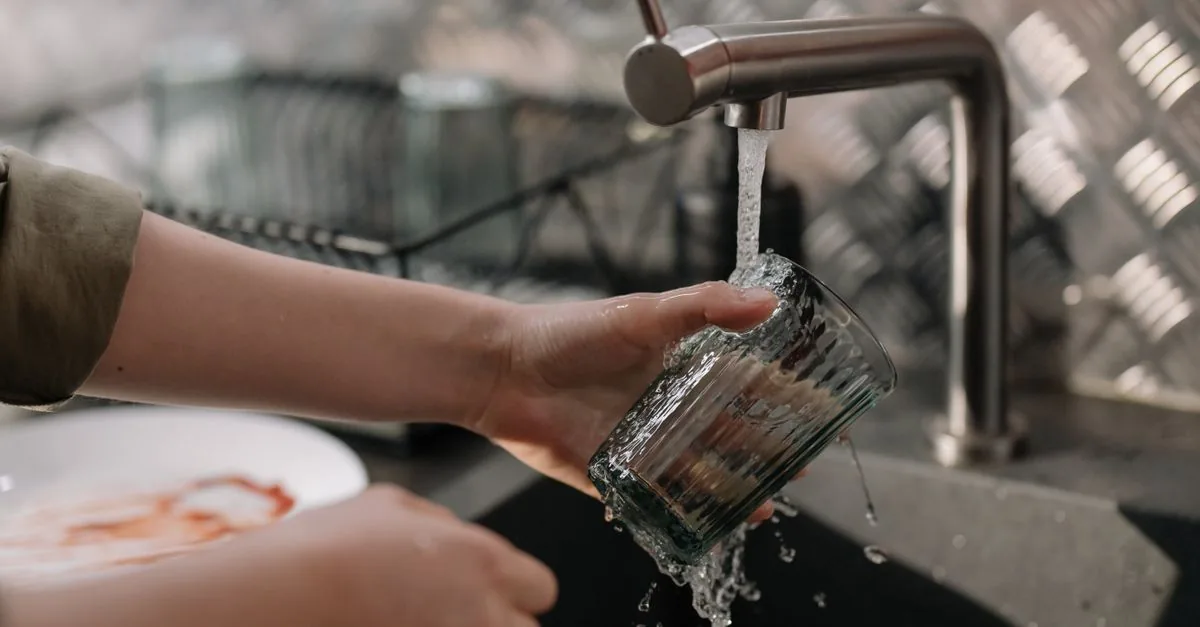
You fill a glass from the RO tap and it comes out looking like watered-down milk. Nothing has changed — same machine, same tap, same supply — and yet the water has gone cloudy. It is one of the most common things people notice about a purifier, and it has a small number of causes that are easy to tell apart once you know what to look at.
Start with the good news, because it is usually the right news. Water that has been pushed through a membrane under pressure carries dissolved air, and that air comes back out as microscopic bubbles the moment the water reaches your glass at normal room pressure. Millions of tiny bubbles scatter light, and scattered light looks white. That is the milky glass. It is not particles and it is not a fault.
The rest of this page is about telling that harmless case apart from the ones that are not air — a filter that is letting sediment past, a brand-new carbon cartridge shedding fines, or an overhead tank that has not been cleaned in years. In Delhi NCR the tank case matters more than most guides admit, because so many homes here take water through a building tank, a tanker delivery or a borewell rather than straight off a clean mains line.
A note first. XpertWorker is a marketplace, not a service company. We do not set any professional’s price and we never charge you a paisa. Every professional you contact through us is independent, quotes you free before starting, and is paid by you directly. This page describes what a symptom mechanically indicates — it does not tell you anything about the quality of your water, which only a laboratory test of your own sample can do.
In this guide
Do this first: the one-minute glass test
This is free, it takes sixty seconds, and it separates the common harmless cause from everything else. Do it before you call anyone or buy anything.
- 1. Fill a clear glass and put it down. Use a plain glass, not a steel tumbler — you need to see through it. Set it on the counter and do not stir it, do not tap it, do not pick it up. Just watch.
- 2. Watch which way it clears. If the cloudiness disappears from the bottom upward, with a clear zone rising through the glass over roughly half a minute to a minute, that is dissolved air. Bubbles rise, so the clearing rises with them. This is the single most useful observation on this page.
- 3. Note if it does the opposite. If the glass stays evenly cloudy for several minutes, or clears from the top downward while a fine layer collects on the bottom, you are looking at solid particles, not air. Leave that glass standing overnight and look at the base in the morning — a visible film or grit at the bottom confirms it.
- 4. Compare with the water going in. Fill a second glass from the tap or line that feeds the purifier. If that water is cloudy too, the machine is not the story — your incoming supply is, and the section on tanks below is where to look.
- 5. Note when it happens. Only the first glass after the machine has stood idle overnight? Every glass, all day? Only since a filter was changed last week? Only since the tanker came? Write the answer down — it is the most useful thing you can hand a technician.
If it clears bottom-up in a minute and the incoming water is clear, you have your answer and the next section explains it. If it does not, work through the two sections after that.
Want a real quote for your own job?
Get free quotesDissolved air: the usual answer, and why it happens
Air dissolves into water under pressure and comes back out when the pressure drops. That single sentence explains almost every milky glass from an RO.
Inside the machine, a pump forces water through the membrane at pressure, and the treated water is then held in a storage tank that is itself under pressure. Air that was in the water, in the tank or in the tubing dissolves into the water while it sits there. When you open the tap, the water leaves that pressurised system and hits room pressure in your glass, and the dissolved air immediately comes out of solution as a cloud of bubbles far too small to see individually. They scatter light, so the glass looks white. Then they rise, join up and reach the surface — and the glass clears from the bottom up.
- Right after a filter or membrane change. Air gets trapped in the housings when they are opened, and it works its way out over the next few days of use. This is by far the most common trigger, and it settles on its own.
- After the supply was interrupted. When the line runs dry and comes back — a DJB supply gap, a building pump that was off, a tanker fill — air enters the pipework and travels through the machine with the water.
- On a newly installed or newly serviced unit. Same reason. Give it a few days and a few tank-fulls of normal use.
- More noticeable in winter. Colder water holds more dissolved gas, so the same machine can look milkier in January than in May with nothing having changed.
What to do about it: nothing, mostly. If you want to speed it up, draw off a few glasses, or drain the storage tank once and let it refill fresh. It is not a fault, it does not need a part, and no technician should be selling you a membrane for it.
When it is not air: sediment past a filter, or a new cartridge shedding fines
If the glass does not clear bottom-up, and something settles at the base overnight, you are seeing solids. There are two ordinary explanations, and they look slightly different.
- A sediment filter that has failed or is being bypassed (the commoner of the two). The sediment cartridge is there to catch silt, sand and rust before anything expensive sees them. If the cartridge core has split, if the media has channelled, or if a housing was not seated properly after a change so water slips around the outside of the cartridge instead of through it, then grit travels straight on. How to confirm: the cloudiness settles to a fine layer overnight, the tap aerator collects grit, and it very often starts within days of a filter change or within a day of the mains running dirty — after a tanker fill, in monsoon turbidity, or after a street main was repaired nearby. DIY? No. Reseating or replacing a cartridge in a pressurised housing is a technician job on most machines, and a housing done up wrong leaks.
- A brand-new carbon cartridge shedding fines. Activated carbon is a granular media and a new cartridge carries a small amount of loose dust from manufacture and handling. For the first few litres after a carbon change, the water can look grey, faintly black-speckled or hazy. How to confirm: it began the day a carbon filter was changed, and it gets visibly better with every litre drawn. What to do: draw off and discard several litres, or drain the storage tank once and let it refill. A properly flushed cartridge stops doing this quickly. If it is still shedding after a full tank or two, the cartridge was not flushed at installation or is faulty, and that is worth a call back to whoever fitted it.
One useful distinction: air arrives suddenly and clears by itself; sediment arrives suddenly and gets worse or stays. If the glass has been settling out a layer for a week, stop waiting for it to clear on its own.
If this started right after a service, say so plainly when you call — the timing is the diagnosis. Our guide on when to change your RO filter covers how to tell a genuinely spent cartridge from one being changed on a sales calendar.
Cloudiness that comes from the tank, not from the machine
If the water going into the purifier is already cloudy, the machine is not the cause and changing its filters will not fix it. In Delhi NCR this is a bigger share of cases than people expect, because most flats here draw from an overhead or underground tank rather than straight off a live mains line.
- Scale flaking off tank walls and pipework. Hard water leaves mineral deposits on every surface it sits against. Flakes of that deposit break loose — especially when a tank is refilled hard by a tanker or when the pump kicks in after a dry spell — and travel down with the water as a fine white haze or visible specks.
- Settled sludge being stirred up. Silt that arrived with tanker or borewell water sinks to the tank floor and sits there. Let the tank run low, or refill it fast, and that layer lifts back into suspension. The classic sign is water that is fine most days and cloudy for a few hours after every delivery.
- A slime layer on the tank walls. Tanks that have gone years without cleaning develop a soft film on the inside surfaces. Pieces of it detach and carry through, and it tends to come with a musty smell as well as haze.
How to confirm it in two minutes: check other taps. If the bathroom tap and the kitchen tap run cloudy too, the purifier is innocent. If only the RO tap does, the machine is involved.
Where to take it from there: an overhead plastic tank you can reach into from outside is a job you can do yourself — see how to clean a water tank yourself, which also explains the tanks you must never climb into — and what drives the cost of having it done if you would rather not. If the cloudiness is building-wide, or arrives with the shared supply, raise it with your RWA or your water utility, because the shared tank and the incoming line are theirs to act on. And if you want to know what is actually in the water rather than what it looks like, send a sample of your water to a laboratory for testing — that is the only thing that answers it, and appearance never will.
When to call someone, and what to tell them
Call a technician when the glass test points away from air. Specifically:
- The cloudiness does not clear bottom-up within a minute or two, on repeated tries.
- A layer settles at the bottom of a glass left standing overnight.
- It started right after a filter change and has not cleared after a full tank or two.
- You find grit in the tap aerator or in the neck of the RO tap.
- It comes with a change in taste or smell or with a bitter or salty edge, which points at the membrane or the carbon stage rather than at sediment.
What to tell them, so they arrive with the right part: the date it started; whether the glass clears bottom-up; whether other taps in the flat are cloudy too; when the pre-filters and the membrane were last changed and by whom; your input and output TDS readings if you own a meter; and your water source — municipal line, borewell, tanker, or a mix. Those six answers turn a guessing visit into a targeted one.
What is not a DIY job: opening a pressurised filter housing, touching the membrane housing, or anything involving the pump or its wiring. Reseating a cartridge sounds simple and is the commonest way a working machine turns into a leaking one. If your unit is already dripping, making a new noise, or refusing to switch off, mention that on the same call — it may be the same visit.
For what shapes the bill before you agree to anything, our RO repair cost guide and RO service and TDS guide cover the ranges; membrane replacement has its own page, because that is the part most often sold when it is not the part at fault. Everyday habits that keep this from recurring are collected in our RO and drinking water tips.
Need an Water Purifier professional?
Get free quotes from independent, local professionals near you. XpertWorker never charges you — you pay the professional directly.
Get free quotes →Frequently asked questions
Why is my RO water cloudy or milky?
Why does my water look white and then clear up on its own?
My RO water turned cloudy right after a filter change. Why?
Why is my water cloudy at every tap, not just the RO?
How do I find out what is actually in my water?
Does XpertWorker charge me for an RO visit in Delhi?
How we put this guide together
This guide is compiled from common Delhi NCR service patterns and reviewed by the XpertWorker team. XpertWorker connects you with independent, local professionals — we never charge you a paisa, and each professional sets their own price and quotes you free.