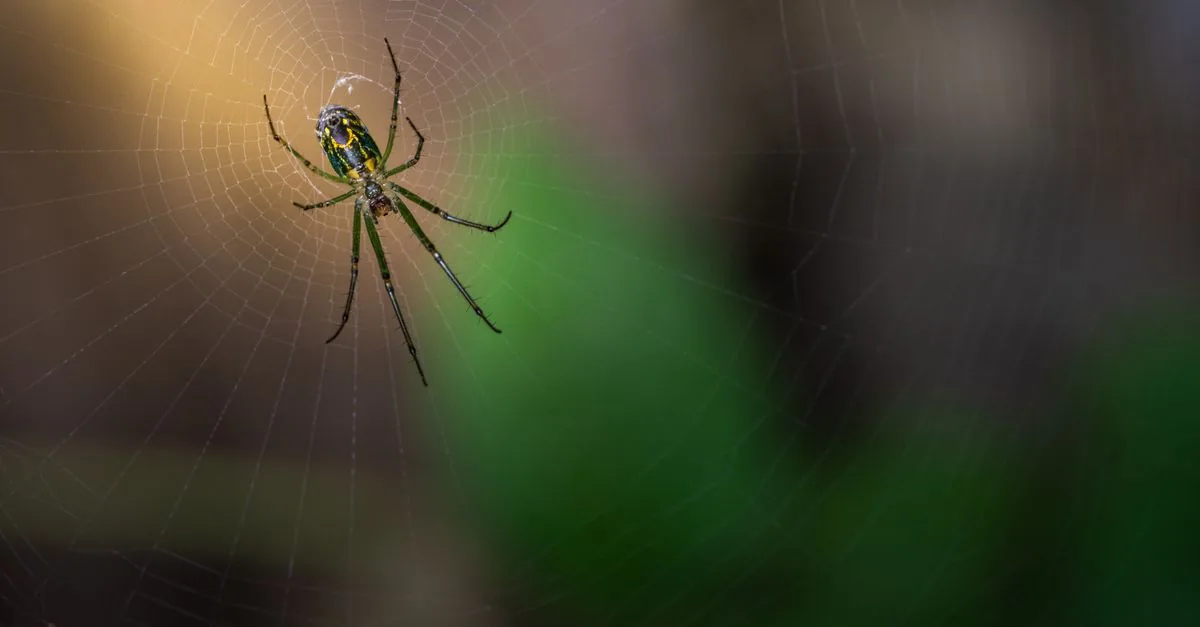
Cobwebs are the most-swept and least-understood thing in a Delhi home. They appear in the same ceiling corners, behind the same wardrobe, in the same balcony grille, week after week, and every household treats it as a cleaning failure. It usually is not.
Spiders are predators that do not chase. They build where prey passes, and they abandon a spot that does not feed them. So a web that is rebuilt within days of being swept is a fairly reliable signal that a steady stream of small flying insects is moving through that corner — moths, midges, small flies, mosquitoes. Sweep the web and you have removed the evidence; deal with the insects and the spider moves out on its own.
This guide covers why webs come back, what a sudden increase in webbing actually means, the Delhi cleaning routine that keeps them down, and — the genuinely useful part — how to tell a cobweb apart from the two things people confuse it with, because one of those two is termites and that is not a cosmetic issue at all.
A note first. XpertWorker is a marketplace, not a service company. We do not set any professional’s price and we never charge you a paisa. Every professional quotes you free before starting, and you pay them directly. The professionals you would meet through us are independent; our checks are identity checks, not a skill test.
In this guide
Why do cobwebs come back so fast after cleaning?
Because sweeping removes the web, not the reason the web was there. Web-building spiders pick a spot by trial: they build, they see what they catch, and they stay if it pays. A corner that keeps producing webs is a corner that keeps producing catches.
- Light is usually the driver. A tube light, a balcony bulb, a corridor light, a lit window at night. Each pulls flying insects from a wide area, and the corners near those lights are the ones that re-web fastest. The same lighting change that reduces lizards reduces webs, for the same reason.
- Still air and no disturbance. High ceiling corners, the top of a curtain rod, the gap behind an almirah, under the staircase, behind the WC, the inside of a balcony grille, the loft. Anywhere a broom does not routinely reach.
- The balcony and the window channel. The interface between outside and inside is the busiest insect route in the flat, which is why balcony grilles and window frames web up first.
- Season. Webbing rises with the monsoon and the post-monsoon insect surge, and again in the mild weather of October and November. That is also, conveniently, the pre-Diwali cleaning season, which is when most people notice how much has accumulated.
- Rooms that are shut. A guest room, a locked room in a rented flat, a storeroom, a barsati. Undisturbed for weeks is exactly the condition a web needs.
So the useful response to a stubborn web corner is not to sweep it harder. It is to ask what is flying through it and why.
Want a real quote for your own job?
Get free quotesWhen webs mean there is another problem
An occasional web in a ceiling corner is normal in every Delhi home in every season. A sudden or heavy increase is worth reading, because it is usually reporting on something else.
- A jump in webbing means a jump in insects. Look for what changed. A new light outside a window, a torn window mesh, a bin that stopped being covered, standing water on the balcony, a garbage point outside the building, the monsoon itself. Deal with the insect load and the webbing falls away.
- Webs in a low, dark, undisturbed place with debris below — behind a wardrobe, in a storeroom, under a staircase — often sit alongside other things living in the same neglected corner. Clear the corner properly and see what else is there.
- Webbing around a kitchen or bathroom drain area often means a drain fly population is feeding it. Fix the drain and the spiders lose their supply.
- Fine webbing plus lots of small dead insects on the sill is a screening problem in disguise. Repair the mesh.
- Egg sacs. Small papery or silky balls tucked into a web, in a corner, or under a windowsill. Remove them along with the web, or you clear the corner and it repopulates in a fortnight.
On bites: we are not going to tell you which spider in a Delhi home is dangerous and which is not, because that is not a call to make from a web page. Do not handle spiders, wear gloves when clearing out a storeroom or a loft, and shake out shoes, gardening gloves and stored clothes that have been undisturbed for a long time. If something bites you and you are concerned about it, that is a question for a doctor, not for a pest control page.
Is it a cobweb, or something worse?
This is the part of the guide worth remembering. Two of the things people sweep away as “cobwebs and dust” are actually early evidence of structural pest damage. Look before you sweep.
- Mud tubes are not webs. A narrow line of packed mud running up a wall, along a skirting, up a door frame or across the ceiling near a beam is a termite shelter tube. It is gritty and solid, not soft and silky, and it does not float when you wave a broom near it. This is the single most important distinction on this page. If that is what you have, stop sweeping and read the signs of termite infestation guide, then the termite treatment guide.
- Fine powder below furniture is not dust. A small pile of pale, talcum-like powder under a wardrobe, a bed frame, a door frame or a shelf, with tiny round holes in the wood above it, is wood borer. It reappears within days of being wiped. See the wood borer guide.
- Silky webbing in a food packet or a grain container is a stored-product pest, not a spider. Clumped or webbed atta, rice or dry fruit means the packet goes out and the shelf gets emptied — see our food storage tips.
- Webbing in stored woollens with holes is usually clothes moths, and damp-related grazing on books and paper is silverfish.
The routine that actually keeps webs down
Little and often beats one heroic clean a year. The pre-Diwali clean is a good reset, but a corner that is only touched in October will be webbed again by March.
- Do the corners on a fixed schedule. A long-handled brush or a ceiling broom around all ceiling corners, curtain rods, light fittings, fan blades, behind doors and along the balcony grille, once a fortnight. Ten minutes.
- Vacuum rather than sweep where you can. A vacuum with a crevice tool removes the web, the egg sacs and the debris in one pass, instead of moving it to the floor.
- Change what your lights do at night. Balcony and porch lights off when not needed, warmer-toned outdoor lamps, curtains drawn after dark. Fewer insects, fewer webs.
- Repair the mesh. Windows, ventilators, exhaust fan openings, and the runners of sliding frames. This is the highest-value repair on the list.
- Declutter the still corners. Cartons on top of the wardrobe, stacked items under the bed, a storeroom nobody enters, unused pots stacked on the balcony. Clutter is what makes a corner undisturbed.
- Clean the outside of the grille and the window frame. Delhi dust builds a scaffold that webs anchor to, so the frames web up faster once they are dusty. Our pest-proofing checklist covers the sealing side of the same job.
- Wear gloves and a mask for a loft or a storeroom clear-out. Between the dust and the years of accumulation, it is worth it.
Do I need pest control for spiders?
Usually not on their own. Spiders are not the kind of pest that justifies a treatment by themselves in a normal Delhi flat, and a treatment aimed only at spiders tends to give you a short quiet period before the insects — and then the spiders — return. Cleaning, lighting and mesh do more.
Where a professional round genuinely helps is when spiders are a symptom of a general insect load that is worth treating anyway, or in specific situations:
- A house or flat that has been shut for months. Reopening after a long absence, a move-in, or a property that has stood empty. A general clean-out round plus a properly prepared visit is reasonable here.
- Ground floors, basements, storerooms and lofts with heavy webbing and a mixed insect population.
- When it comes with other pests. If cockroaches, ants, flies or mosquitoes are also in play, treat those on their own terms and the webs reduce as a side effect. Combined rounds are the normal way this is handled.
- Ask for web removal to be part of the scope, including the high corners and the balcony grille, and ask about precautions: how long to ventilate, what to cover, what to do about pets, a fish tank or a birdcage, and ask to see the product label rather than accepting a verbal reassurance.
On money: we do not quote figures and we do not set anyone’s price. Home size, how many pests are being covered, and whether it is a one-off or a running arrangement are what drive it — see the pest control cost guide and the AMC guide. And no professional can promise a home that never gets another web; what they can do is reduce the insect population that keeps building them.
Need an Pest Control professional?
Get free quotes from independent, local professionals near you. XpertWorker never charges you — you pay the professional directly.
Get free quotes →Frequently asked questions
Why do cobwebs keep coming back after I clean them?
What does it mean if there are suddenly a lot of spider webs in my house?
Is it a cobweb or a termite mud tube on my wall?
How do I keep spiders off my balcony grille?
Do I need pest control treatment for spiders?
Are house spiders in Delhi dangerous?
How we put this guide together
This guide is compiled from common Delhi NCR service patterns and reviewed by the XpertWorker team. XpertWorker connects you with independent, local professionals — we never charge you a paisa, and each professional sets their own price and quotes you free.